

Date | 2026-04-15 08:12:53
From smartphones to smart meters, from electric vehicles to portable medical devices, “smaller, thinner, lighter” has become the dominant trend in modern engineering.
In the electrical industry, this transformation is even more evident:
MCB thickness reduced from 36 mm to 18 mm
Smart meter housings moving toward sub-1 mm wall thickness
Motor terminal boards becoming increasingly compact
But miniaturization is not just about design—it is a stress test for materials.
As space shrinks, safety margins shrink with it.
As walls get thinner, every material property is pushed to its limit.
So the question becomes clear:
👉 In this race toward smaller devices, who safeguards safety?
The answer lies in the materials you don’t see.
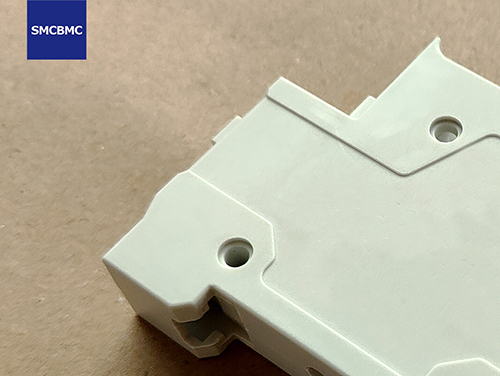
Reducing size is not simply scaling down—it is increasing performance density.
For electrical equipment, this creates several critical challenges:
Standards such as IEC 60947 define strict electrical spacing requirements.
Smaller designs leave less tolerance for dimensional variation—any deformation can lead to compliance failure.
Same power, smaller volume = higher heat density.
Materials must withstand elevated temperatures and repeated thermal cycling without deformation.
Thin-wall structures must resist:
Installation stress
Vibration
Impact
Any cracking or creep can compromise the entire system.
In compact spaces, heat and arcs dissipate less efficiently.
Materials must maintain flame resistance even at ultra-thin sections, without melting or dripping.
👉 These challenges go beyond the capabilities of conventional engineering plastics.
Bulk Molding Compound (BMC) is a thermosetting composite uniquely suited for compact, high-reliability designs.
BMC 16XX series can achieve UL94 V-0 at just 0.4 mm thickness.
Even at this ultra-thin level:
No melting
No dripping
Rapid surface carbonization
This creates a protective barrier that prevents flame propagation—critical for compact devices like MCBs.
Thanks to its cross-linked structure, BMC offers:
Very low CTE (1.3–3.5 × 10⁻⁵/K)
Minimal expansion or shrinkage
Across -40°C to 150°C, dimensions remain stable—ensuring electrical spacing remains compliant over time.
Density: ~1.7–2.0 g/cm³ (≈60% lighter than steel)
Flexural strength: 120–200 MPa
Even in thin-wall designs, BMC maintains structural integrity under stress and vibration.
High dielectric strength
CTI ≥600V
Excellent arc resistance
This allows reliable insulation even in compact layouts—without additional barriers.
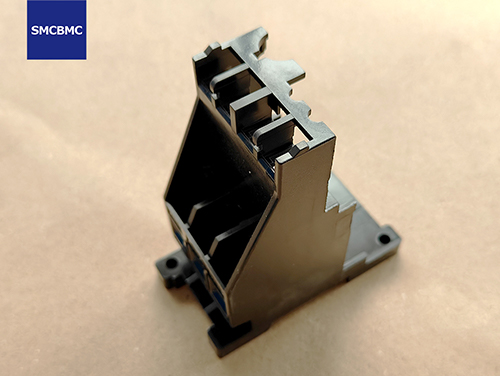
BMC is used in:
Arc chambers
Housings
It prevents arc damage by:
Resisting melting
Limiting arc energy
Maintaining structural integrity under heat
With wall thickness below 1 mm, BMC housings:
Resist UV and humidity
Maintain shape for decades
Protect sensitive electronics
Operating temperatures can exceed 155°C.
BMC ensures:
Thermal stability (HDT ≥200°C)
No creep under load
Secure electrical connections
Material performance alone is not enough—especially for thin-wall parts.
At Wenzhou Jintong, we combine:
Material formulation
Precision mold design
Compression molding expertise
Key capabilities include:
Mold temperature control (±5°C)
Optimized pressure curves
Advanced venting design
This ensures consistent quality, dimensional accuracy, and repeatable performance.
Miniaturization is inevitable.
Compromising safety is not.
With its unique combination of:
Thin-wall flame retardancy
Dimensional stability
Mechanical strength
Electrical insulation
BMC stands as a reliable safeguard in compact electrical design.
As engineers push the limits of size,
BMC quietly protects every:
Circuit interruption
Energy measurement
System operation
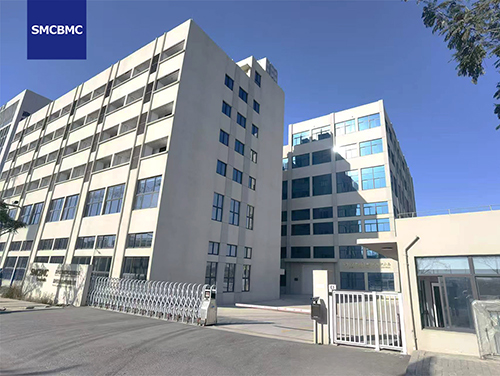
Wenzhou Jintong Complete Appliances Co., Ltd.
Specializing in:
BMC / SMC composite materials
Precision molding
Electrical insulation components
Providing thin-wall, high-reliability solutions for:
MCB
Smart meters
Motors
Electric vehicles
📧 wendy.qiu@smcbmc.com
📞 +86 13868305300