

Date | 2026-05-15 09:40:14
As smart meters become increasingly connected and expected to operate reliably for 10–20 years in outdoor environments, enclosure material selection has become a critical engineering decision.
One of the most demanding validation methods used by utilities and meter manufacturers worldwide is the so-called “85/85 test” — continuous exposure to 85°C temperature and 85% relative humidity under accelerated aging conditions.
Under these conditions, differences between enclosure materials quickly become apparent.
Today, the global smart meter market is primarily dominated by two enclosure material systems:
PC/ABS alloys (polycarbonate/acrylonitrile-butadiene-styrene)
BMC thermoset composites (Bulk Molding Compound)
While both materials are widely used, their long-term performance under high heat and humidity differs significantly.
This article compares the two from the perspectives of material science, aging mechanisms, and practical testing results.
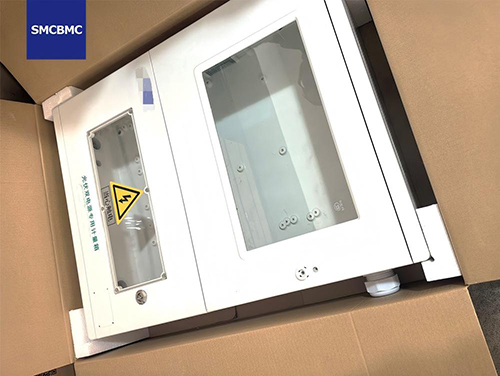
The 85/85 test is based on accelerated environmental aging principles similar to those defined in IEC and GB environmental testing standards.
However, the test is not simply about “heat resistance” or “humidity resistance.”
It subjects the enclosure material to three simultaneous stresses:
Thermal stress
Moisture penetration
Electrical stress
These combined factors accelerate long-term aging mechanisms that would normally occur over years of field operation.
High temperature accelerates water molecule diffusion into the material structure, while high humidity maintains continuous surface moisture exposure.
This can reduce insulation resistance and weaken filler-resin interfaces.
When voltage is applied, absorbed moisture combined with ionic impurities may create localized conductive paths, leading to surface tracking or electrical failure.
Long-term exposure to elevated temperature accelerates polymer degradation.
For PC/ABS materials, the butadiene phase is especially vulnerable to oxidation and hydrolysis.
The biggest difference between BMC and PC/ABS lies in their polymer architecture.
| Property | BMC Thermoset Composite | PC/ABS Thermoplastic |
|---|---|---|
| Material Structure | Highly crosslinked thermoset | Linear/branched thermoplastic |
| Moisture Absorption | Low | Higher |
| Main Aging Mechanism | Interface moisture penetration | Hydrolysis and polymer chain degradation |
| Dimensional Stability | Excellent | Moderate after moisture absorption |
| Flame Retardancy | Inherently flame resistant | Requires additives |
| Long-Term Thermal Stability | High | Moderate |
Once cured, BMC forms an irreversible crosslinked structure.
Its long-term degradation mainly occurs gradually at filler-resin interfaces rather than through bulk polymer breakdown.
PC/ABS, by contrast, contains carbonate bonds that are more susceptible to hydrolysis under prolonged high heat and humidity exposure.
This difference becomes increasingly visible after extended aging periods beyond 500 hours.
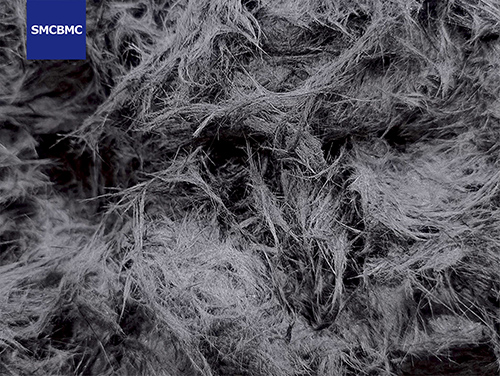
According to internal testing conducted on Wenzhou Jintong BMC 16XX series materials under:
85°C
85% RH
1000-hour exposure
3 mm specimen thickness
the following performance retention was observed:
| Test Item | Initial Value | After 1000h 85/85 | Retention |
|---|---|---|---|
| Insulation Resistance (Dry) | ≥1.0×10¹³ Ω | ≥5.0×10¹¹ Ω | — |
| Insulation Resistance (Wet) | ≥1.0×10¹² Ω | ≥1.0×10¹¹ Ω | — |
| Flexural Strength | ≥130 MPa | ≥110 MPa | ≥85% |
| Dielectric Strength | ≥20 kV/mm | ≥17 kV/mm | ≥85% |
| Appearance | Smooth surface | No cracks, blistering, or significant discoloration | — |
Data shown above represents typical internal testing results. Actual values may vary slightly depending on formulation and production batches.
The results show that even after 1000 hours of accelerated humidity aging:
insulation resistance remained at a very high level,
mechanical and electrical retention exceeded 85%,
and no visible structural degradation occurred.
This performance is largely attributed to:
high inorganic filler loading,
reduced moisture-sensitive resin content,
and the structural stability provided by glass fiber reinforcement.
In practical field conditions, PC/ABS enclosures may begin developing microcracks after prolonged humidity aging.
These are typically caused by:
moisture absorption,
plasticization effects,
internal stress release,
and thermal oxidation.
Under electrical load, crack tips may create localized electric field concentration, accelerating tracking and leakage risks over long-term operation.
For utilities targeting 10+ years of outdoor service life, this becomes a critical reliability concern.
Material selection alone does not determine reliability.
Processing technology plays an equally important role.
BMC smart meter enclosures are typically produced using compression molding under controlled conditions:
mold temperature: 135–170°C
optimized pressure holding stages
controlled curing cycles
Compared with injection-molded PC/ABS parts, compression molding generally produces:
lower residual stress,
more uniform fiber distribution,
and improved dimensional stability.
These factors help reduce stress cracking risks during thermal-humidity cycling.
In addition, BMC formulations used for smart meter enclosures can meet:
RoHS 2.0 environmental requirements
960°C glow-wire resistance standards
UL94 V-0 flame retardancy targets
making them highly suitable for utility-grade electrical infrastructure.
only short-term humidity testing is required,
cost sensitivity is extremely high,
or product lifespan expectations are moderate.
1000-hour 85/85 testing is required,
long-term insulation reliability is critical,
outdoor deployment is severe,
or utilities require higher fire and electrical safety margins.
For long-life smart grid applications, engineers should evaluate not only whether a material “passes” testing, but how much performance it retains afterward.
That difference often determines field reliability years later.
Wenzhou Jintong specializes in:
BMC/SMC thermoset composite materials
precision mold development
electrical insulation component manufacturing
customized enclosure solutions for smart grid applications
With deep experience in electrical insulation systems, we help customers optimize both material reliability and manufacturing consistency for demanding utility environments.
For technical support or project discussions:
📧 wendy.qiu@smcbmc.com
📞 +86 13868305300