

Date | 2026-01-09 13:46:52
From high-speed train roofs racing across vast landscapes to underground power distribution networks in modern cities, a new generation of insulators is quietly replacing traditional ceramics. Lighter in weight, stronger in performance, and longer in service life, composite insulators are redefining the standards of electrical safety and reliability.
As power systems evolve toward lightweight design, higher performance, and longer service life, the industry trend of “composites replacing ceramics” continues to accelerate. Epoxy resin and BMC (Bulk Molding Compound) composite insulators, with their revolutionary material advantages, have become the preferred upgrade solution for rail transit and low-voltage power distribution systems.
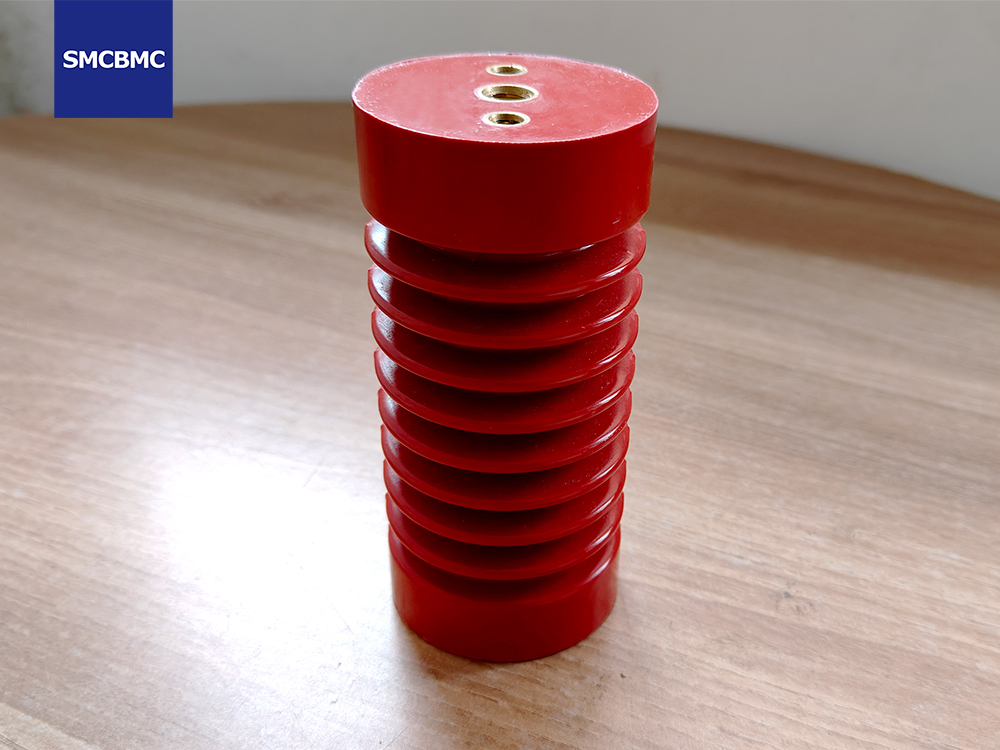
In rail transportation and urban power grids, insulators are continuously exposed to vibration, pollution, moisture, ultraviolet radiation, and electrical stress. Traditional ceramic insulators suffer from inherent disadvantages, including heavy weight, brittleness, and a higher risk of flashover in polluted environments.
In rail transit applications in particular, roof-mounted insulators must withstand high-speed airflow, mechanical vibration, and extreme temperature variations. Any performance degradation may directly compromise operational safety. The market urgently requires a new insulation solution that integrates excellent electrical performance, superior mechanical strength, outstanding weather resistance, and lightweight design.
Both epoxy resin and BMC belong to the family of high-performance thermosetting composites, yet differences in formulation and processing result in distinct performance profiles—enabling precise material selection for different applications.
Epoxy composite insulators typically utilize cycloaliphatic epoxy resin systems, known for their exceptional electrical properties and structural integrity. They offer ultra-high insulation resistance and dielectric strength, effectively resisting arc erosion under high electrical loads.
Through advanced formulation design, epoxy insulators exhibit excellent hydrophobicity and tracking resistance, making them particularly suitable for medium- and high-voltage outdoor applications where superior arc resistance is critical.
BMC insulators are based on unsaturated polyester resin, reinforced with chopped glass fibers and functional fillers through compression molding. Their core strengths lie in high mechanical strength, dimensional stability, and excellent flame-retardant and tracking resistance performance.
Thanks to superior flowability, BMC enables one-piece molding of complex structures—such as multi-shed profiles—with smooth surfaces and high dimensional precision. According to publicly available data, BMC materials can retain over 60% of their mechanical strength after more than 10 years of outdoor exposure, demonstrating outstanding long-term durability.
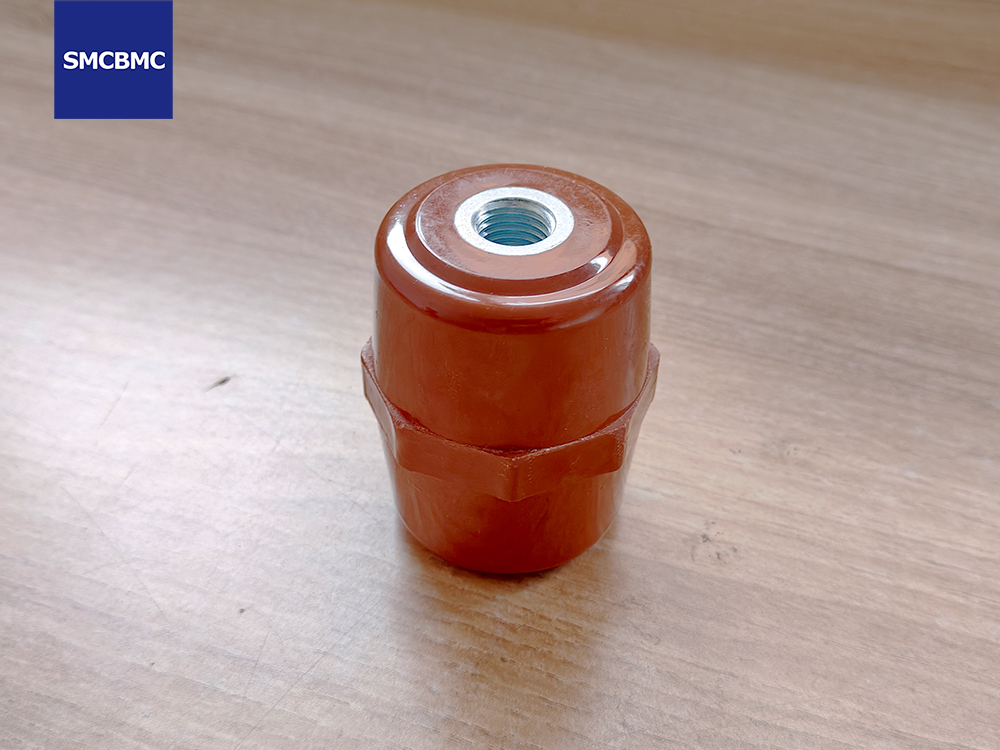
Material characteristics define optimal application scenarios. Epoxy resin and BMC insulators each play indispensable roles in rail transit and low-voltage power distribution.
Epoxy resin insulators are widely used as roof-mounted support insulators for high-voltage railway equipment, typically operating at voltage levels of 25 kV or higher. They must endure wind, sand, rain, snow, strong UV radiation, and continuous mechanical vibration.
Studies indicate that long-term hydrophobicity degradation must be addressed through optimized formulations and specialized fillers. Meanwhile, BMC insulators are extensively used in low-voltage electrical systems inside trains and along railway lines, such as insulation supports and connectors—where high strength and flame retardancy ensure stable system operation.
In low-voltage insulation applications, BMC materials dominate the market. They are ideally suited for large-scale, high-precision manufacturing of insulation pillars, busbar supports, and circuit breaker components used in switchgear systems.
Operating typically below 1500 V, these components require exceptional mechanical strength, UL94 V-0 flame retardancy, and long-term dimensional stability. BMC’s excellent processability enables efficient, cost-effective production of complex structures with metal inserts while fully complying with IEC and related international standards.
As smart grids and rail transportation systems continue to evolve, composite insulators are expected to advance in three key directions:
Functional Integration
Future insulators may integrate sensors for real-time monitoring of temperature, mechanical stress, and leakage current—enabling predictive maintenance.
Enhanced Material Performance
Through nano-modification and advanced fiber reinforcement technologies, epoxy and BMC materials will further improve resistance to tracking, UV radiation, high temperatures, and mechanical fatigue.
Green Manufacturing
Development of low-emission, recyclable, or bio-based resin systems will reduce carbon footprints and improve sustainability throughout the product life cycle.
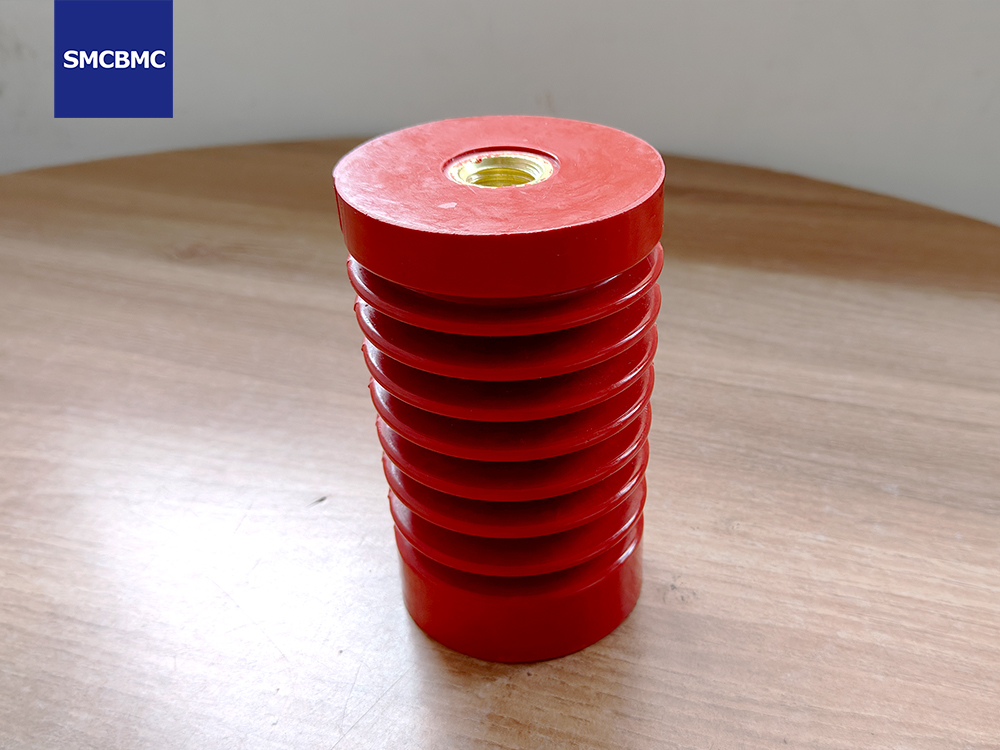
The performance of insulators defines the safety baseline of power systems. Quality depends not only on material formulation, but also on precise design, rigorous process control, and deep system-level understanding.
As a member of the National Insulating Materials Standardization Technical Committee, Wenzhou Jintong is more than a supplier—we are your trusted technical solution partner.
We possess deep expertise in both epoxy resin and BMC materials, offering full-chain support from material selection and structural design to precision tooling and mass production, tailored to specific requirements such as voltage level, mechanical load, environmental conditions, and flame-retardant standards.
All products strictly comply with national standards and our own more stringent internal technical specifications, ensuring consistent high reliability. Choosing Jintong means choosing a safety commitment grounded in material science and engineering excellence.
The mission of insulation is silent protection.
When high-speed trains cross mountains and cities glow with light, composite insulators—built with advanced materials—quietly sustain the energy pulse of modern society with performance and longevity far beyond traditional solutions.