

Date | 2026-02-07 14:17:50
In industrial manufacturing, material selection is often framed as a simple cost comparison.
Which material is cheaper per kilogram?
Which option reduces upfront tooling or unit price?
But in real systems — electrical equipment, motors, rail components, energy infrastructure — the true cost is never defined by material price alone. It is defined by reliability over time, production consistency, and total lifecycle performance.
This is where BMC (Bulk Molding Compound) molding demonstrates its real economic value — not as a “low-cost plastic,” but as a long-term engineering solution.
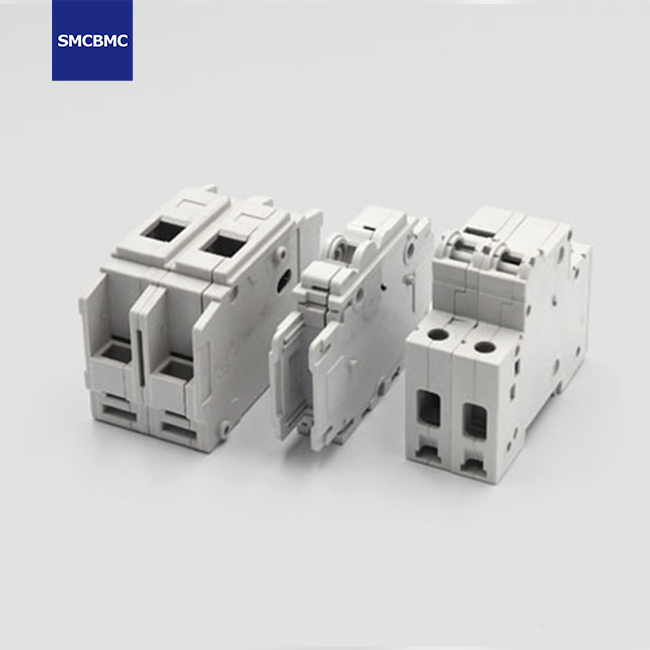
Comparing materials purely on raw material price often leads to false conclusions.
A lower-cost thermoplastic or metal solution may appear attractive initially, but hidden costs accumulate rapidly through:
Dimensional instability and rework
Higher scrap rates during molding or machining
Assembly variation and tolerance compensation
Premature field failures
Increased warranty and maintenance costs
In contrast, BMC economics emerge over the full lifecycle, where consistency and durability dominate total cost.
In real electrical and industrial systems, failure rarely comes from sudden overload.
It comes from gradual degradation:
Loss of dimensional accuracy after thermal cycling
Creep under constant mechanical or electrical load
Reduced creepage and clearance distances
Loosened fasteners or electrical contacts
Warping that compromises sealing or insulation integrity
BMC’s thermoset structure does not soften, relax, or creep under heat. Once cured, its geometry and mechanical properties remain stable over decades of service.
Reliability reduces cost not by being cheaper — but by not failing.
When evaluated across the full product lifecycle, BMC delivers measurable economic advantages:
Manufacturing Phase
High repeatability reduces scrap and rework
Net-shape molding minimizes secondary machining
Stable shrinkage simplifies mold compensation
Consistent batch-to-batch performance improves yield
Assembly Phase
Tight tolerances reduce fitting adjustments
Stable geometry enables automated assembly
Lower risk of fastener loosening or misalignment
Operation & Service Phase
Long-term dimensional stability under heat and load
Inherent flame retardancy without additive migration
Resistance to moisture, chemicals, UV, and aging
Reduced maintenance and extended service life
In many applications, one avoided failure costs more than thousands of molded parts.
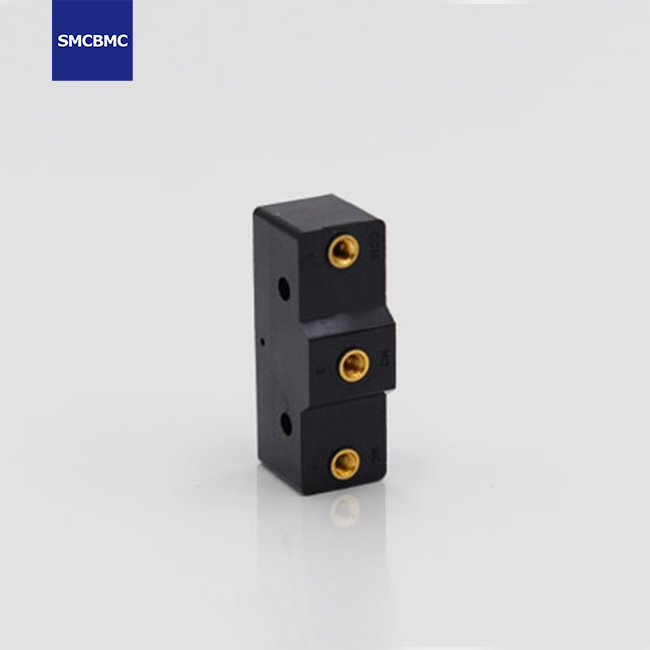
BMC is often evaluated as a metal replacement, but the economics extend beyond weight reduction.
Replacing metal with BMC can eliminate:
Corrosion protection processes
Electrical insulation add-ons
Multi-part assemblies
Secondary coatings or treatments
At the system level, BMC enables:
Functional integration
Simplified supply chains
Lower assembly labor
Reduced lifecycle energy consumption
This is not material substitution — it is system optimization.
Material alone does not guarantee cost efficiency.
Economic value comes from controlled interaction between material, mold, and process.
At Wenzhou Jintong, lifecycle cost optimization is engineered through:
Application-specific BMC formulations
Mold designs optimized for shrinkage balance
Precise mold temperature uniformity control
Stable pressure and curing profiles
Integrated material–mold–process development
This ensures that laboratory performance translates into real production economics.
The most expensive materials are not those with higher unit prices.
They are the ones that introduce variability, rework, and uncertainty into your system.
BMC molding delivers value by:
Reducing risk
Stabilizing production
Extending product life
Protecting brand reputation
In modern engineering, reliability is not a feature — it is a financial strategy.
Cost, reliability, and lifecycle are inseparable.
BMC molding is not chosen because it is cheap.
It is chosen because it stays stable, performs consistently, and costs less over time.
That is the real economics of BMC.
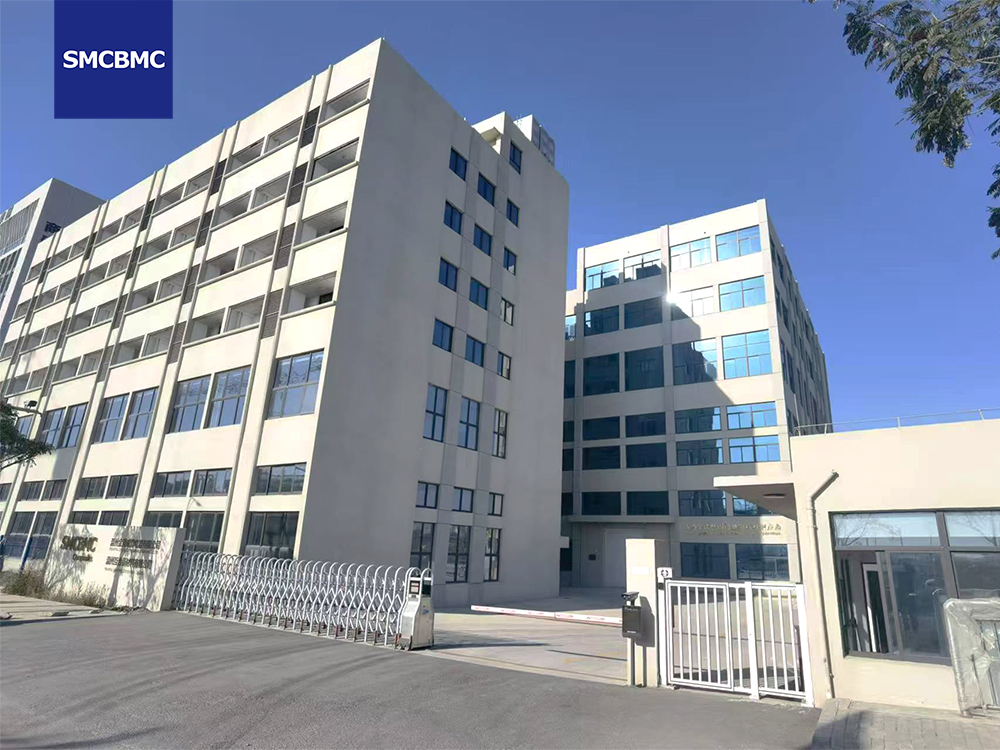
Wenzhou Jintong Complete Electrical Co., Ltd. specializes in high-performance BMC/SMC thermosetting composites, precision mold design, and compression molding of critical electrical and structural components.
We support customers in electrical insulation, motors, rail transit, new energy, and industrial equipment with high-reliability, lifecycle-optimized composite solutions.