

Date | 2026-02-06 07:38:30
Lightweight design has become a dominant trend across electrical equipment, transportation, and energy infrastructure. Reducing weight promises lower material costs, easier installation, improved efficiency, and compliance with sustainability goals.
However, in real-world systems, lightweight design can introduce an often-overlooked risk:
Long-term structural instability.
In many applications, failures do not originate from insufficient strength at day one —
they emerge years later, driven by deformation, creep, thermal cycling, or dimensional drift.
This is where lightweight design and long-term stability begin to conflict.
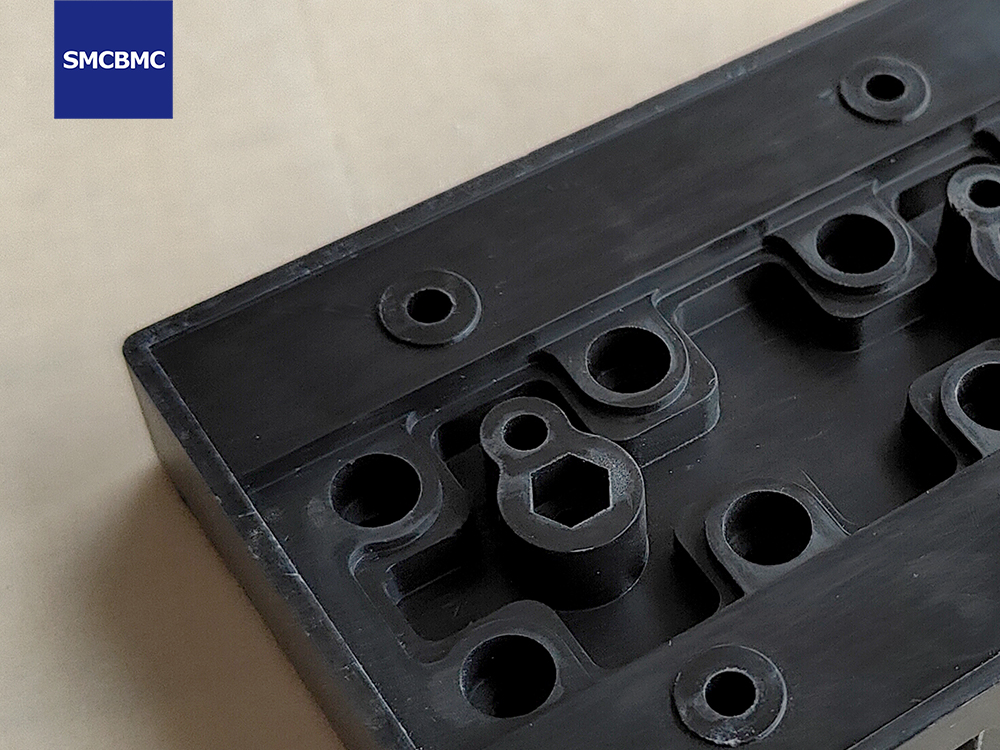
In electrical and industrial systems, components are expected to maintain:
Precise geometry
Stable mechanical preload
Consistent electrical clearances
Structural integrity over decades
Yet many lightweight solutions rely heavily on thermoplastics or thin-wall metal designs that:
Soften under heat
Creep under constant stress
Warp due to thermal expansion
Absorb moisture and swell over time
The result is not immediate failure — but gradual loss of function, including:
Loosened connections
Increased contact resistance
Reduced creepage and clearance distances
Seal failure in enclosures
Accelerated aging of adjacent components
Lightweight design that ignores long-term behavior becomes a hidden reliability liability.
The tension between weight reduction and structural stability is most visible in:
MCB and switchgear housings
Motor terminal boards and insulation pillars
Busbar supports and cable management systems
Rail transit electrical structures
Outdoor electrical enclosures
In these systems, even millimeter-level deformation can compromise safety margins.
A component does not need to crack or burn to fail —
it only needs to move out of position.
Structural stability is defined not by peak strength, but by the ability to remain unchanged under:
Continuous mechanical load
Long-term thermal exposure
Temperature cycling
Vibration and shock
Humidity and environmental stress
Materials that are extremely light but dimensionally unstable often perform well in short-term tests — yet underperform in service life.
In contrast, materials optimized for stability deliver:
Consistent assembly quality
Predictable electrical performance
Lower maintenance requirements
Longer service life
In many electrical systems, stability is the real performance metric.
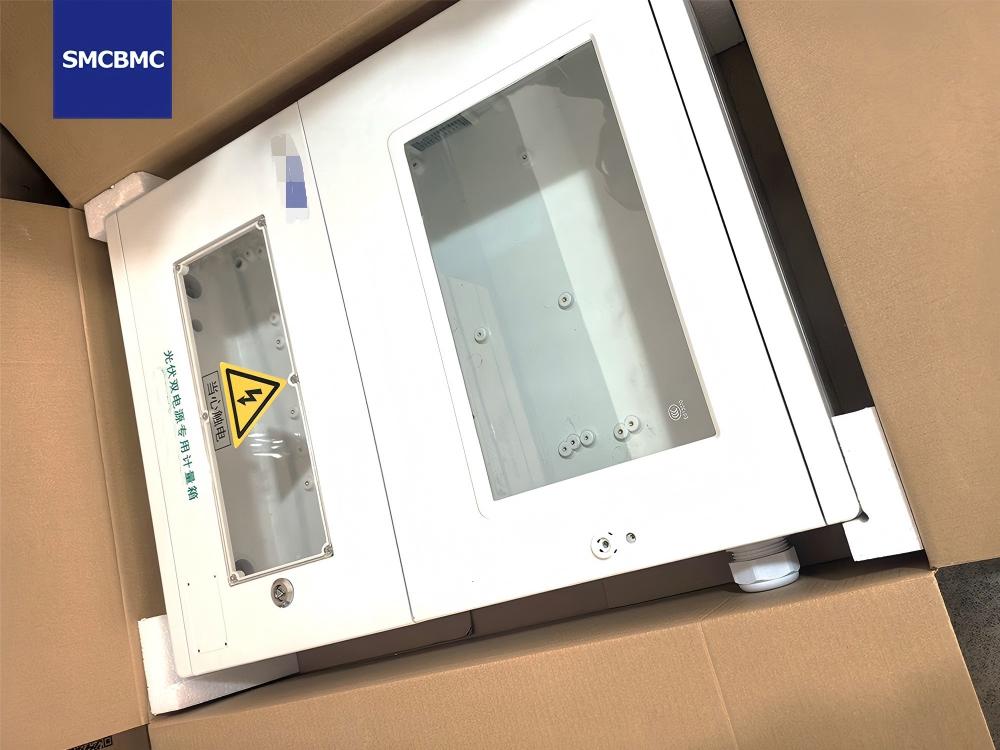
Bulk Molding Compound (BMC) offers a fundamentally different balance.
As a thermosetting composite reinforced with glass fibers and mineral fillers, BMC provides:
Lower density than metals, enabling meaningful weight reduction
Significantly higher dimensional stability than most thermoplastics
Minimal creep under load, even at elevated temperatures
Low thermal expansion, maintaining geometry across wide temperature ranges
Excellent moisture resistance, preventing swelling or deformation
Once cured, BMC does not soften, relax, or remelt —
making it inherently suited for long-term structural stability.
This allows designers to reduce weight without sacrificing positional accuracy or mechanical integrity.
True stability is not achieved by material selection alone.
At Wenzhou Jintong, lightweight yet stable BMC components are achieved through:
Application-specific BMC formulation design
Mold structures optimized for fiber orientation and shrinkage balance
Controlled mold temperature uniformity
Precisely managed pressure and curing profiles
This material–mold–process integration ensures that lightweight design translates into consistent, repeatable production — not theoretical performance.
Lightweight design should not be understood as:
“Using the lightest possible material.”
Instead, it should mean:
Using the lightest structure that remains dimensionally and mechanically stable throughout its entire service life.
In electrical systems, reliability is rarely lost through sudden overload —
it is lost through slow, invisible movement.
As systems become more compact and performance margins tighten, the cost of instability increases.
The most advanced lightweight designs are not those that remove the most material —
but those that remove uncertainty.
BMC is not merely a lightweight alternative.
It is a structural material engineered for consistency over time.
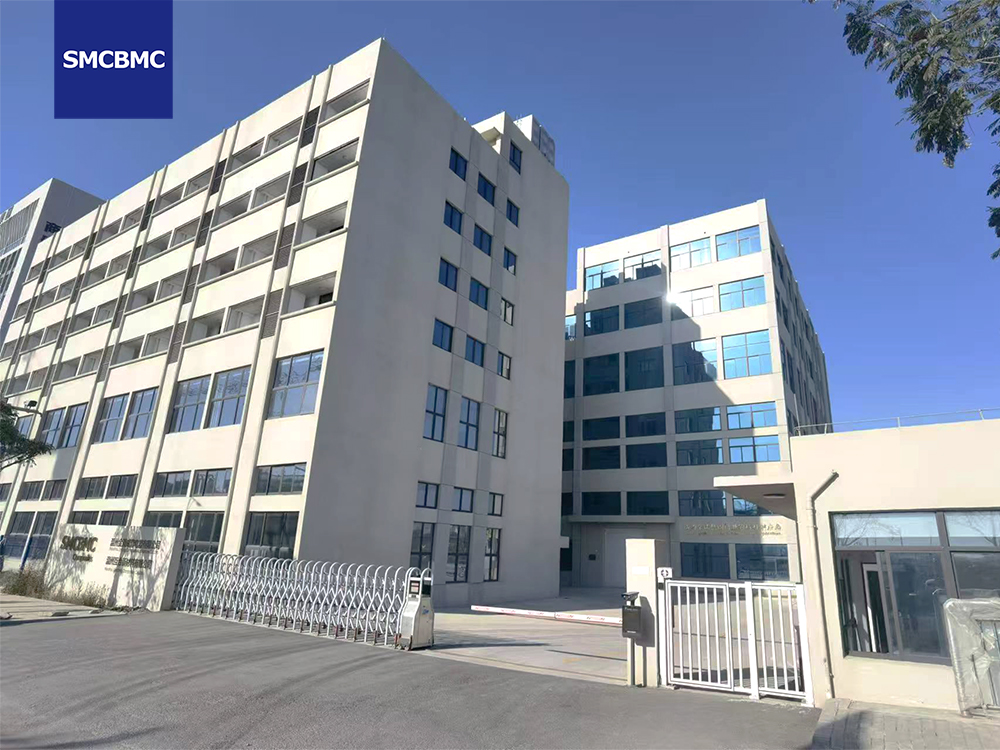
Wenzhou Jintong Complete Electrical Co., Ltd. specializes in high-performance BMC/SMC thermosetting composites, precision mold design, and compression molding of critical electrical and structural components.
We support customers in electrical insulation, motors, rail transit, new energy, and industrial equipment with lightweight yet dimensionally stable composite solutions designed for long-term reliability.