

Date | 2026-02-26 13:46:38
Smart meters are no longer simple measuring devices. They are critical data nodes within modern energy infrastructure. Designed for outdoor installation and long service life, smart meter enclosures must withstand environmental exposure, mechanical stress, and evolving safety requirements.
Among the commonly used materials for smart meter housings, Polycarbonate (PC) and Bulk Molding Compound (BMC) represent two fundamentally different approaches.
While both materials are widely used in electrical applications, their long-term performance characteristics differ significantly. Understanding these differences is essential for utilities and OEM manufacturers focused on lifecycle reliability.
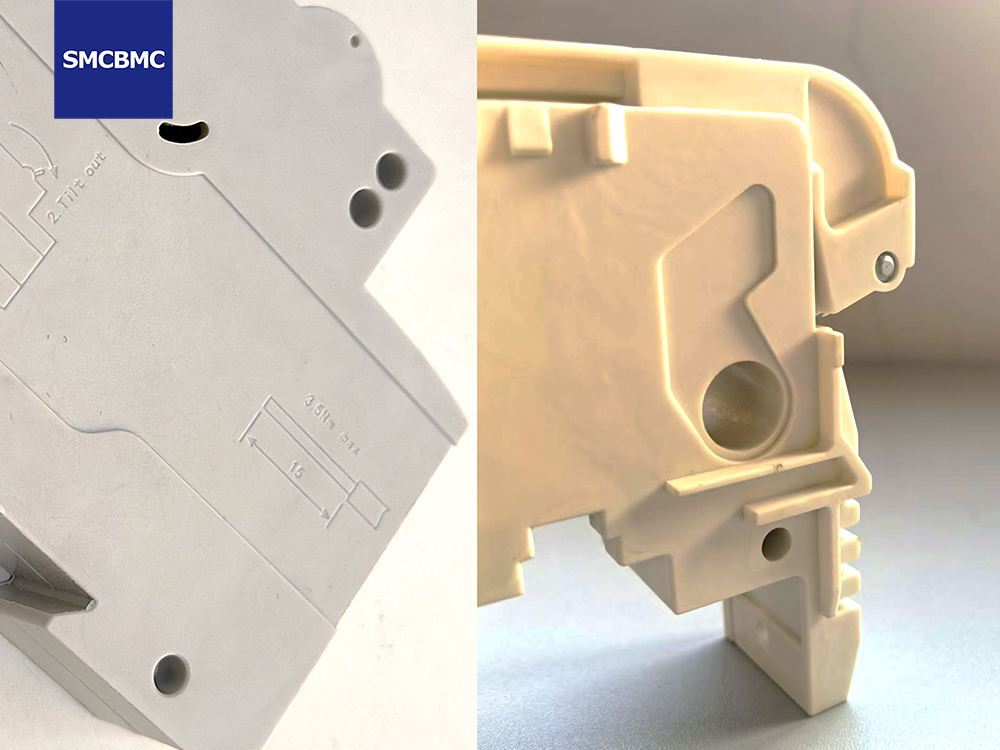
Polycarbonate (PC) is an engineering thermoplastic known for impact resistance, transparency, and ease of injection molding.
BMC (Bulk Molding Compound) is a thermosetting composite reinforced with glass fibers and mineral fillers. Once cured under heat and pressure, it forms a permanently crosslinked structure that does not remelt.
This structural distinction defines how each material behaves over time.
Smart meters are typically installed outdoors, where enclosures are exposed to:
Continuous solar radiation
Seasonal temperature fluctuations
Internal heat from electronic components
Polycarbonate softens at elevated temperatures and may experience long-term creep under mechanical stress. Over extended service periods, this can lead to:
Dimensional drift
Fastener loosening
Reduced sealing performance
BMC maintains structural rigidity after curing. It offers:
Low thermal expansion
High resistance to creep under load
Stable geometry under thermal cycling
For applications requiring precise dimensional retention over decades, thermoset composites provide structural predictability.
Smart meter enclosures must meet strict fire safety standards.
Flame-retardant PC grades are available but often rely on additive systems that may influence long-term aging performance.
BMC formulations can achieve high flame-retardant ratings inherently due to mineral fillers and thermoset chemistry. The crosslinked structure does not melt or drip under fire conditions, enhancing containment characteristics.
In high-density urban installations, this difference can be critical.
Outdoor grid infrastructure faces long-term exposure to:
UV radiation
Humidity and condensation
Pollution and airborne contaminants
While UV-stabilized grades exist, prolonged UV exposure may cause surface aging, embrittlement, or discoloration.
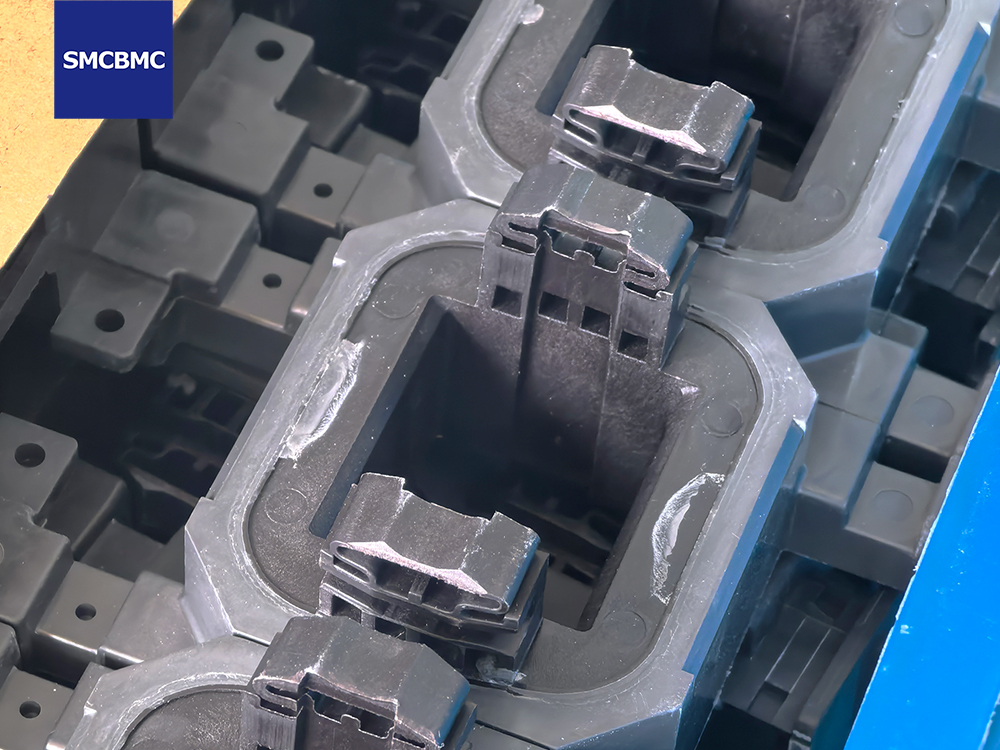
Glass fiber-reinforced BMC exhibits excellent resistance to UV degradation and environmental stress, maintaining structural integrity and surface stability over extended periods.
Smart meter housings must protect sensitive electronics from:
Installation impacts
Vibration
Mechanical loading from mounting systems
Polycarbonate provides high impact strength but may lose stiffness at higher temperatures.
BMC offers higher rigidity and load-bearing capability, making it suitable for structurally demanding installations where deformation must be minimized.
Polycarbonate is typically injection molded, allowing high production speed and complex geometries.
BMC is compression molded, offering:
Excellent dimensional consistency
Low shrinkage variability
Strong fiber orientation control
Stable batch-to-batch repeatability
For infrastructure-scale production, consistency and tolerance control often outweigh cycle speed advantages.
When evaluated purely on initial material and processing cost, Polycarbonate may appear advantageous.
However, over the full lifecycle of a smart meter — often 10–20 years — material stability influences:
Maintenance frequency
Replacement costs
Warranty exposure
System reliability
Brand reputation
In critical infrastructure, reliability frequently outweighs short-term savings.
Polycarbonate remains suitable for applications prioritizing impact resistance, transparency, or short-to-medium lifecycle use.
BMC becomes advantageous when the design requires:
Long-term dimensional stability
Structural rigidity under load
High flame retardancy
Resistance to thermal and environmental aging
Reduced risk of creep or deformation
For smart grid systems designed for decades of service, structural stability becomes a strategic material requirement.
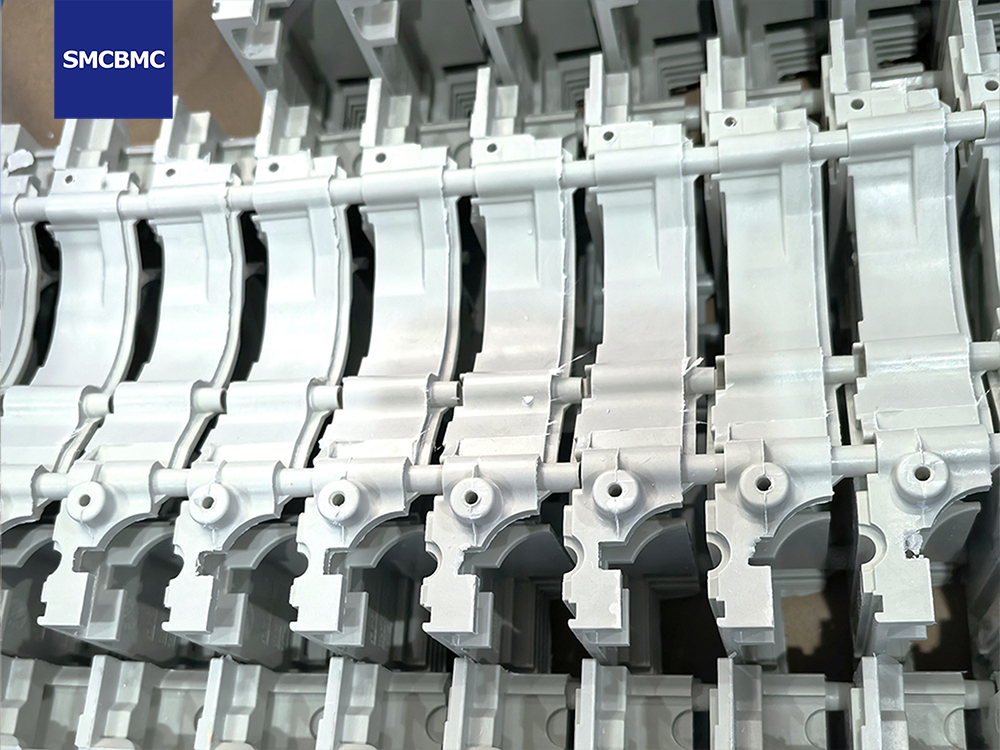
In modern energy infrastructure, enclosure materials do more than protect electronics — they safeguard data continuity, electrical safety, and operational trust.
The choice between BMC and Polycarbonate is not simply about material preference. It is about aligning material behavior with service expectations.
For long-term structural stability and predictable performance, thermoset composites offer a compelling advantage.
Wenzhou Jintong Complete Appliances Co., Ltd. specializes in high-performance BMC/SMC thermosetting composites, precision mold development, and compression molding of electrical and structural components.
We provide dimensionally stable, flame-retardant composite solutions for smart meter enclosures and energy infrastructure applications worldwide.