

Date | 2026-02-24 13:49:17
In modern energy infrastructure, smart meters are more than measurement devices.
They are long-term data nodes within critical grid systems.
Global energy technology leaders serving thousands of utilities worldwide rely on smart meters that must perform reliably for 10, 15, even 20 years — often under harsh environmental conditions.
While attention is typically focused on electronics, communication modules, and software platforms, one component quietly determines long-term performance:
The smart meter enclosure.
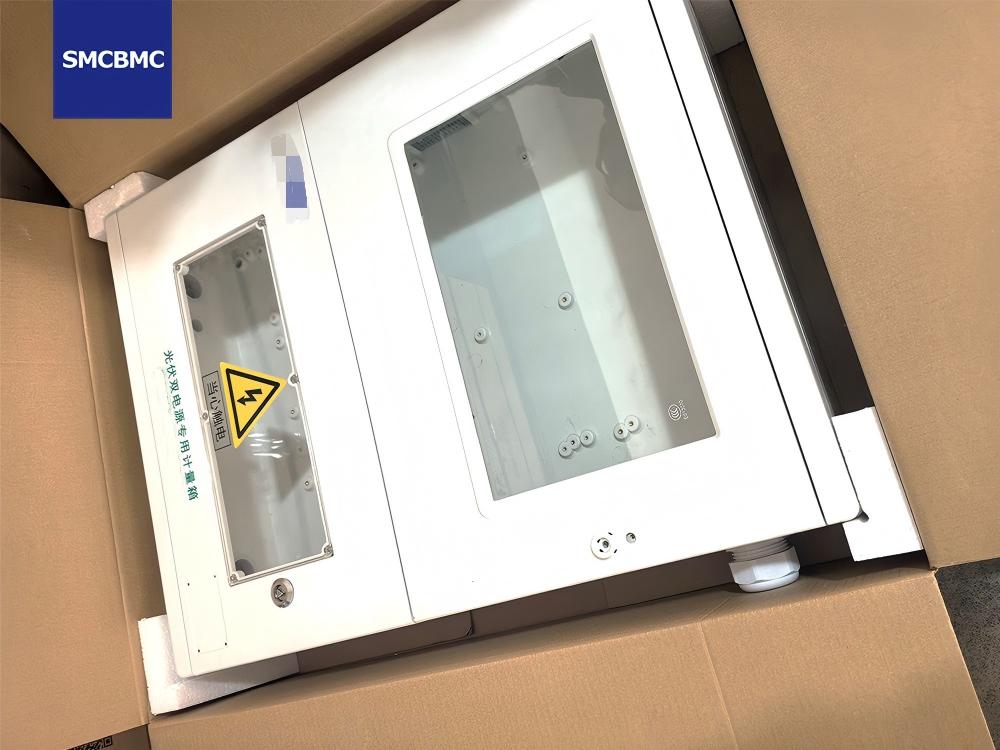
Unlike indoor consumer electronics, smart meters operate in environments where failure is not an option. Meter enclosures must withstand:
Continuous outdoor exposure
UV radiation
Temperature cycling
Humidity and condensation
Mechanical stress during installation
Long-term electrical load conditions
Fire safety compliance requirements
A compromised enclosure can lead to:
Reduced insulation performance
Seal failure and moisture ingress
Dimensional distortion affecting internal components
Safety and compliance risks
In critical infrastructure, reliability begins with structural integrity.
Many smart meter housings are manufactured from engineering thermoplastics due to cost and processing convenience. However, over long service periods, thermoplastics may experience:
Thermal deformation under prolonged heat exposure
Creep under mechanical load
UV degradation
Moisture absorption and dimensional swelling
Reduced mechanical stability over time
For short product lifecycles, these materials may perform adequately.
But for grid-level infrastructure designed for decades of service, long-term stability becomes the defining factor.
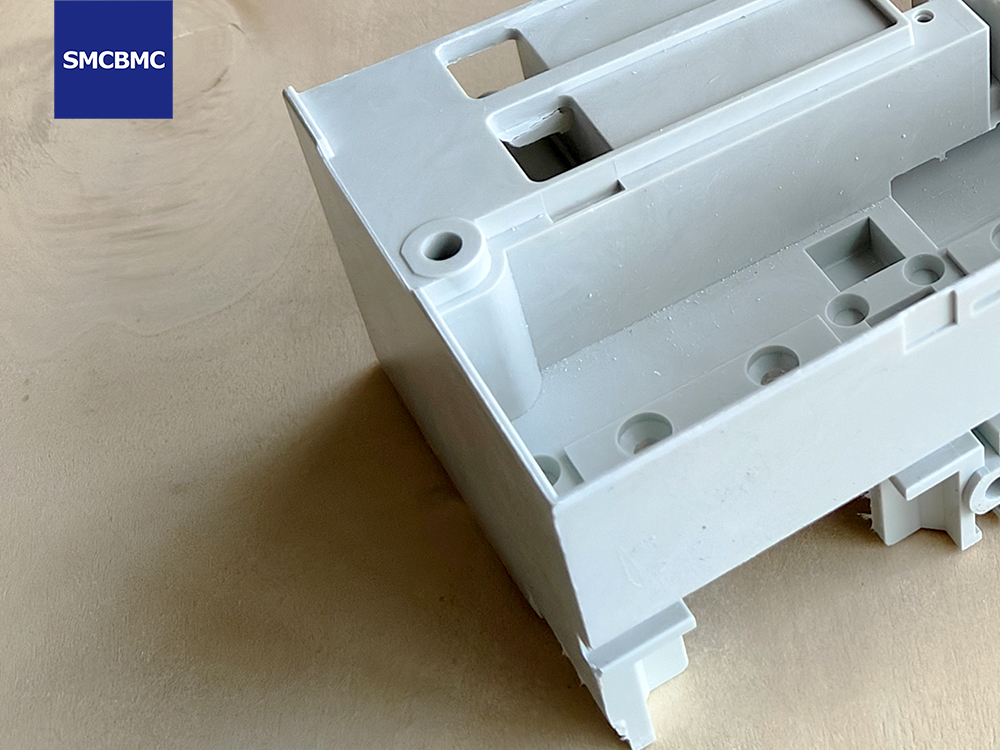
Bulk Molding Compound (BMC) offers a fundamentally different approach to smart meter enclosure design.
As a thermosetting composite reinforced with glass fibers and mineral fillers, BMC delivers:
Once cured, BMC does not soften or relax under elevated temperatures. This ensures the enclosure maintains precise geometry over years of operation.
BMC formulations can meet stringent fire safety standards required for energy metering equipment without relying on unstable additives.
Reduced expansion and contraction minimize internal stress on sensitive electronic assemblies.
BMC absorbs minimal moisture, reducing the risk of swelling or seal failure in humid or outdoor conditions.
The composite structure maintains structural integrity during installation, vibration, and long-term service.
Material properties alone do not guarantee performance.
At Wenzhou Jintong, smart meter enclosure components are developed through integrated control of:
Application-specific BMC formulation
Mold design optimized for shrinkage balance and fiber orientation
Controlled mold temperature uniformity
Stable compression molding parameters
This material–mold–process integration ensures:
Consistent dimensional accuracy
Low defect rates
Stable batch-to-batch performance
Reliable sealing interfaces
For energy infrastructure, repeatability is as important as performance.
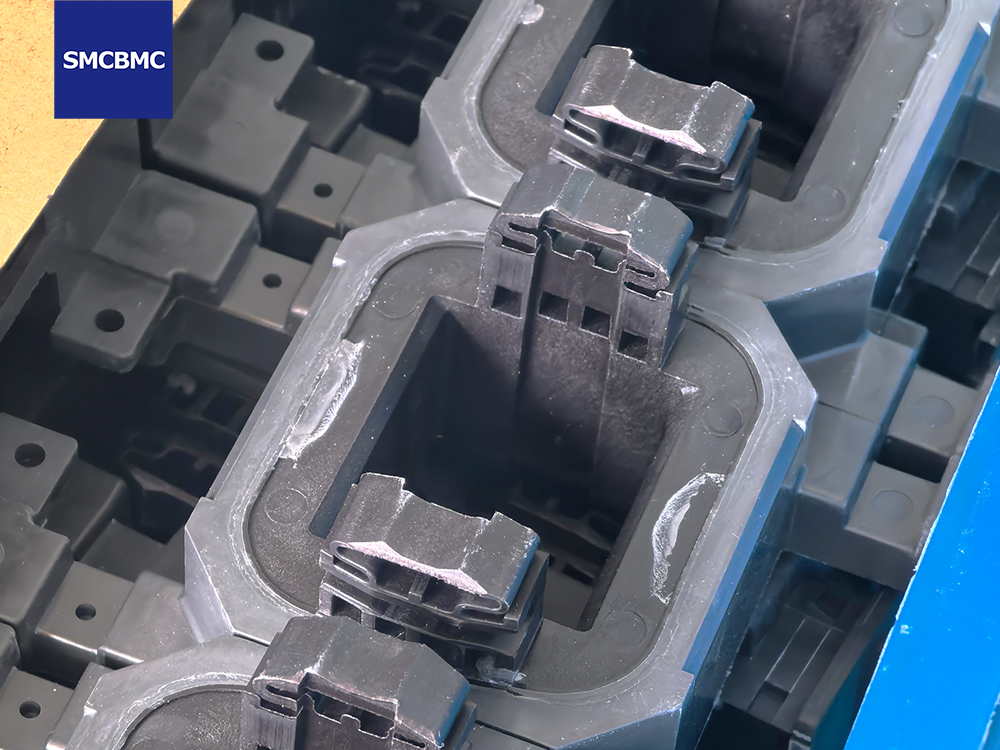
As utilities worldwide modernize grids and deploy advanced metering infrastructure (AMI), the expectations placed on smart meter hardware continue to rise.
Enclosures must not only protect electronics —
they must maintain integrity across decades of service.
BMC provides a material platform aligned with the needs of:
Smart grid deployment
Distributed energy systems
EV charging integration
Advanced metering systems
Utility-scale infrastructure
In critical energy systems, the enclosure is not just a shell.
It is a structural safeguard for data, safety, and long-term reliability.
Wenzhou Jintong Complete Appliances Co., Ltd. specializes in high-performance BMC/SMC thermosetting composites, precision mold development, and compression molding of electrical and structural components.
We provide dimensionally stable, flame-retardant composite solutions for smart meter enclosures, electrical insulation systems, and energy infrastructure applications worldwide.