

Date | 2026-02-27 15:45:37
In critical infrastructure, performance is not measured in months —
it is measured in decades.
Electrical distribution systems, smart metering networks, rail transit equipment, and industrial control platforms are designed for long service lives under continuous environmental and mechanical stress.
Under these conditions, the true engineering challenge is not peak strength.
It is stability over time.
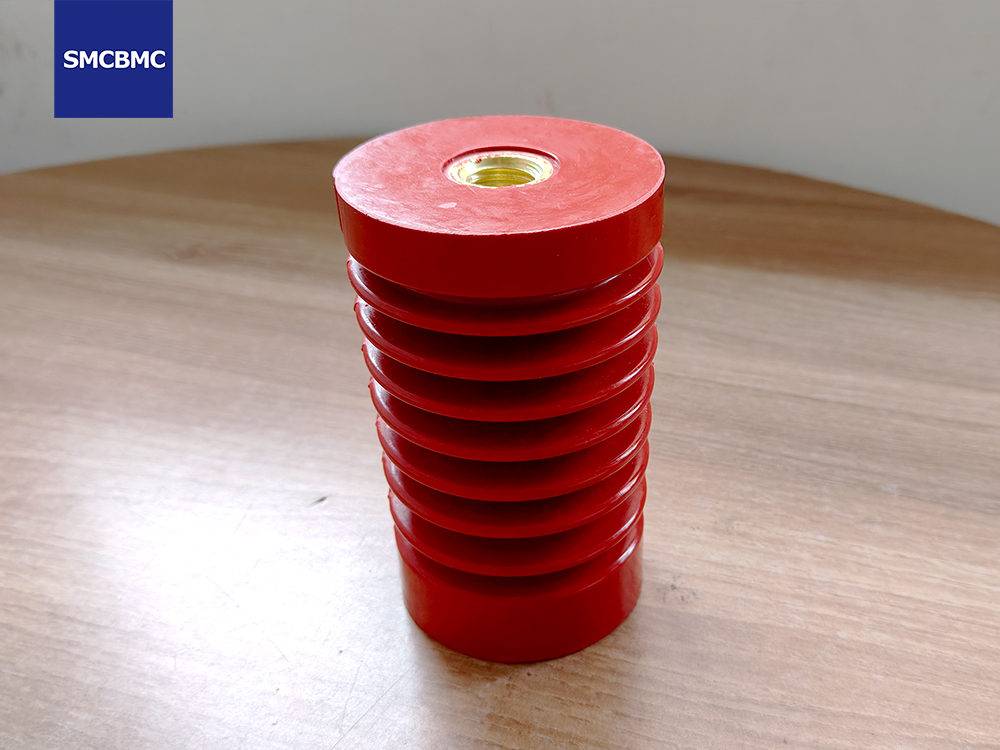
Many materials perform well in short-term mechanical tests:
High tensile strength
Good impact resistance
Certified flame retardancy
Yet infrastructure systems rarely fail due to insufficient strength on day one.
They fail due to:
Thermal cycling fatigue
Creep under constant load
Dimensional drift
Seal degradation
Gradual loss of assembly preload
In long-lifecycle systems, structural consistency outweighs peak performance metrics.
Infrastructure-grade stability requires a material to maintain:
Dimensional accuracy across temperature cycles
Mechanical rigidity under sustained stress
Electrical clearance integrity
Sealing precision over years of exposure
Resistance to humidity, UV, and environmental aging
Even minor deformation can compromise:
Creepage and clearance distances
Contact reliability
Fastener torque retention
Waterproof or dustproof performance
When systems become more compact and electrically dense, tolerance margins shrink — making stability even more critical.
Bulk Molding Compound (BMC) is a thermosetting composite reinforced with glass fibers and mineral fillers. Unlike thermoplastics, it forms a permanently crosslinked structure during curing.
This molecular stability translates into engineering advantages:
Low thermal expansion
Minimal creep under long-term load
High rigidity at elevated temperatures
Resistance to moisture-induced deformation
Stable shrinkage behavior during molding
Once cured, BMC does not soften, remelt, or relax — enabling reliable geometry retention across extended service life.
For infrastructure applications, predictability equals safety.
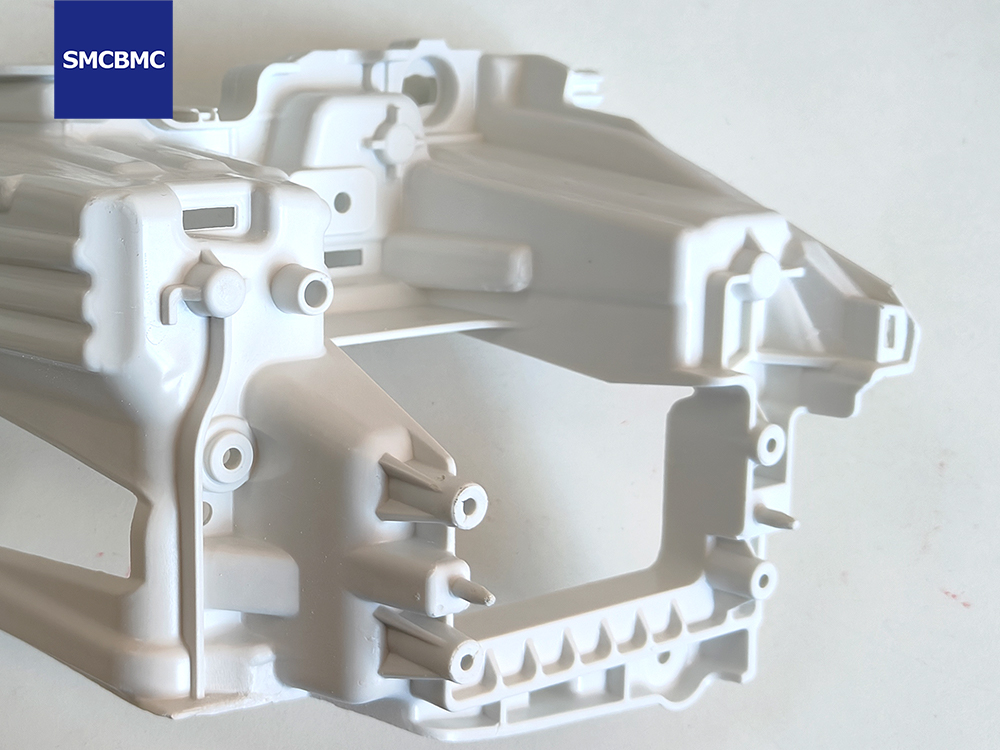
Engineering stability is the result of controlled interaction between:
Material formulation
Mold design
Fiber orientation
Temperature uniformity
Pressure and curing profile
At Wenzhou Jintong, stability is engineered through integrated material–mold–process control, ensuring that laboratory properties translate into production consistency.
This approach supports applications such as:
Smart meter enclosures
Motor insulation structures
Switchgear housings
Busbar supports
Rail electrical components
In these systems, the most important part is often the one that never moves.
Instability introduces hidden costs:
Assembly variation
Rework and scrap
Warranty claims
Field maintenance
Brand risk
In contrast, stable components reduce lifecycle uncertainty.
Infrastructure-grade stability is not an upgrade —
it is a requirement for long-term system integrity.
As global energy and transportation systems modernize, the demand for durable, low-maintenance materials continues to increase.
Engineering decisions must shift from:
“What performs best today?”
to
“What remains unchanged over time?”
BMC is not simply a composite material.
It is a structural solution engineered for stability in long-service infrastructure environments.
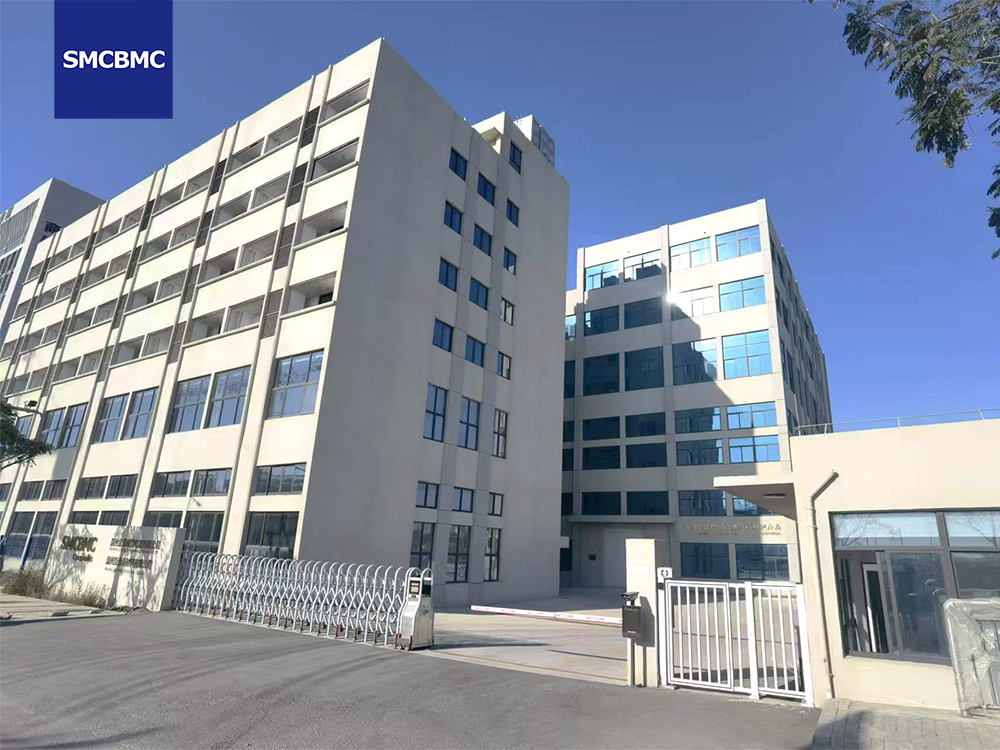
Wenzhou Jintong Complete Appliances Co., Ltd. specializes in high-performance BMC/SMC thermosetting composites, precision mold development, and compression molding of electrical and structural components.
We provide dimensionally stable, flame-retardant composite solutions for electrical insulation systems, smart grid equipment, rail transit applications, and industrial infrastructure worldwide.