

Date | 2026-02-28 08:26:30
Across electrical infrastructure, industrial equipment, and energy systems, one quiet shift is redefining engineering priorities:
Tolerance margins are shrinking.
Designs are becoming more compact.
Power density is increasing.
Integration levels are rising.
Regulatory standards are tightening.
In this new reality, materials are no longer evaluated only by strength or flame resistance —
they are evaluated by how consistently they maintain geometry over time.
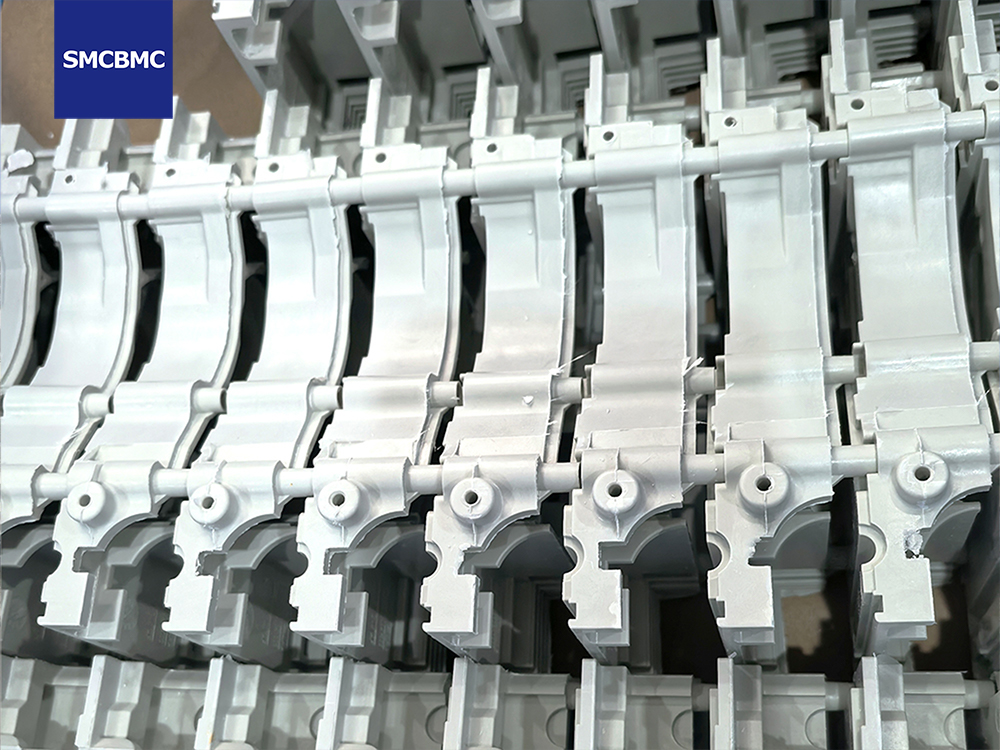
Modern systems demand:
Smaller enclosures
Thinner wall structures
Higher electrical density
Reduced weight
Integrated multi-functional components
In applications such as:
Smart meter enclosures
Switchgear housings
Motor insulation systems
Busbar supports
Rail electrical assemblies
millimeter-level dimensional shifts can compromise:
Creepage and clearance distances
Contact alignment
Seal integrity
Mechanical preload
Thermal dissipation paths
When design margins shrink, the cost of movement increases.
Most materials perform well under short-term testing.
The challenge appears after years of exposure to:
Thermal cycling
Continuous mechanical load
Vibration
Humidity and environmental aging
Internal heat from electronic components
Common long-term failure patterns include:
Creep under sustained load
Warpage from uneven thermal expansion
Moisture-induced swelling
Relaxation of fastening torque
These changes are often gradual and invisible — until they push a system beyond its safety threshold.
In compact systems, there is little room for dimensional drift.
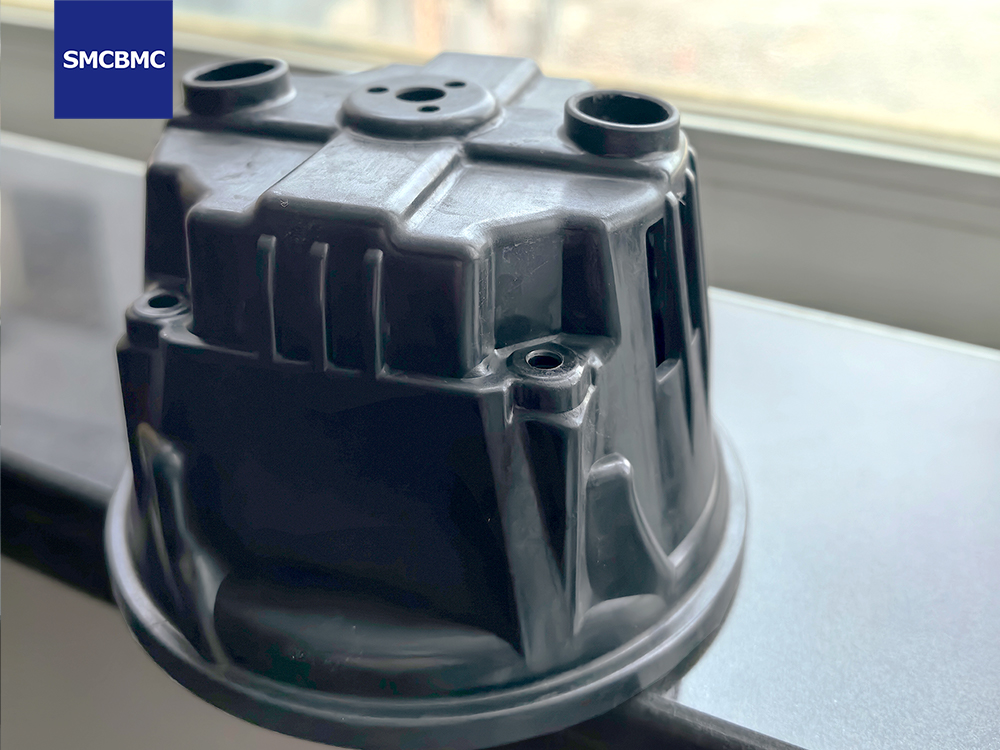
When tolerances tighten, material stability becomes directly linked to:
Electrical insulation performance
Long-term sealing reliability
Mechanical alignment
System lifespan
A component does not need to crack or burn to fail.
It only needs to move enough to exceed its allowable deviation.
In infrastructure-grade applications, predictable geometry over time is as critical as flame retardancy or mechanical strength.
Bulk Molding Compound (BMC) is a thermosetting composite reinforced with glass fibers and mineral fillers. Unlike thermoplastics, it forms a permanently crosslinked structure during curing.
This structural characteristic provides:
Low thermal expansion
High rigidity at elevated temperatures
Minimal creep under long-term load
Resistance to moisture-induced deformation
Stable shrinkage behavior during molding
Because BMC does not soften or remelt after curing, it maintains dimensional integrity even in high-temperature environments.
For compact, tolerance-sensitive designs, this predictability reduces system risk.
Material chemistry alone does not guarantee long-term dimensional consistency.
True stability results from coordinated control of:
Formulation design
Fiber orientation
Mold temperature uniformity
Pressure and curing profiles
Shrinkage compensation
At Wenzhou Jintong, stability is developed through integrated material–mold–process control, ensuring that real production parts maintain the tolerances defined in design.
When margins are narrow, manufacturing discipline becomes essential.
As electrification expands and systems become more intelligent, the mechanical room for error continues to shrink.
Future-ready designs must consider not only:
“What can this material withstand today?”
but also
“How will it behave after 10 or 20 years of service?”
In this context, material stability is no longer a secondary consideration.
It is a strategic engineering decision.
Shrinking tolerance margins demand materials that remain dimensionally stable under long-term stress.
In high-density electrical systems, the most valuable performance characteristic is not peak strength —
it is controlled, predictable behavior over time.
BMC is engineered for that consistency.
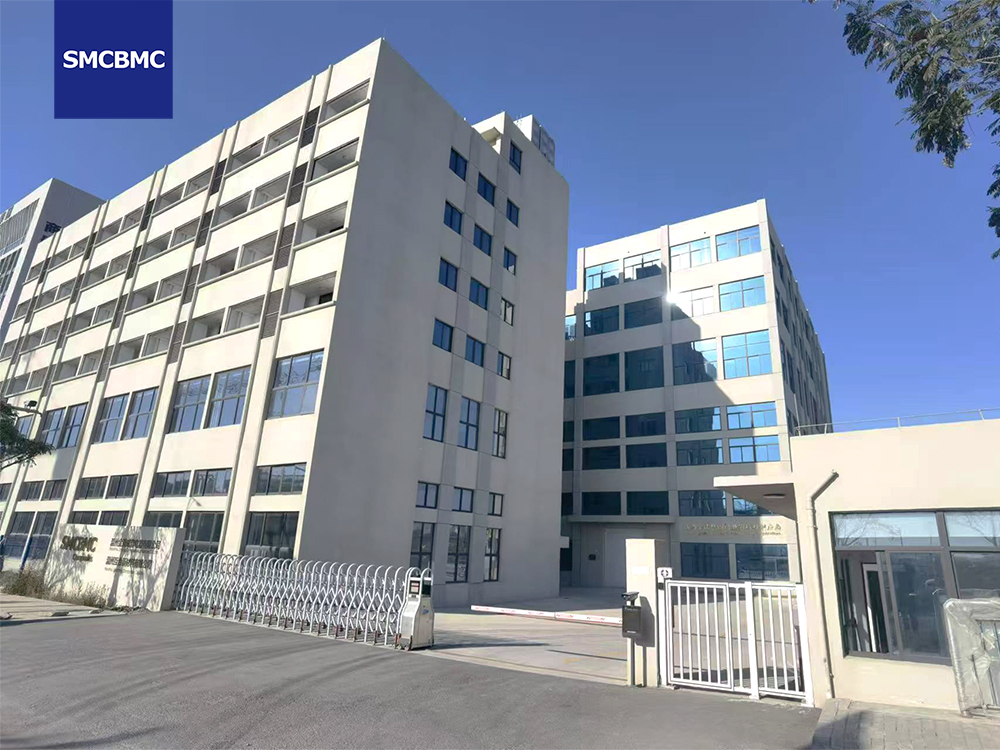
Wenzhou Jintong Complete Appliances Co., Ltd. specializes in high-performance BMC/SMC thermosetting composites, precision mold development, and compression molding of electrical and structural components.
We provide dimensionally stable, flame-retardant composite solutions for smart grid equipment, motor systems, switchgear housings, and infrastructure-grade electrical applications worldwide.