
Date | 2026-03-09 12:43:16
Electrical systems are designed with multiple layers of protection to ensure safe and reliable operation. Circuit protection devices, grounding systems, and insulation structures all work together to prevent electrical faults from becoming safety hazards.
Among these elements, insulation materials play a fundamental but often overlooked role. While electrical engineers focus heavily on circuit design and electronic components, the materials used to support and isolate conductive parts are equally critical to long-term safety.
From smart meters and motor systems to switchgear and power distribution equipment, insulation components must perform reliably for years under demanding conditions.
At a basic level, insulation materials prevent unwanted electrical contact between conductive components.
However, in real-world applications insulation must also maintain:
Creepage distance stability
Arc resistance
Thermal endurance
Mechanical support
Fire safety performance
Even small material changes can affect electrical safety margins. Deformation, moisture absorption, or thermal aging may reduce insulation effectiveness over time.
This is why the selection of insulation materials is a key engineering decision in electrical equipment design.
To ensure safe operation over long service life, insulation components must satisfy several critical requirements.
Insulation materials must withstand electrical stress without breakdown, maintaining reliable separation between live components.
A high CTI rating indicates strong resistance to surface tracking, which can occur when electrical current forms a conductive path across the surface of a material.
Electrical systems must comply with strict fire safety standards. Materials used in electrical equipment typically require UL94 V-0 flame retardant performance to prevent fire propagation.
Heat generated during electrical operation can weaken some materials over time. Insulation components must maintain structural integrity even under elevated temperatures.
Humidity and condensation can degrade insulation performance. Materials with low moisture absorption help maintain consistent electrical properties.
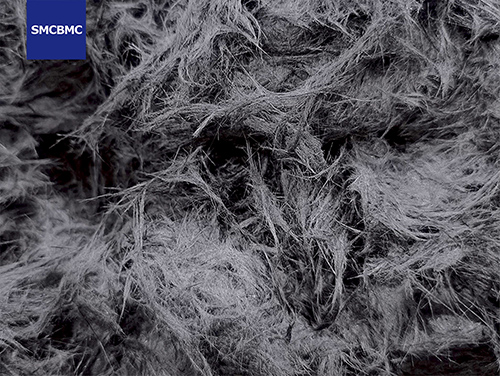
In many electrical applications, thermoset composite materials such as BMC (Bulk Molding Compound) are widely used for insulation structures.
Unlike thermoplastics, thermoset materials cure into a permanently crosslinked structure that does not soften when reheated. This provides several advantages in electrical systems.
BMC materials offer:
Excellent dielectric properties
High CTI ratings
UL94 V-0 flame retardancy
Low moisture absorption
Strong dimensional stability
High mechanical strength
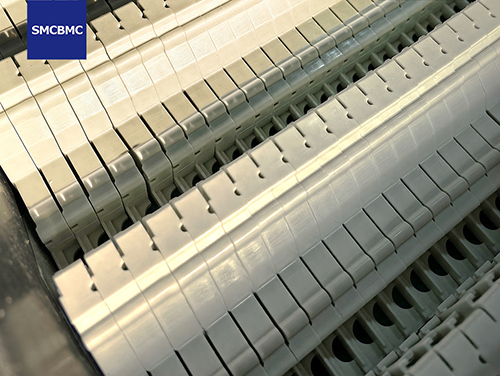
These characteristics make BMC particularly suitable for components such as:
Smart meter structures
Motor terminal boards
Busbar supports
Switchgear insulation parts
Electrical enclosures
Electrical safety is not only about preventing immediate failure. It is also about maintaining protection throughout the entire service life of the equipment.
Over time, environmental exposure, thermal stress, and mechanical loads can affect material properties. Materials that creep, warp, or absorb moisture may gradually reduce insulation performance.
Stable composite materials help ensure that electrical safety margins remain consistent even after years of operation.
As electrical systems become more compact and power densities increase, the role of insulation materials becomes even more critical.
Proper material selection helps manufacturers design products that are:
safer
more reliable
longer lasting
In modern electrical engineering, insulation materials are not just passive components — they are an essential part of system safety.
Wenzhou Jintong Complete Appliances Co., Ltd. specializes in BMC and SMC thermoset composite materials, mold development, and compression molding of electrical insulation components.
Our products are widely used in electrical equipment, smart energy systems, motors, rail transit, and industrial applications where reliability and safety are essential.