

Date | 2026-03-10 07:36:24
In electrical engineering, equipment failures are often attributed to overloaded circuits, faulty electronics, or external environmental conditions.
However, in many real-world cases, failures do not begin with electrical design or system architecture. They start much earlier — at the material level.
The materials used in structural and insulation components play a fundamental role in determining how electrical equipment performs over time. When materials degrade, deform, or lose stability, the reliability of the entire system can be compromised.
Understanding this relationship between materials and long-term reliability is becoming increasingly important as electrical systems become more compact, powerful, and integrated.
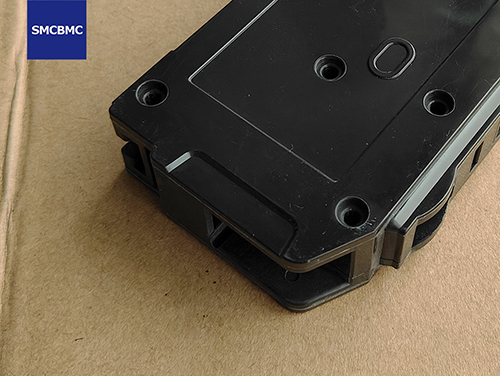
Electrical equipment rarely fails suddenly without warning. In most cases, failure develops gradually as materials respond to long-term stress.
Over years of operation, electrical components are exposed to conditions such as:
Thermal cycling
Mechanical vibration
Electrical stress
Humidity and condensation
UV exposure
Continuous mechanical load
These environmental and operational factors can slowly change the properties of materials used inside the equipment.
As materials degrade, several issues may begin to appear:
Dimensional deformation
Loss of insulation performance
Reduced mechanical strength
Increased contact resistance
Structural misalignment of electrical components
These changes may initially seem minor, but over time they can lead to serious system failures.
Inside electrical equipment, many components serve both structural and electrical functions.
Examples include:
terminal boards
insulation supports
electrical enclosures
busbar supports
meter structures
These components must not only isolate electrical conductors but also maintain precise mechanical positioning.
If materials lose dimensional stability or creep under load, the resulting structural changes can affect:
electrical clearances
creepage distances
connection pressure
heat dissipation paths
This is why material stability is often a key factor in long-term system reliability.
Several common failure mechanisms in electrical equipment are directly related to material performance.
Some plastics soften or relax under continuous heat exposure. Over time this can cause components to warp or lose their designed geometry.
Materials under constant stress may gradually deform, especially at elevated temperatures.
This can reduce the clamping force of electrical connections and increase resistance.
Certain materials absorb moisture from the environment. This may cause swelling, dimensional drift, or reduced insulation performance.
Under high voltage and contamination conditions, surface tracking can occur, eventually creating conductive paths across the material surface.
Materials with poor tracking resistance are particularly vulnerable in outdoor electrical systems.
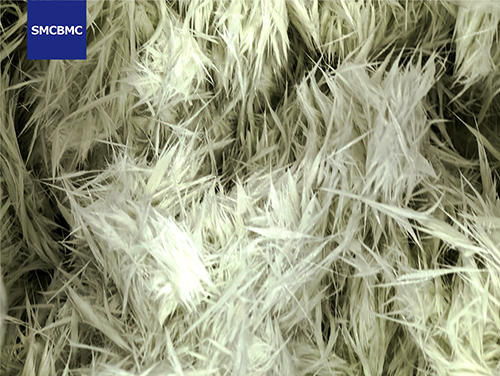
Preventing these issues begins with selecting materials designed for long-term stability under electrical operating conditions.
For many electrical components, thermoset composites such as BMC (Bulk Molding Compound) are widely used because they offer a combination of properties difficult to achieve with standard thermoplastics.
BMC materials provide:
high dielectric strength
strong resistance to electrical tracking
excellent flame retardancy (UL94 V-0)
low moisture absorption
superior dimensional stability
good resistance to thermal deformation
These properties help ensure that electrical insulation structures maintain their performance throughout long service lifetimes.
As electrical systems continue to evolve toward higher power density, compact designs, and longer service life expectations, the importance of material engineering will continue to grow.
In many cases, improving reliability does not require redesigning the entire electrical system. Instead, it begins with selecting materials that maintain stable mechanical and electrical properties over time.
In modern electrical equipment, reliability is not determined only by electronics or circuit design.
Very often, it starts with the materials that hold the system together.
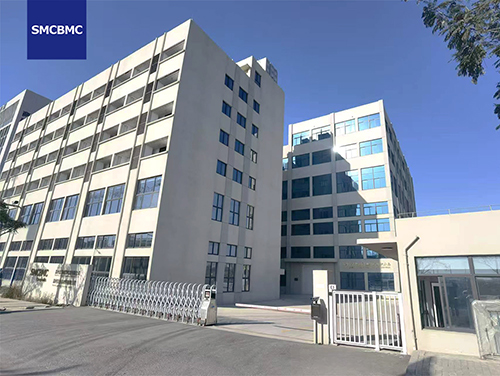
Wenzhou Jintong Complete Appliances Co., Ltd. specializes in BMC and SMC thermoset composite materials, precision mold design, and compression molding of electrical insulation components.
Our materials and molded parts are widely used in electrical equipment, smart energy systems, motors, rail transit, and industrial applications where long-term reliability and electrical safety are critical.