

Date | 2026-03-23 12:47:41
Beneath every modern city lies a hidden network—cable trenches, power tunnels, and utility corridors. These underground systems carry electricity and communication signals, forming the lifelines of urban infrastructure.
Compared to above-ground installations, underground environments are far more demanding:
High humidity and water exposure
Corrosive gases and chemicals
Confined installation spaces
Strict fire safety requirements
In such conditions, traditional materials—especially metals—are reaching their limits. This is where Bulk Molding Compound (BMC) is emerging as a superior alternative.
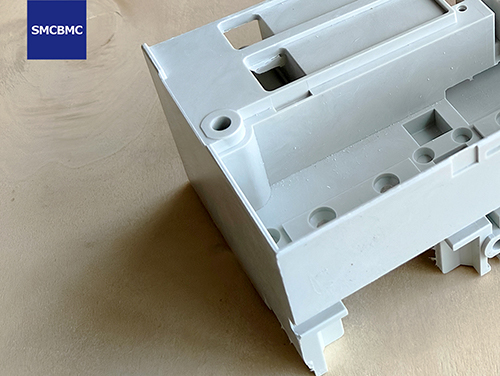
Electrical components used in cable trenches and tunnels must withstand extreme conditions over long service periods.
Underground spaces are constantly exposed to humidity, and often water accumulation.
Even with protective coatings, metal components:
Corrode over time
Lose structural strength
Increase maintenance costs
Limited space makes installation and maintenance difficult.
Heavy components:
Increase labor intensity
Raise safety risks
Slow down construction efficiency
Fires in underground environments are particularly dangerous due to:
Limited evacuation paths
Rapid smoke accumulation
Materials must offer:
Flame retardancy
Low smoke emission
No dripping during combustion
Underground systems are designed for 20–30 years of operation with minimal maintenance.
Material failure leads to:
High replacement costs
Service interruptions
As a thermosetting composite, BMC offers a unique combination of properties that directly address these challenges.
BMC is inherently resistant to:
Moisture
Acids and alkalis
Salt and chemical exposure
Unlike metal, it:
Does not rust
Requires no anti-corrosion coating
Maintains performance over decades
BMC can achieve UL94 V-0 rating, offering:
No flame propagation
No molten dripping
Low smoke emission
This significantly improves safety in confined underground environments.
With a density of 1.7–2.0 g/cm³, BMC is:
Up to 60% lighter than steel
Easier to transport and install
Safer for confined-space operations
BMC forms a cross-linked structure after curing, providing:
Low thermal expansion
Minimal moisture absorption
Long-term shape stability
This ensures components maintain:
Structural integrity
Electrical clearance
Mechanical reliability
BMC is naturally insulating, eliminating the need for:
Additional insulation layers
Coatings that degrade over time
This simplifies design and enhances long-term reliability.
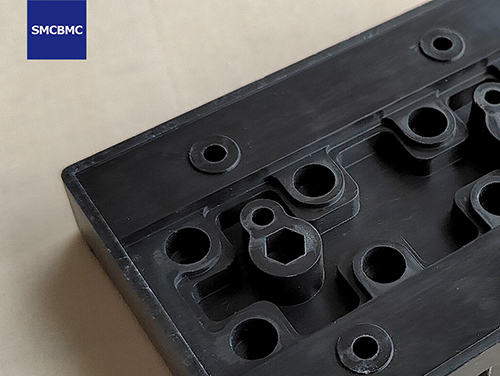
Traditional metal brackets corrode easily, while plastics may lack strength.
BMC brackets offer:
High mechanical strength
Corrosion resistance
Long service life without replacement
Additionally, their insulating properties reduce eddy current losses.
BMC cable trays provide:
Lightweight structure
Excellent durability
Superior flame resistance
Compared to alternatives:
No corrosion like metal
Better strength and aging resistance than standard plastics
Lighting systems in tunnels must withstand:
Moisture
Vibration
Temperature variations
BMC covers deliver:
Stable dimensions
Strong impact resistance
Long-term sealing performance
BMC manhole covers combine:
High load-bearing capacity
Lightweight design
Corrosion resistance
Zero scrap value (anti-theft advantage)
They are an ideal replacement for cast iron covers.
Installed in confined, humid environments, BMC enclosures provide:
Integrated molding (fewer joints)
Improved sealing performance
Electrical insulation and corrosion resistance
Material performance alone is not enough.
Different underground environments require tailored solutions:
Coastal areas → salt spray resistance
Chemical zones → chemical stability
High groundwater → waterproof performance
At Wenzhou Jintong Complete Equipment Co., Ltd., we provide:
Adjusting:
Resin systems
Fiber content
Additives
To meet specific environmental and performance requirements.
Optimized for:
Material flow behavior
Shrinkage control
Embedded metal integration
Strict control of:
Temperature (±5°C)
Pressure
Curing cycles
Ensuring consistent quality across batches.
As cities continue to expand and modernize, underground infrastructure is becoming increasingly critical.
The demand is shifting toward materials that offer:
Long-term reliability
Low maintenance
High safety standards
BMC composites are moving from above-ground applications into underground systems, proving to be a reliable, efficient, and future-ready solution.
If you are looking for durable and reliable materials for:
Cable trenches
Power tunnels
Utility corridors
We are ready to support your projects with engineered BMC/SMC solutions.
📧 wendy.qiu@smcbmc.com
📞 +8613868305300