

Date | 2026-03-20 07:40:59
During China’s 2026 “Two Sessions,” the development of a new power system once again became a national priority. Government directives are clear: accelerate smart grid deployment, expand renewable energy integration, and scale up energy storage.
By 2030, China aims to establish a modern grid architecture where:
Backbone transmission networks form the foundation
Distribution networks provide flexibility
Smart microgrids act as intelligent supplements
Renewable energy accounts for ~30% of total generation
While most attention is focused on solar capacity, wind farms, and battery storage, a fundamental question is often overlooked:
What materials will support this entire infrastructure?
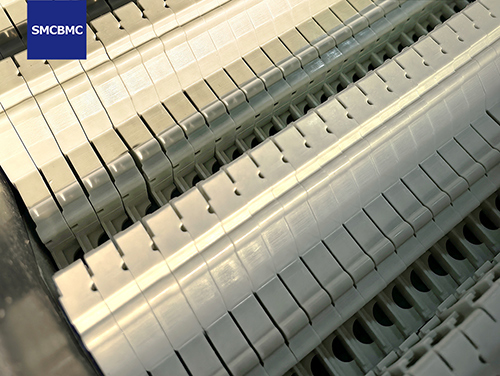
As power systems evolve, the challenge is no longer just scale—but stability under complexity.
High penetration of renewable energy introduces:
Voltage fluctuations
Power intermittency
Frequent load adjustments
This fundamentally changes operating conditions for electrical equipment.
Frequent thermal cycling and electrical stress accelerate:
Deformation
Creep
Material fatigue
Traditional plastics often fail under long-term dynamic loads.
Urban grid upgrades and distributed energy systems require:
Smaller equipment footprints
Higher integration density
This leaves minimal tolerance for dimensional deviation, making material stability critical.
Grid infrastructure is expected to operate for 20+ years, often in harsh outdoor environments.
Short-term performance is no longer enough—long-term reliability defines true value.
Bulk Molding Compound (BMC), a thermosetting composite, is emerging as a key enabling material for modern power systems.
Unlike metals, BMC provides built-in insulation, eliminating:
Secondary insulation layers
Complex assembly processes
This simplifies design and improves system reliability.
With a cross-linked molecular structure, BMC offers:
Low thermal expansion
Minimal moisture absorption
Stable geometry from -40°C to 150°C
This ensures long-term compliance with electrical clearance requirements.
BMC naturally delivers:
UV resistance
Corrosion resistance
UL94 V-0 flame retardancy
Ideal for outdoor applications such as:
Distribution boxes
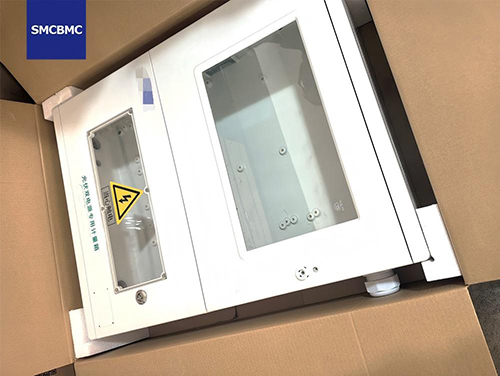
Meter enclosures
Renewable energy systems
With a density of only 1.7–2.0 g/cm³, BMC enables:
30–50% weight reduction vs. metal
Easier installation
Lower transportation costs
Based on years of industry experience, BMC is widely used in:
Transformer insulation blocks
Busbar barriers
Structural insulating supports
These components ensure mechanical stability and arc resistance under high stress.
Smart meter enclosures
Outdoor distribution boxes
Cable branch cabinets
BMC ensures 20+ years of stable operation in outdoor conditions.
PV inverter housings
EV charging system components
These applications demand:
Heat resistance
Flame retardancy
Long-term durability
Material performance alone is not enough.
To fully realize BMC’s advantages, integration across three domains is essential:
Material formulation
Mold design
Molding process control
At Wenzhou Jintong Complete Equipment Co., Ltd., we provide a fully integrated solution:
Tailored resin systems and filler ratios to meet:
Electrical performance
Thermal stability
Mechanical strength
Designed based on:
Flow behavior
Shrinkage characteristics
Ensuring:
High dimensional accuracy
Batch consistency
Strict control of:
Mold temperature (±5°C uniformity)
Pressure profiles
Curing cycles
To convert material properties into reliable product performance at scale.
The transition to a new power system is not just about energy—it’s about infrastructure reliability.
While the world focuses on megawatts and gigawatts, the true foundation lies in:
Insulation blocks inside transformers
Enclosures protecting smart meters
Structural components inside switchgear
These “invisible components” determine whether systems run safely for decades.
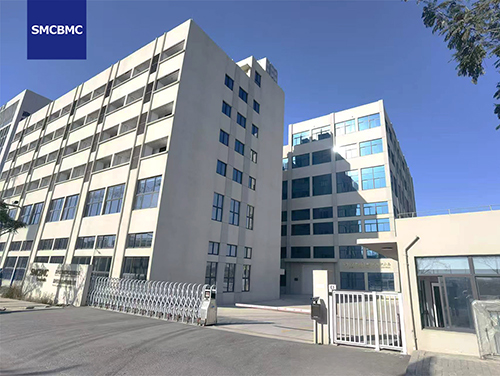
At Wenzhou Jintong Complete Equipment Co., Ltd., we specialize in:
BMC/SMC thermosetting composites
Precision molding solutions
Electrical insulation components
If you're developing equipment for:
Smart grids
Renewable energy
Power distribution systems
We’re ready to help you turn material science into long-term reliability.
📧 wendy.qiu@smcbmc.com
📞 +8613868305300