

Date | 2026-04-02 12:52:42
In engineering, material selection often follows habit.
“We’ve always used this.”
“It performs well on the datasheet.”
“Everyone else is using it.”
These are common justifications—but rarely fundamental ones.
When we step back and ask a more basic question:
What problem is the material actually solving?
many conventional choices begin to lose their certainty.
This is where first-principles thinking becomes valuable—stripping away assumptions and returning to the fundamental physics and chemistry that define material behavior.
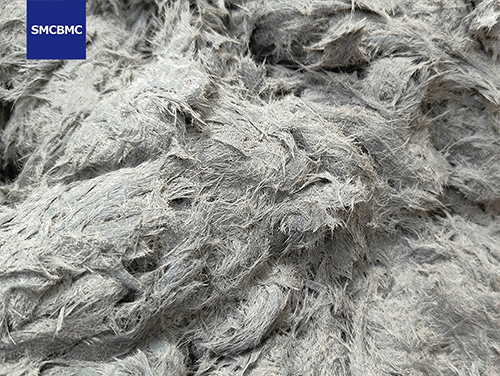
First-principles thinking requires us to ignore convention and start from the core:
What role does this component play in the system?
What stresses will it experience?
In what environment will it operate?
How long must it perform reliably?
For structural and insulation components in electrical systems, the answers typically converge on a few essential requirements:
Long-term electrical insulation reliability
Dimensional stability
Resistance to environmental degradation
Fire safety under fault conditions
At their core, these requirements demand one thing:
Stability over time.
Not static behavior—but consistent performance under thermal, mechanical, electrical, and environmental stress over decades of service.
When material selection is examined from first principles, the answer often lies at the molecular level.
Engineering thermoplastics such as PA, PC, and PBT consist of linear or lightly branched molecular chains.
This structure provides:
Good processability
High toughness
But it also introduces inherent limitations:
Molecular chains can move under heat → softening and creep
Long-term stress leads to chain rearrangement → stress relaxation
Moisture absorption increases chain spacing → swelling and distortion
These are not defects—they are fundamental characteristics of linear polymer systems.
In short-term applications, they may be acceptable.
In 20+ year electrical systems, they become risk factors.
Bulk Molding Compound (BMC) is fundamentally different.
As a thermosetting composite, it forms a three-dimensional crosslinked network during curing. Once formed, this structure is irreversible:
Molecular chains are locked in place
No remelting under heat
No long-term molecular rearrangement
Minimal response to moisture
From a first-principles perspective, BMC represents a system engineered to resist structural change over time.
Returning to engineering fundamentals, electrical components do not simply require strength or insulation at a single point in time.
They require consistency over decades.
A component may meet all mechanical requirements at production.
But if it:
Warps under thermal cycling
Creeps under sustained load
then electrical clearances and mechanical integrity gradually deviate from design intent.
This is not immediate failure—it is a slow loss of reliability.
Many materials rely on flame-retardant additives that may:
Migrate over time
Degrade under heat
Lose effectiveness with aging
BMC, by contrast, achieves flame resistance through its inherent composition—mineral fillers and crosslinked structure—providing stable, long-term fire performance without dependence on additives.
Electrical insulation failure often begins with:
Tracking
Surface degradation
Carbonization pathways
BMC’s high CTI performance and low moisture absorption directly address these long-term risks.
Engineering is fundamentally about managing uncertainty.
We cannot predict:
Exact thermal cycles
Vibration intensity
Environmental exposure
But we can choose materials that resist these variables.
The value of BMC is not defined by a single superior property, but by its consistently high performance baseline:
Does not soften under heat
Resists creep under long-term load
Maintains dimensional stability in humid environments
Does not drip or propagate flame under fire conditions
These characteristics define a material that delivers predictable behavior over time.
And predictability is the foundation of reliability.
When material selection is approached from first principles, several important insights emerge:
A component lasting 30 years is inherently more economical than one requiring replacement after 10.
Laboratory data is valuable—but long-term field stability defines true performance.
The question is not “What has been used before?”
but “What material best matches the fundamental requirements of this application?”
Material selection is not about choosing what is “better,”
but what is more fundamentally appropriate.
From a first-principles perspective, BMC is not simply an alternative to traditional materials—it is a material system whose molecular structure, thermal behavior, and long-term stability align closely with the core demands of electrical engineering.
Its crosslinked network resists time.
Its inherent flame resistance enhances safety.
Its dimensional stability preserves design intent.
In an uncertain world, choosing materials that deliver certainty may be the most engineering-driven decision of all.
Wenzhou Jintong Complete Electrical Co., Ltd. specializes in high-performance BMC/SMC thermosetting composites, precision mold design, and compression molding of critical components.
We provide reliable material and component solutions for electrical systems, new energy vehicles, rail transit, and industrial applications worldwide.