

Date | 2026-04-03 09:20:12
Extreme weather is no longer an exception — it is becoming the new baseline.
From heatwaves exceeding 45°C to winter storms causing widespread outages, and from coastal humidity to typhoon-driven rainfall, outdoor electrical infrastructure is operating under increasingly severe environmental stress.
For equipment designed to last 10–20 years, the question is no longer whether extreme conditions will occur —
but whether the material can endure them consistently over time.
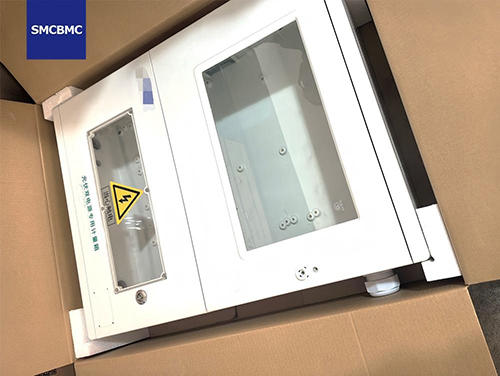
Under direct sunlight, outdoor electrical enclosures can reach internal temperatures above 80°C.
For many conventional engineering plastics, prolonged exposure to heat leads to:
Thermal deformation
Material aging
Loss of sealing integrity
Gradual decline in insulation performance
Failures rarely occur instantly.
Instead, they develop slowly — a slight deformation leads to seal failure, moisture ingress, and eventually internal damage.
Bulk Molding Compound (BMC), as a thermoset composite, forms a permanently crosslinked structure after curing.
This structure ensures:
No softening or melting under heat
Heat distortion resistance above 200°C
Stable geometry under prolonged thermal exposure
Even under extreme summer conditions, BMC enclosures maintain structural integrity and continue to protect internal components reliably.
Extreme cold introduces a different set of challenges:
Brittle fracture in low-temperature conditions
Condensation caused by rapid temperature changes
Moisture accumulation leading to insulation risks
These issues are especially critical in power transmission systems and outdoor metering devices.
Very low moisture absorption (typically ≤0.2%)
Reduced risk of internal condensation damage
Low coefficient of thermal expansion (CTE)
Stable performance across a wide temperature range (-40°C to 150°C)
BMC resists cracking and dimensional drift even under repeated thermal cycling.
In coastal and high-humidity environments, materials face continuous exposure to:
Moisture
Salt particles
Chemical corrosion
These conditions can lead to:
Metal corrosion
Swelling of hygroscopic plastics
Seal degradation
BMC materials exhibit strong resistance to:
Water absorption
Hydrolysis
Salt spray corrosion
Chemical exposure (acids and alkalis)
For example, hydrolysis-resistant BMC formulations are specifically designed for water treatment systems and coastal applications, making them well-suited for:
Smart meter enclosures
Outdoor distribution boxes
EV charging infrastructure
Extreme weather events such as storms and typhoons combine:
Mechanical impact (wind, debris)
Continuous heavy rainfall
Outdoor enclosures must meet strict protection standards, typically:
IP54 minimum
IP65 or higher for high-risk environments
High mechanical strength and rigidity
Resistance to impact and cracking
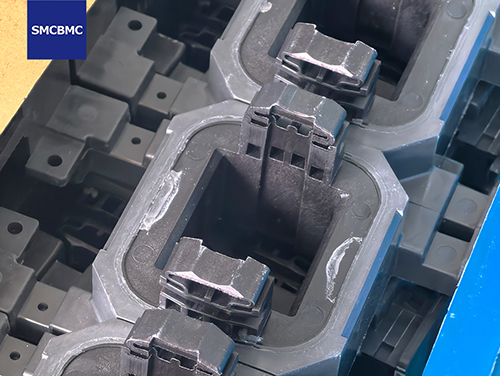
One-piece molding capability, reducing joints and leakage points
Improved sealing reliability through precision mold design
These characteristics allow BMC enclosures to maintain protection even under severe weather conditions.
To address diverse outdoor challenges, different BMC formulations are developed for specific environments:
Hydrolysis-Resistant BMC Series
Optimized for high humidity and chemically aggressive environments
Flame-Retardant Electrical Grade BMC
Capable of achieving V-0 at thin wall thickness (e.g., 0.4 mm), with excellent dimensional stability
High-Temperature BMC Grades
Continuous operating temperatures ≥170°C, suitable for high-heat applications such as inverters and charging systems
General-Purpose Structural BMC
Balanced mechanical strength for a wide range of outdoor applications
Material performance alone does not guarantee reliability.
To fully realize the benefits of BMC, performance must be supported by:
Application-specific material formulation
Precision mold design
Controlled compression molding processes
At Wenzhou Jintong, we integrate:
Material development
Mold engineering
Component manufacturing
to ensure:
Consistent dimensional accuracy
Stable mechanical performance
Reliable long-term field behavior
Extreme weather is no longer a rare event — it is a design condition.
Outdoor electrical equipment must now withstand:
Heat
Cold
Moisture
Mechanical stress
over extended service lifetimes.
In this context, material selection is no longer a cost-driven decision —
it is a reliability-driven one.
BMC addresses these challenges through inherent stability:
No softening under heat
Minimal moisture absorption
Resistance to creep and deformation
Stable performance across environmental extremes
In critical infrastructure, reliability is not defined by peak performance,
but by the ability to remain unchanged over time.
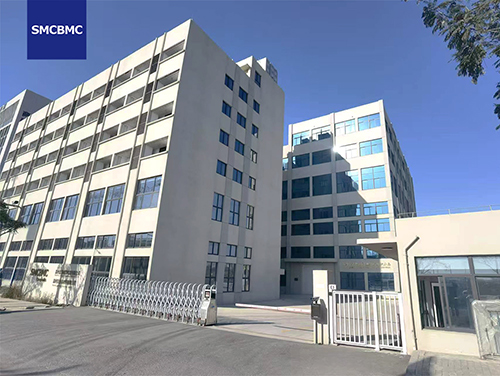
Wenzhou Jintong Complete Electrical Co., Ltd. specializes in high-performance BMC/SMC thermosetting composites, precision mold development, and compression molding.
We provide durable, weather-resistant component solutions for electrical equipment, new energy infrastructure, and industrial applications worldwide.