

Date | 2026-04-08 10:00:54
The global rollout of 5G networks is reshaping wireless infrastructure at an unprecedented pace. Compared to 4G, 5G operates at higher frequencies (Sub-6 GHz and millimeter wave bands), with shorter transmission distances and weaker penetration capabilities. As a result, antenna systems must become more integrated, more precise, and more performance-sensitive.
In this transformation, one often-overlooked component plays a critical role — the radome.
A radome must protect the antenna system from harsh environmental conditions while allowing electromagnetic waves to pass through with minimal loss. In 5G applications, this dual requirement becomes significantly more demanding.
This is where BMC (Bulk Molding Compound) emerges as a compelling material solution.
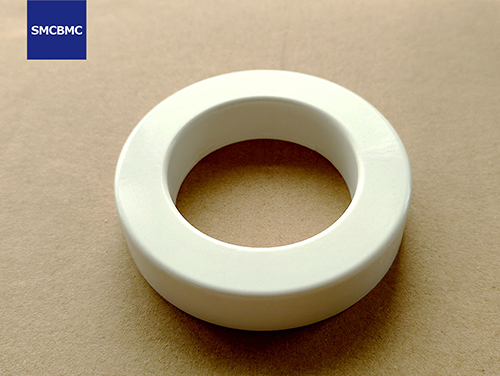
Compared to traditional base stations, 5G radomes must meet a more complex set of performance criteria:
High-frequency signals are highly sensitive to material properties.
High Dk reduces signal transmission efficiency
High Df increases signal attenuation
An ideal radome material should achieve:
Dk ≤ 3.0
Df ≤ 0.005 (at high frequencies such as 28 GHz)
Just as importantly, these properties must remain stable across temperature and humidity variations.
Outdoor deployment exposes radomes to:
UV radiation
Temperature cycling
Rain, snow, and humidity
Salt fog in coastal regions
Materials must maintain performance over 10–20 years without degradation.
Radomes must withstand:
Wind loads
Impact (hail, debris)
Thermal expansion and contraction
Even small deformations can compromise sealing, alignment, and long-term reliability.
As part of critical infrastructure, radomes must meet UL94 V-0 flame retardancy standards to ensure fire safety.
With the adoption of MIMO (Multiple Input Multiple Output) technology, antenna density increases significantly.
Lightweight materials help:
Reduce tower load
Simplify installation
Improve structural safety
BMC is a thermosetting composite made from unsaturated polyester resin, chopped glass fibers, mineral fillers, and performance additives. Once cured, it forms a permanent crosslinked structure — a key advantage over thermoplastics.
Through formulation design, BMC can achieve:
Low dielectric constant
Low dielectric loss
Unlike standard plastics such as PC, BMC allows application-specific tuning of electromagnetic properties.
BMC offers:
UV resistance
Moisture resistance
Salt fog resistance
Thermal stability
This makes it highly suitable for long-term outdoor deployment.
As a thermoset material, BMC does not soften or creep under heat.
Low thermal expansion
Stable geometry across wide temperature ranges
Reliable sealing and fit over time
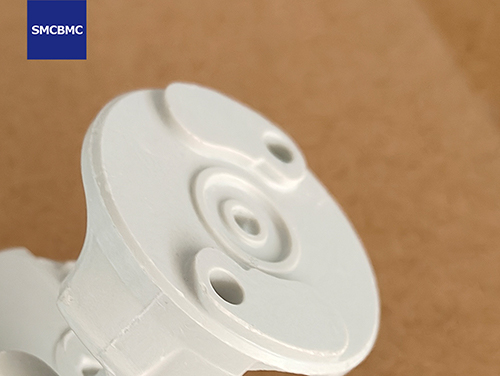
BMC achieves UL94 V-0 without relying on halogen-based additives.
No toxic dripping
Environmentally compliant (RoHS, REACH)
Long-term flame resistance stability
With a density of approximately 1.7–2.0 g/cm³, BMC offers:
Significant weight reduction vs. metals
High mechanical strength
Good impact resistance
Compression molding enables:
Complex geometries
Functional integration
Reduced part count and assembly steps
BMC is not limited to radomes. Its electrical insulation and non-magnetic properties make it suitable for:
Base station enclosures
Junction boxes
Cable management systems
Structural supports for antenna systems
Material performance alone is not enough.
To fully realize BMC’s advantages, material, mold, and process must work together.
At Wenzhou Jintong, we ensure this through:
Customized BMC formulations
Precision mold design for large, thin, and complex structures
Controlled molding parameters (temperature, pressure, curing profiles)
This integrated approach guarantees consistent performance from lab to mass production.
As 5G infrastructure continues to expand, material selection is becoming a critical engineering decision.
BMC offers a rare combination of:
Low dielectric performance
Long-term weather resistance
Intrinsic flame retardancy
Dimensional stability
Lightweight strength
It is not just an alternative material —
it is a future-ready solution for high-frequency communication systems.
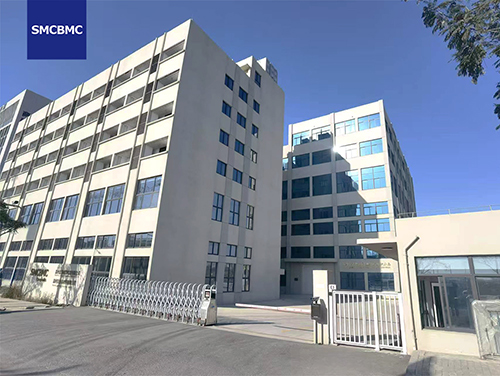
Wenzhou Jintong Complete Electrical Co., Ltd. specializes in high-performance BMC/SMC thermosetting composites, precision mold design, and compression molding.
We provide reliable material and component solutions for:
5G communication infrastructure
Electrical insulation systems
Automotive and new energy applications
Industrial and outdoor equipment
📧 Email: wendy.qiu@smcbmc.com
📞 Phone: +8613868305300