

Date | 2026-04-20 08:42:37
In sourcing BMC (Bulk Molding Compound) components, many engineers and buyers face a familiar problem:
The datasheet looks perfect—yet in mass production, issues emerge: dimensional instability, batch inconsistency, or even premature failure.
In most cases, the root cause is not the material itself, but the supplier’s integrated capability—from formulation and mold engineering to process control and validation.
This practical guide outlines a 6-step audit framework to help procurement, quality, and engineering teams quickly identify truly reliable BMC partners.
What to check:
Does the supplier develop their own formulations or only use purchased compounds?
Can they customize materials for specific needs (high CTI, thin-wall flame retardancy, hydrolysis resistance)?
Do they maintain a long-term material performance database?
Ask on-site:
“We need UL94 V-0 at 0.4mm and CTI ≥ 600V. Can you adjust an existing grade? How long would it take?”
Reliable supplier:
Responds quickly with case studies
Willing to co-develop formulations
Can show R&D records under NDA
Red flag:
Only offers “standard grades” without technical depth
What to check:
In-house lab availability and equipment (TGA, FTIR, universal testing machine, glow-wire tester, etc.)
Accreditation (e.g., CNAS or equivalent)
Closed-loop testing: incoming → in-process → final inspection
Ask:
“How do you ensure batch consistency for resin, fiber, and fillers?”
Reliable supplier:
Provides full testing records
Equipment is calibrated and traceable
Red flag:
Heavy reliance on outsourced testing
Missing raw data
What to check:
In-house mold design and manufacturing
Mold flow analysis capability
Press machine precision and temperature uniformity (±5°C expected)
Process monitoring (temperature, pressure)
Ask:
“How do you control mold temperature for parts with uneven thickness?”
Reliable supplier:
Demonstrates simulation reports and real-time monitoring
Red flag:
Fully outsourced molds
No process data visibility
What to check:
SOPs for production
Control of key parameters (temperature, pressure, curing time)
Batch traceability system
Cpk (process capability) analysis
Ask:
“What is the latest Cpk for critical dimensions?”
Reliable supplier:
Provides recent Cpk reports (≥1.33 preferred)
Full traceability from raw material to finished parts
Red flag:
No traceability records
Poor shop-floor organization
What to check:
ISO 9001, IATF 16949, ISO 14001
UL Yellow Card, RoHS, REACH compliance
In-house failure analysis capability
Ask:
“Can you provide UL certification details for this material grade?”
Reliable supplier:
Certificates are valid and product-specific
Red flag:
Only system certifications, no product validation
What to check:
Proven applications in electrical, automotive, or energy sectors
Supply duration and stability
Customer references or project examples
Ask:
“How long have you supplied for smart meter housings or MCB components?”
Reliable supplier:
Provides verifiable case studies
Red flag:
Avoids specific customer references
| Criteria | Weight | Key Indicator |
|---|---|---|
| R&D Capability | 20% | Custom formulation ability |
| Testing & Lab | 20% | Accredited lab |
| Mold & Process | 20% | In-house + monitoring |
| Process Control | 20% | Traceability + Cpk ≥1.33 |
| Certifications | 10% | IATF + UL |
| Track Record | 10% | Proven industry cases |
≥4.0: Preferred partner
3.0–4.0: Acceptable with improvement
<3.0: High risk
BMC components may be small—but they directly impact electrical safety, product lifespan, and brand reputation.
It’s far more efficient to select the right supplier upfront than to fix problems in mass production.
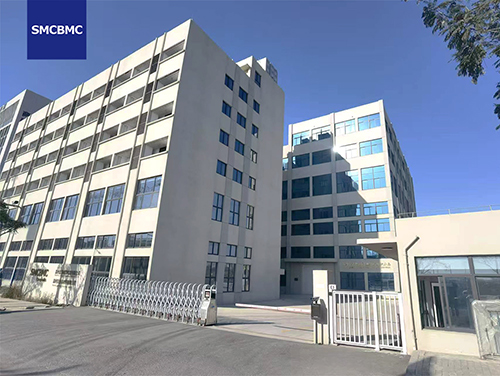
Wenzhou Jintong Complete Appliances Co., Ltd. specializes in high-performance BMC/SMC materials, precision mold design, and compression molding.
We provide integrated, reliability-driven solutions for electrical, automotive, and new energy applications.
📧 wendy.qiu@smcbmc.com
📞 +8613868305300