

Date | 2026-04-24 08:46:08
The global push toward decarbonization is no longer a distant policy goal—it is reshaping how materials are selected, sourced, and evaluated across entire industrial value chains.
In 2026, China reinforced its commitment to carbon reduction by introducing stricter dual-control targets on total emissions and carbon intensity. At the same time, regulatory and market mechanisms are converging worldwide:
Supply chain carbon disclosure is becoming mandatory
Frameworks like CDP and EcoVadis increasingly factor Scope 3 emissions into supplier evaluation
The EU’s Carbon Border Adjustment Mechanism (CBAM) is expanding its scope, impacting materials and components
For manufacturers in electrical, automotive, and energy sectors, one question is now unavoidable:
👉 Where do your materials come from—and what is their carbon footprint?

Carbon reduction is no longer limited to operational efficiency.
It has shifted upstream—into material selection.
Bulk Molding Compound (BMC), a thermoset composite, is emerging as a compelling option due to its life-cycle carbon advantages, particularly when combined with bio-based resin systems.
To evaluate sustainability, a full Life Cycle Assessment (LCA) approach is essential—from raw material extraction to end-of-life.
BMC contributes to carbon reduction across four key stages:
Traditional BMC relies on petroleum-based unsaturated polyester resins.
However, bio-based BMC replaces part of this with renewable feedstocks such as:
Agricultural residues
Biomass derivatives
Industrial fermentation by-products
These materials absorb CO₂ during growth, creating a biogenic carbon loop that significantly reduces net emissions.
👉 Result: lower upstream carbon footprint
Unlike thermoplastics, which require repeated high-temperature melting, BMC is processed via compression molding:
Typical curing temperature: 130–170°C
Short cycle time
No secondary machining required
Combined with automated mixing and dosing systems, this results in:
👉 Lower energy consumption per unit of product
BMC has a density of ~1.7–2.0 g/cm³, enabling:
30–60% weight reduction vs. metals
Functional integration (fewer parts, less assembly)
In applications such as EVs or rail systems:
👉 Every 100 kg weight reduction can save 2–3 tons of CO₂ over the product lifecycle
Additionally, long service life (often 20+ years) reduces replacement frequency—another hidden carbon advantage.
As a thermoset material, BMC cannot be remelted like thermoplastics.
However:
Its durability reduces total waste generation
Recycling pathways are evolving (mechanical grinding, filler reuse, energy recovery)
👉 Sustainability is achieved through longevity + emerging circular solutions
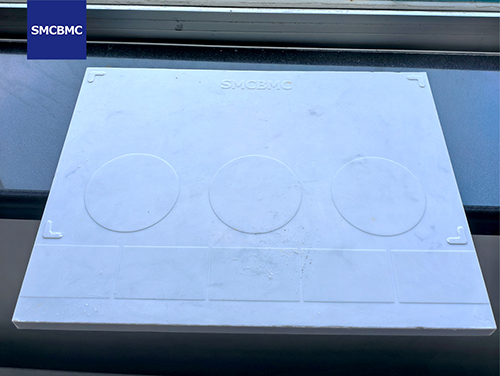
To align with global low-carbon policies, Wenzhou Jintong has developed the BMC 10XX bio-based series, with BMC 1015 as its first commercial grade.
Key characteristics:
Bio-based carbon content: customizable (typically ≥20%)
Flexural strength ≥100 MPa
Heat deflection temperature ≥200°C
UL94 V-0 (1.6 mm)
Excellent electrical insulation
👉 Crucially, these materials maintain performance parity with conventional BMC—no redesign required.
Carbon footprint data is no longer a “nice-to-have”—it is becoming a market access requirement.
For exporters and OEM suppliers:
CBAM introduces carbon-based cost pressure
OEMs increasingly demand verified carbon data from suppliers
Green procurement policies are expanding globally
In this context, material choice directly impacts:
✔ Regulatory compliance
✔ Cost structure
✔ Supplier qualification
The role of material suppliers is evolving.
At Wenzhou Jintong, we are advancing across three levels:
Bio-based BMC (up to 40% renewable content)
High-performance formulations (CTI, flame retardancy, heat resistance)
Energy monitoring and efficiency upgrades
Integrated material–mold–process system (reduced logistics emissions)
Carbon footprint reporting support
Material selection guidance for ESG compliance
Collaboration with upstream and downstream partners
In the era of carbon constraints, sustainability is no longer separate from performance—it is part of it.
BMC, particularly in its bio-based form, offers a pathway to:
Maintain engineering performance
Reduce carbon footprint
Strengthen supply chain competitiveness
The transition from “materials sourcing” to “carbon-aware sourcing” is already underway.
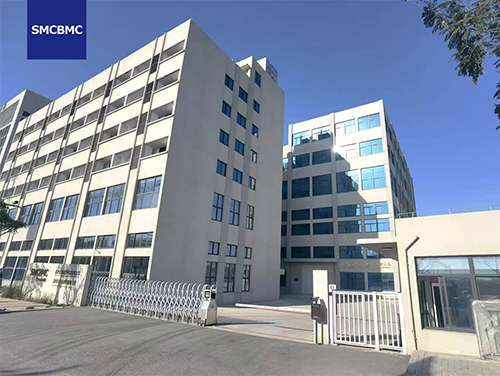
Wenzhou Jintong Complete Appliances Co., Ltd.
Specializing in BMC/SMC composites, precision molds, and integrated molding solutions.
We provide:
Bio-based BMC materials
Carbon footprint support
End-to-end manufacturing solutions
📧 wendy.qiu@smcbmc.com
📞 +86 13868305300