

Date | 2026-05-08 07:40:17
As global energy storage deployments accelerate, one challenge has moved to the center of industry attention: safety.
On May 1, 2026, a lithium battery energy storage station in Nottinghamshire, UK caught fire, with flames originating from a containerized battery storage unit. Thick smoke spread rapidly across the site. Incidents like this are no longer isolated cases. Industry statistics show that more than 20 energy storage fire accidents occurred worldwide in 2025 alone, while over 160 electrochemical energy storage safety incidents have been recorded globally in recent years.
The message is becoming impossible to ignore:
energy storage safety is now one of the industry’s defining engineering challenges.
At the same time, governments and industry organizations are tightening regulations.
China’s new national standard, GB/T 51048-2025 – Design Standard for Electrochemical Energy Storage Power Stations, officially came into force on April 1, 2026. The updated regulation introduces significantly stricter requirements for fire protection, thermal management, compartment design, and automatic suppression systems for lithium-ion and sodium-ion battery installations.
Shortly afterward, the Technical Guidelines for Fire Safety Systems of Electrochemical Energy Storage Stations (T/CFPA 002-2026) were also released, reinforcing the industry’s shift toward system-level thermal runaway protection.
Under these stricter safety expectations, a battery pack is no longer viewed simply as an energy container.
It is now expected to function as a highly engineered safety enclosure capable of surviving extreme thermal events.
And while Battery Management Systems (BMS) act as the “brain” of safety protection, passive safety materials are increasingly becoming the industry’s last physical line of defense.
This is where BMC (Bulk Molding Compound) enters the picture.
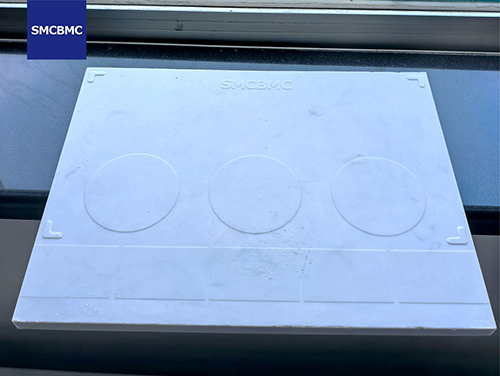
Thermal runaway in lithium-ion batteries typically begins with internal short circuits, overcharging, mechanical damage, or overheating. Once triggered, cell temperatures can rise to 500–1000°C within seconds, rapidly spreading to adjacent cells and modules.
Modern battery safety strategies therefore rely on multiple protection layers:
Cell-level protection — delaying failure initiation
Module-level protection — preventing heat propagation
System-level protection — suppressing fire and gas explosion risks
Passive safety materials used inside battery packs must simultaneously deliver:
Materials must resist heat penetration and physically isolate adjacent cells to slow propagation.
Structures and enclosures must prevent fire spread and maintain integrity under direct flame exposure.
Insulating components must continue functioning even under elevated temperatures and humidity.
Materials must resist deformation, collapse, and molten metal penetration during catastrophic failures.
Modern battery systems increasingly require halogen-free, low-smoke, and environmentally compliant materials.
Meeting all these requirements simultaneously is exceptionally difficult for conventional plastics.
BMC, however, was practically engineered for this type of environment.
BMC is a fiber-reinforced thermoset composite with inherent flame resistance, dimensional stability, and electrical insulation properties.
Unlike thermoplastics, BMC does not melt or drip under extreme heat.
Instead, it forms a stable carbonized barrier layer that helps slow flame and heat propagation.
This makes BMC particularly valuable in energy storage systems where structural integrity during thermal runaway is critical.
Module separators are one of the battery pack’s most critical passive safety components.
Their job is to:
prevent flame propagation,
maintain electrical isolation,
resist molten metal splash,
and preserve mechanical integrity during thermal runaway.
Designed for high-performance electrical insulation applications:
UL94 V-0 at ultra-thin 0.4 mm wall thickness
GWIT up to 960°C
Excellent CTI performance (≥600V)
No melt dripping
Developed for elevated temperature environments:
Continuous operating temperature ≥170°C
Peak resistance up to 230°C
Exceptional dimensional stability during thermal cycling
Together, these materials create a robust thermal protection architecture from standard operating conditions to extreme fire scenarios.
Battery packs contain high-current busbars and connectors carrying hundreds of amps.
If insulating supports deform under heat, secondary short circuits may occur — potentially accelerating thermal runaway.
BMC’s advantages include:
Volume resistivity >10¹² Ω·cm
CTI ≥600V
Water absorption ≤0.2%
Excellent dimensional stability at elevated temperatures
This ensures reliable electrical isolation even under harsh operating conditions.
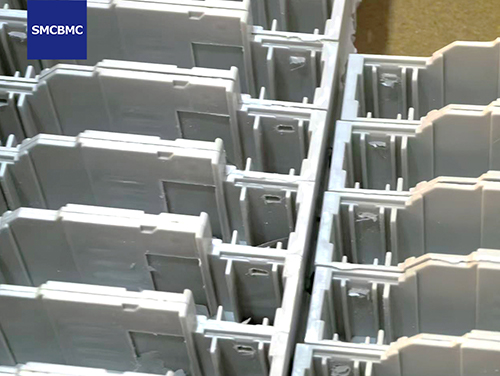
BMC is also increasingly used for:
battery enclosures,
end plates,
structural support frames,
cable protection covers,
and integrated mounting structures.
Compared with metal structures, BMC offers:
~60% lower weight than steel
~30% lower weight than aluminum
integrated molding capability
corrosion resistance
electrical insulation without secondary coatings
Complex structural functions such as ribs, mounting points, and insulation barriers can be molded into a single component, reducing assembly steps and minimizing potential failure points.
| Application | Recommended Series | Key Advantages |
|---|---|---|
| Standard module insulation barriers | 16XX | 0.4mm V-0 flame resistance, CTI ≥600V |
| High-temperature module barriers | 18XX | Continuous heat resistance ≥170°C |
| HV connector insulation spacers | 16XX | High insulation, low moisture absorption |
| Structural module frames | 16XX / 20XX | High flexural strength, dimensional stability |
| Anti-static explosion-proof components | 15XX | Surface resistance 10⁶–10⁹Ω |
At Wenzhou Jintong, we understand that energy storage safety depends on more than just material specifications.
True reliability requires close coordination between:
material formulation,
mold engineering,
precision compression molding,
and process consistency.
Our integrated manufacturing capabilities cover:
BMC material development,
precision mold design,
component molding,
and customized application engineering.
We provide specialized formulations including:
high-CTI grades,
high-temperature BMC,
anti-static BMC,
thin-wall flame-retardant systems,
and bio-based BMC solutions.
In thermal runaway events, every second matters.
A material that does not melt, drip, or collapse under extreme heat can buy valuable time for suppression systems, emergency response, and system isolation.
That is why BMC is increasingly becoming one of the most trusted passive safety materials in modern energy storage systems.
As global energy infrastructure evolves, passive fire protection materials will no longer be optional engineering upgrades — they will become foundational safety requirements.
And in that future, BMC stands at the frontline.
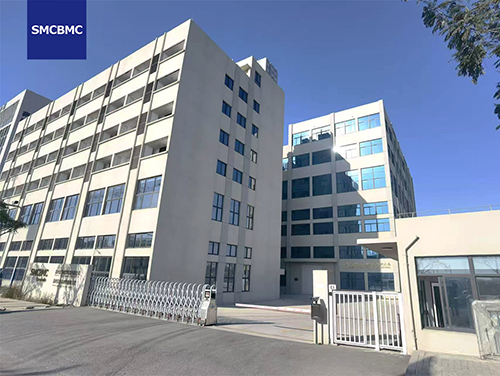
Specialized in BMC/SMC thermoset composite materials, precision molding, and integrated engineering solutions for:
Energy Storage Systems
Electric Vehicles
Electrical Equipment
High-Reliability Industrial Applications
📧 wendy.qiu@smcbmc.com
📞 +86 13868305300
🌐 smcbmc.net