
Date | 2026-05-21 08:37:46
In electrical insulation material selection, UL94 V-0 and glow-wire 960°C are among the most frequently referenced flame-retardant indicators. A common misconception is:
"If a material is UL94 V-0 rated, it will automatically pass the 960°C glow-wire test."
This assumption seems logical but is technically incorrect. These two tests belong to different evaluation systems, with distinct procedures, criteria, and engineering implications. Misinterpreting them may lead to material selection errors—assuming a material passing V-0 can withstand 960°C glow-wire exposure, or vice versa.
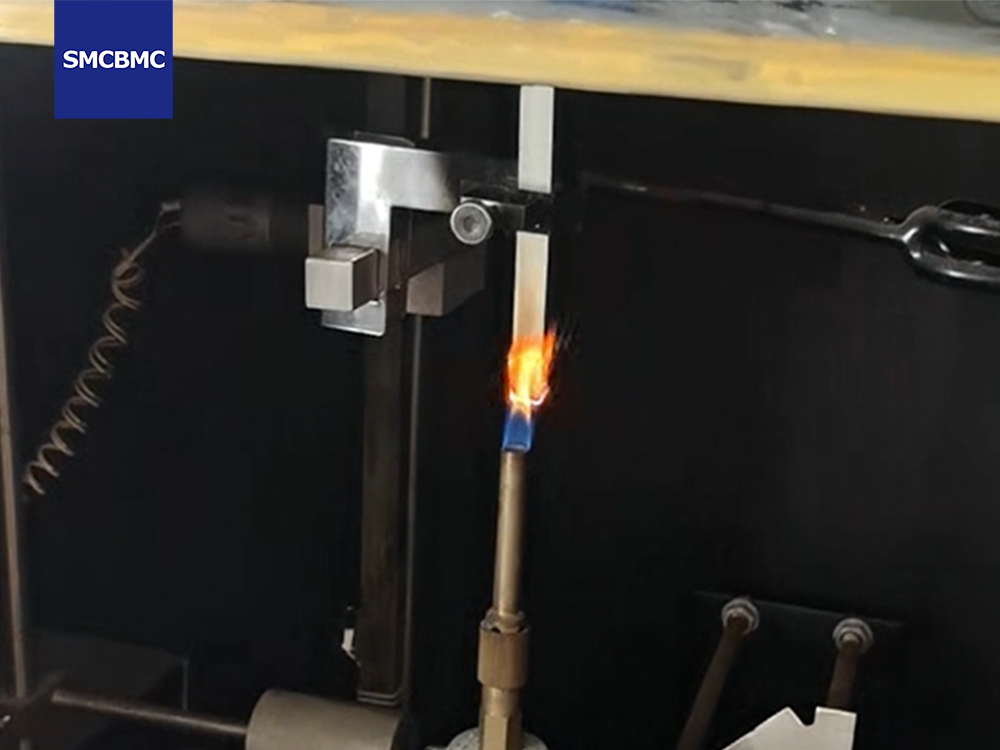
UL94 is a widely recognized plastic flammability standard developed by Underwriters Laboratories (UL) in the U.S. The Vertical Burning Test (V-0, V-1, V-2) evaluates:
Afterflame duration
Glow time
Dripping behavior
Ignition of underlying cotton
Glow-wire flammability testing, under GB/T 5169.12 or IEC 60695-2-11, simulates the ignition risk when electrical components overheat. The procedure involves:
Heating a metal wire to a specific temperature (e.g., 650°C, 850°C, 960°C)
Pressing it against the material with a 1N force for 30 seconds
Observing if ignition occurs and whether any flame self-extinguishes within 30 seconds
Key differences:
| Comparison Aspect | UL94 Vertical Burning (V-0/V-1/V-2) | Glow-Wire Flammability |
|---|---|---|
| Standard | UL94 | GB/T 5169.12 / IEC 60695-2-11 |
| Principle | External flame exposure, observe post-flame behavior | Simulates local overheating from electrical components |
| Ignition source | Bunsen flame, 50W | Heated wire, controlled temperature (650–960°C) |
| Evaluation | Afterflame time, dripping | Ignition occurrence, self-extinguishing |
| Engineering focus | General flame resistance | High-temperature electrical insulation risk |
The difference stems from heat transfer mode and stress type:
UL94 applies a convective flame (~800–1000°C)
Glow-wire uses direct conductive contact, creating high local heat flux
Materials that form a stable char in V-0 may still ignite under direct 960°C contact if local thermal stability is insufficient
Formulations with halogenated flame retardants may pass UL94 V-0 but fail glow-wire testing due to localized pyrolysis. Conversely, inorganic flame retardant BMCs (e.g., aluminum hydroxide, magnesium hydroxide) often excel in both tests due to synergistic vapor-phase and condensed-phase flame suppression.
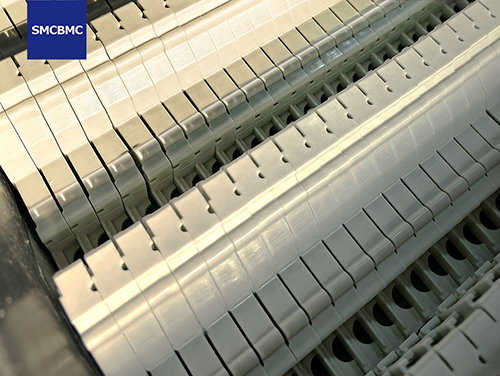
Our internal testing confirms:
UL94 V-0: 0.4 mm thin-wall specimens pass, ensuring self-extinguishing behavior without wall-thickness compensation
Glow-Wire 960°C: Material withstands 960°C for 30 seconds without ignition, simulating extreme thermal stress conditions in breakers or switches
Engineering takeaway:
V-0 evaluates: “If ignited, will it self-extinguish?”
Glow-wire evaluates: “Will it ignite when in contact with overheated components?”
| Product Type | Common Flame-Retardant Requirement | Notes |
|---|---|---|
| Low-voltage MCB & contactor housings | UL94 V-0 + Glow-wire 850°C/960°C | High unattended insulation requirements (IEC 60695-2-11) |
| Smart meter housings | UL94 V-0 + Glow-wire 650°C/850°C | Lower voltage, operator-present conditions |
| High-voltage switchgear supports | Glow-wire 960°C | Sensitive to ignition near live components |
| EV charging insulation | UL94 V-0 + Glow-wire 850°C/960°C | Specified by customer standards |
Always confirm:
The exact standard referenced (UL94 vs. GB/T 5169.12 / IEC 60695-2-11)
Glow-wire test temperature (650°C, 850°C, 960°C)
Avoid relying solely on “V-0” or generic “flame-retardant” labels.
UL94 V-0 and Glow-Wire 960°C are independent but complementary indicators. Materials may meet one, both, or neither. The Jintong BMC 16XX series achieves both, providing dual-layer flame-retardant assurance for electrical insulation applications.
For guidance on selecting BMC materials for high-performance, flame-retardant electrical components, contact us:
📧 wendy.qiu@smcbmc.com | +86 13868305300