

Date | 2026-05-23 07:36:05
In selecting electrical insulation materials, heat resistance is a fundamental but often misunderstood property. Engineers frequently encounter two specifications: one reports a Heat Deflection Temperature (HDT) of 260°C, while another cites a Temperature Index (TI) of 155°C. A common mistake is assuming HDT directly reflects long-term usage temperature, which can lead to premature insulation failure due to thermal aging.
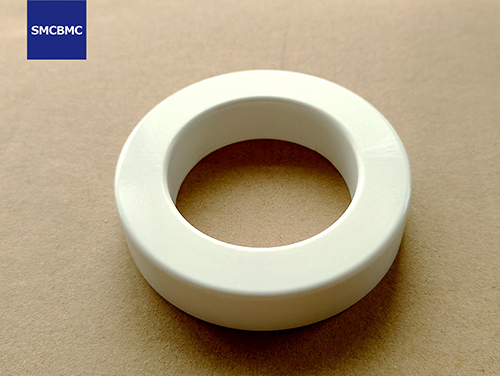
HDT vs Temperature Index (TI)
Heat Deflection Temperature (HDT): Measures short-term rigidity under load. Samples are bent in a three-point fixture and immersed in oil, with temperature increased at a constant rate until a defined deflection occurs (0.34 mm). It reflects the material’s ability to resist softening under short-term heat stress.
Temperature Index (TI): Evaluates long-term thermal aging. Samples are aged at multiple temperatures over thousands of hours, monitoring performance decay (e.g., flexural strength). TI is defined as the maximum continuous service temperature at which key properties remain ≥50% of their original value after the test duration, reflecting durability under prolonged heat.
Key Difference: HDT indicates short-term softening; TI represents long-term stability. A material can have a high HDT but a lower TI if it degrades over time under sustained heat.
Jintong BMC Performance
BMC 16XX & SMC series: TI ≥155°C
BMC 18XX series (high-temp variant): Continuous use ≥170°C, short-term peak up to 230°C
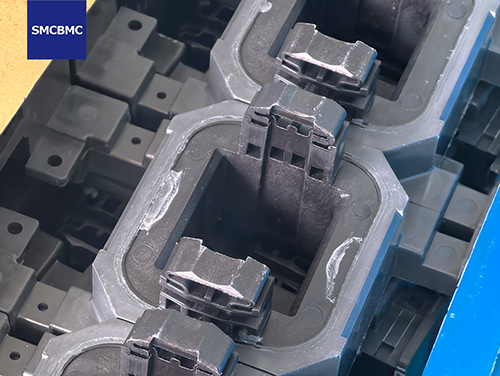
Flexural strength is used as the reference property, as mechanical integrity is often the first limiting factor in insulation aging. A 50% decay threshold ensures conservative and reliable design for long-term applications.
Material Selection Guide
| Condition | Recommended Metric | Notes |
|---|---|---|
| Short-term thermal overload (minutes/seconds) | HDT | Check material rigidity under peak load |
| Continuous long-term operation (years) | TI | Reflects material durability over time |
| Molding process window | HDT + cure profile | Guides demolding temperature |
| High-temperature insulation (>150°C) | TI ≥155°C, prefer BMC 18XX | Ensures safe operation over long durations |
Conclusion:
HDT answers "Can it withstand brief heat spikes?" TI answers "Can it last a lifetime under continuous heat?" Jintong BMC standards quantify long-term thermal stability to help engineers select insulation materials with confidence.
Contact:
📧 wendy.qiu@smcbmc.com | +86 13868305300