

Date | 2026-05-26 09:02:05
As the energy storage industry transitions from 1000V platforms to mainstream 1500V DC systems, insulation design is entering a new engineering era. Higher voltage enables greater energy density and lower transmission losses, but it also places significantly stricter demands on insulation coordination inside battery packs.
For insulation engineers, the key questions are no longer simply “Which material is flame retardant?” but rather:
What CTI level is required for 1500V systems?
How should creepage distance be calculated?
How much electrical safety margin is enough for long-term reliability?
This is where high-performance BMC thermoset composites are becoming increasingly important in next-generation energy storage systems.
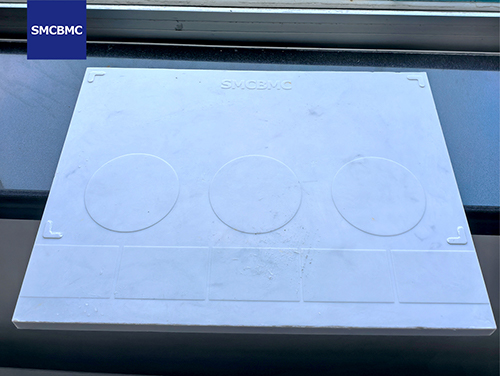
According to IEC 60664 / GB/T 16935.1, insulation coordination depends on several factors:
Working voltage
Pollution degree
Overvoltage category
Material comparative tracking index (CTI)
Inside energy storage battery packs, insulation structures are typically designed for:
Pollution Degree 2 — enclosed battery pack environments
Pollution Degree 3 — systems exposed to condensation or humidity cycling
Compared with 1000V systems, the transition to 1500V introduces two major engineering challenges.
Under the same material group and pollution degree, required creepage distance scales almost linearly with operating voltage.
In practical terms:
A 1500V DC system typically requires ~50% longer creepage distance than a 1000V system.
This directly affects insulation structure size, packaging density, and thermal management layout.
IEC 60664 classifies insulation materials into four groups:
| Material Group | CTI Value |
|---|---|
| Group I | CTI ≥ 600V |
| Group II | 400–599V |
| Group IIIa | 175–399V |
| Group IIIb | 100–174V |
The lower the CTI value, the longer the required creepage distance.
In compact battery pack architectures, selecting a lower-grade material can increase insulation path requirements by 40–60%, making packaging design far more difficult.
This is why high-CTI thermoset composites are increasingly preferred in advanced energy storage systems.
According to Wenzhou Jintong’s internal standard Q/JTJ0001-2025, all BMC series materials achieve:
PTI ≥ 600V
Classified as IEC 60664 Material Group I
This allows engineers to:
Reduce creepage distance requirements
Increase electrical safety margins
Optimize compact structural layouts
For modern high-density battery systems, this is a major design advantage.
High-voltage battery pack insulation components must satisfy multiple performance criteria simultaneously.
Jintong BMC materials achieve:
Dielectric strength ≥20 kV/mm
(Tested according to GB/T 1408.1)
With a typical 3 mm wall thickness, breakdown voltage reaches:
48–60 kV
This provides a safety margin exceeding 30× relative to a 1500V operating voltage.
Battery pack insulation components must meet both:
UL94 V-0
960°C Glow Wire Test
Jintong BMC 16XX series achieves:
UL94 V-0 at 0.4 mm wall thickness
960°C glow wire compliance according to GB/T 5169.12
This combination is critical for preventing thermal propagation inside battery systems.
Energy storage systems often operate in:
Outdoor containers
Closed electrical cabinets
High humidity cycling environments
According to internal testing:
After 1000 hours under 85°C / 85% RH conditions, Jintong BMC 16XX maintains:
Insulation resistance ≥10¹¹ Ω
Flexural strength retention ≥85%
This long-term stability is especially important for systems designed for 20+ year service life.
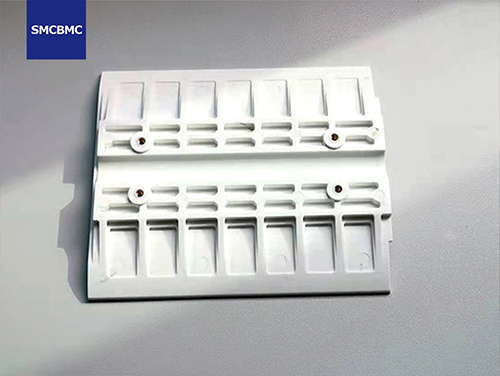
The following values can serve as engineering references for BMC insulation design:
| Voltage | Pollution Degree | Material Group | Recommended Creepage Distance |
|---|---|---|---|
| 1500V DC | 2 | Group I (CTI ≥600V) | ≥8.0 mm |
| 1500V DC | 3 | Group I (CTI ≥600V) | ≥12.0 mm |
| 1000V DC | 2 | Group I (CTI ≥600V) | ≥5.0 mm |
| 1500V DC | 2 | Group IIIa (CTI 175–399V) | ≥12.5 mm |
Note: Values are estimated based on IEC 60664 insulation coordination guidelines. Final design must comply with product-specific standards and validation testing.
The comparison clearly shows that using Group I materials can significantly reduce insulation structure size.
When selecting BMC insulation materials for 1500V battery systems, engineers should focus on four critical areas:
Always request:
CTI test data
PTI certification
IEC material group classification
For compact high-voltage designs, Group I materials are strongly recommended.
Battery packs are increasingly space-constrained.
Using high-CTI BMC materials enables:
Smaller insulation structures
Better packaging density
Lower overall system cost
Energy storage systems operate for decades, not months.
Thermoset BMC composites typically provide better humidity resistance and insulation retention than many thermoplastics under long-term damp heat exposure.
For 1500V systems, insulation materials should simultaneously meet:
UL94 V-0
960°C glow wire
Dielectric strength ≥20 kV/mm
Focusing on only one parameter is insufficient for real-world safety requirements.
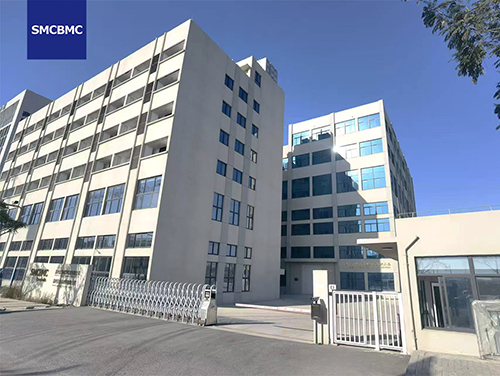
As energy storage systems move toward higher voltage platforms, insulation design is becoming a decisive factor in reliability, safety, and power density.
In 1500V battery packs, material selection is no longer just about insulation — it is about balancing:
Creepage distance
CTI classification
Flame retardancy
Long-term humidity stability
Structural compactness
With PTI ≥600V, high dielectric strength, UL94 V-0 performance, and excellent long-term stability, BMC thermoset composites are emerging as a key insulation solution for next-generation energy storage systems.
Wenzhou Jintong continues to support global energy storage manufacturers with advanced BMC/SMC insulation solutions designed for high-voltage reliability and long service life.