

Date | 2026-05-29 07:42:00
On September 1, 2025, China’s new national standard GB/T 45441-2025 — Greenhouse Gases: Quantification Requirements and Methods for the Carbon Footprint of Plastic Products will officially take effect.
For manufacturers of BMC (Bulk Molding Compound) insulation components — and for downstream customers in electrical equipment, renewable energy, transportation, and industrial systems — this marks an important shift toward measurable carbon transparency across the supply chain.
In the near future, customers may increasingly request standardized carbon footprint reports as part of procurement qualification, export compliance, ESG disclosure, or green supply-chain certification.
So how should the carbon footprint of BMC insulation parts actually be calculated?
This article explains the process from an engineering and manufacturing perspective, covering lifecycle boundaries, calculation methodology, and the key emissions sources within BMC production.
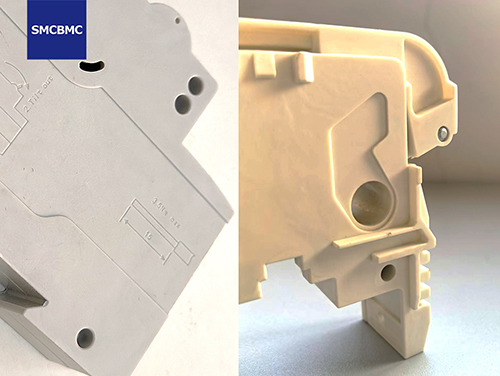
GB/T 45441-2025 applies to plastic products primarily based on synthetic resin systems, which clearly includes BMC and SMC thermoset composite insulation components.
The standard follows a Life Cycle Assessment (LCA) methodology, requiring greenhouse gas emissions to be evaluated across several lifecycle stages:
Raw material acquisition
Manufacturing and processing
Transportation and storage
(Optional) Product use phase
(Optional) End-of-life treatment
The calculation model is expressed as:
CFP = Σ(ADi × EFi,j × GWPj)
Where:
ADi = Activity Data
(electricity consumption, resin usage, transportation distance, etc.)
EFi,j = Emission Factor
GWPj = Global Warming Potential
(based on IPCC Sixth Assessment Report values)
Examples include:
CO₂ = 1
CH₄ = 27.9
N₂O = 273
For a typical BMC insulation barrier, breaker component, or electrical support structure, the carbon footprint generally comes from the following stages:
This is often the largest contributor.
Key sources include:
Unsaturated polyester resin
Glass fiber reinforcement
Aluminum hydroxide fillers
Calcium carbonate
Additives and flame retardants
Upstream transportation
Accurate supplier emission data becomes increasingly important at this stage.
Production emissions mainly come from:
Electricity consumption during molding
Mold heating systems
Hydraulic press operation
Scrap and material loss rates
Auxiliary thermal processes
For thermoset composite manufacturers, machine-level energy monitoring is becoming a critical capability for carbon accounting accuracy.
This includes:
Raw material transport to the factory
Finished goods shipment to customers
Warehousing energy use
For export-oriented manufacturers, overseas logistics may significantly impact total product emissions.
Although often excluded in simplified calculations, the standard encourages consideration of:
Landfill
Incineration
Recycling and material recovery
Recovered material substitution may also generate carbon offset credits under certain accounting frameworks.
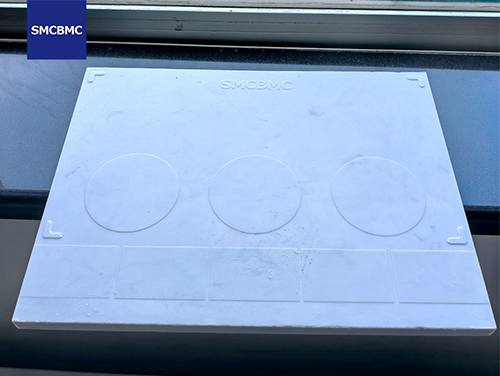
Following the methodology suggested in the standard, BMC manufacturers can generally follow five steps:
The declared unit may be:
1 kg of BMC product
1 insulation component
1 breaker housing
1 assembled module
For engineering applications, using “per component” is often more practical for customers and ESG reporting.
At minimum, the assessment should include:
Raw material acquisition
Manufacturing
Transportation
Additional lifecycle stages may be added depending on customer requirements or export regulations.
The standard prioritizes primary operational data such as:
Metered electricity consumption
Production records
Material usage logs
Scrap ratios
Supplier-provided carbon data is preferred over generic database assumptions whenever possible.
If multiple products share the same production line, emissions must be allocated according to:
Production volume
Machine hours
Economic value
Consistency and traceability are critical.
Results are typically expressed as:
kg CO₂e per component
kg CO₂e per kg of product
The final report should follow the standard’s recommended documentation structure.
As a long-term manufacturer of thermoset composite insulation components, Wenzhou Jintong Complete Appliances Co., Ltd. is actively preparing internal carbon footprint accounting systems aligned with GB/T 45441-2025.
Our preparation includes:
From resin systems to glass fiber and mineral fillers, we maintain supply-chain traceability for core raw materials.
Energy consumption data is tracked by production line, molding machine, and shift cycle to support precise manufacturing-stage calculations.
Our BMC materials comply with RoHS 2.0 environmental requirements, helping reduce environmental risk throughout the product lifecycle.
Future customers will be able to compare carbon footprint data across different BMC and SMC material systems to optimize both performance and sustainability goals.
As carbon disclosure requirements continue expanding globally, we recommend downstream manufacturers:
Establish carbon data collaboration with upstream suppliers early
Prioritize primary supplier emissions data whenever possible
Use “per component” functional units for easier ESG reporting
Pay close attention to logistics emissions for export markets
Carbon transparency is quickly becoming part of product competitiveness — not just environmental compliance.
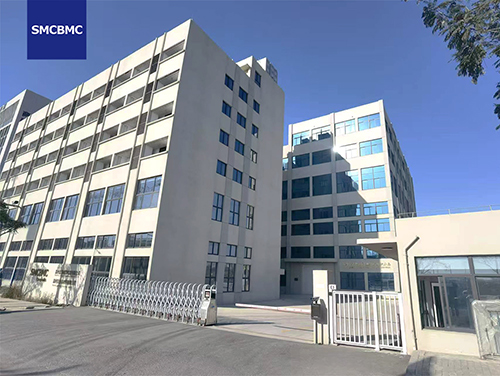
Wenzhou Jintong Complete Appliances Co., Ltd. specializes in:
BMC/SMC thermoset composite materials
Electrical insulation components
Precision compression molding
Mold design and manufacturing
We provide integrated solutions for electrical equipment, renewable energy, rail transit, and industrial applications.
📧 wendy.qiu@smcbmc.com
📞 +86 13868305300