

Date | 2026-06-02 10:46:00
Energy storage system safety is a top industry priority. Inside battery packs, high-voltage control cabinets, and busbar cabinets, BMC (Bulk Molding Compound) insulation panels provide both electrical isolation and structural support. During thermal runaway events, these panels must not only self-extinguish quickly but also maintain insulation under extreme heat and arc stress, giving the system time to safely disconnect.
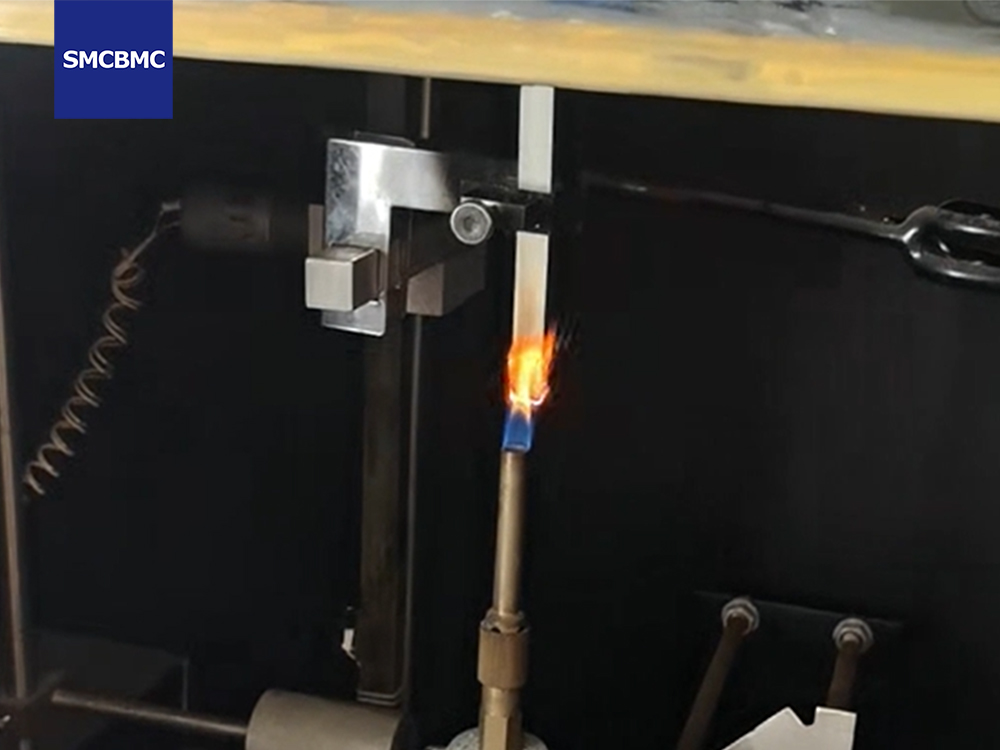
Dual Safety Requirements for Energy Storage Insulation Panels
Insulation panels face a critical dual challenge:
Flame retardancy: Must resist ignition at 960°C (hot-wire test) and meet UL94 V-0 standards.
Electrical strength: Must maintain ≥20 kV/mm even under high temperature and after accelerated aging.
Both properties must coexist in the same material to ensure cross-reliable performance under thermal stress.
BMC Material Performance Highlights
According to Wenzhou Jintong standards Q/JTJ0001-2025, the BMC 16XX series meets both requirements for energy storage applications:
Flame retardancy: UL94 V-0 at 0.4 mm thickness; hot-wire ignition at 960°C.
Electrical strength: ≥20 kV/mm (breakdown voltage 48–60 kV at 3 mm thickness), providing a 30x safety margin over 1500 V system voltage.
Insulation resistance: ≥1.0×10¹³ Ω initially, and ≥1.0×10¹² Ω after 24h water immersion.
Arc resistance: ≥180 seconds per GB/T 1411, protecting against rare arc faults.
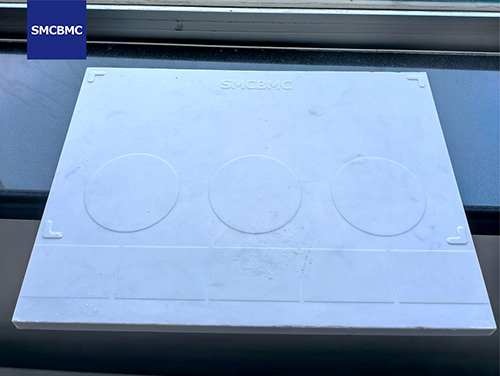
Accelerated Aging Validation
After 1000 hours in 85°C / 85% RH conditions, key metrics remain robust:
| Property | Initial | After 1000h | Retention |
|---|---|---|---|
| Insulation resistance | ≥1.0×10¹³Ω | ≥5.0×10¹¹Ω | — |
| Flexural strength | ≥130 MPa | ≥110 MPa | ≥85% |
| Electrical strength | ≥20 kV/mm | ≥17 kV/mm | ≥85% |
| Flame retardancy | UL94 V-0 | UL94 V-0 | No degradation |
| Appearance | Smooth | No bubbling, cracking, discoloration | — |
Process Consistency Matters
Material compliance is the first step. Process control ensures batch-to-batch consistency:
Mold temperatures maintained at 135–170°C (±5°C).
Three-stage closing speed prevents fiber disturbance.
Post-cure hold of 15–30 seconds eliminates microvoids, enhancing long-term reliability under humid heat.
Selection Recommendations
Ensure both flame retardancy and electrical strength are certified.
Request post-aging performance data (≥85% retention after 1000h dual 85 test).
Verify supplier process control documentation for mold temperature uniformity and hold timing.
Contact Wenzhou Jintong for More Information
📧 wendy.qiu@smcbmc.com | +86 13868305300