

Date | 2026-06-10 07:39:26
For decades, glass fiber has been the dominant reinforcement material used in Bulk Molding Compound (BMC) due to its balanced cost, processability, and mechanical performance.
However, growing demands from electrical equipment, energy storage systems, rail transportation, and EV applications are pushing composite materials toward higher strength, improved insulation performance, and lower carbon footprints.
Basalt fiber has recently emerged as a promising alternative.
To evaluate its practical benefits, Jintong conducted comparative testing using identical BMC formulations, differing only in reinforcement type: Basalt Fiber (BF) versus E-Glass Fiber (GF).
The results reveal meaningful improvements in both engineering performance and sustainability.
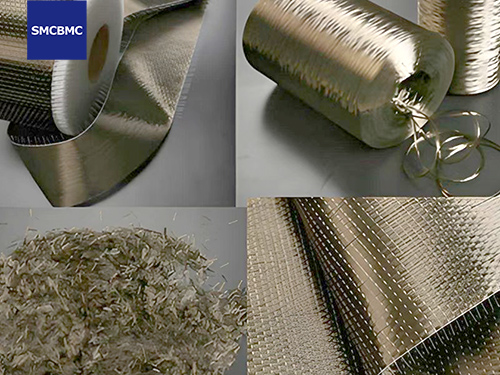
Both materials were produced using the same polyester resin system, fillers, additives, and fiber loading level (14 wt.%).
The only variable was the reinforcement fiber.
Testing was performed on compression-molded specimens under identical processing conditions.
| Parameter | Glass Fiber BMC | Basalt Fiber BMC |
|---|---|---|
| Resin System | Unsaturated Polyester | Unsaturated Polyester |
| Fiber Content | 14% | 14% |
| Molding Temperature | 155°C | 155°C |
| Molding Pressure | 15 MPa | 15 MPa |
| Cure Time | 120 s | 120 s |
| Property | Glass Fiber BMC | Basalt Fiber BMC | Improvement |
|---|---|---|---|
| Flexural Strength | 106.02 MPa | 129.41 MPa | +22% |
| Tensile Strength | 32.87 MPa | 52.15 MPa | +59% |
| Impact Strength | 28.08 kJ/m² | 37.50 kJ/m² | +34% |
| Insulation Resistance | 18 MΩ | 80 MΩ | +344% |
Source: Internal comparative testing conducted by Jintong, June 2026.
The most significant improvement appears in tensile performance.
Basalt Fiber BMC achieved a tensile strength of 52.15 MPa, nearly 60% higher than the glass fiber version.
For engineers, this means:
Better resistance to cracking and structural failure
Greater design flexibility
Potential wall-thickness reduction without sacrificing strength
Improved reliability under long-term mechanical loading
Applications such as battery pack spacers, electrical supports, motor brackets, and insulation structures can particularly benefit from this improvement.
Impact strength increased by approximately 34%.
This indicates that Basalt Fiber BMC can absorb more energy before failure, reducing the risk of brittle fracture during:
Transportation
Assembly operations
Mechanical shock events
Long-term vibration exposure
This advantage is especially valuable for energy storage systems, EV components, and industrial electrical equipment.
Insulation resistance increased from 18 MΩ to 80 MΩ.
While both materials satisfy the requirements of many low-voltage electrical applications, the significantly higher insulation resistance provides additional safety margins under:
High humidity environments
Condensation conditions
Outdoor installations
Long-term aging exposure
For critical insulation components, greater electrical reliability often translates directly into longer service life and reduced maintenance risk.
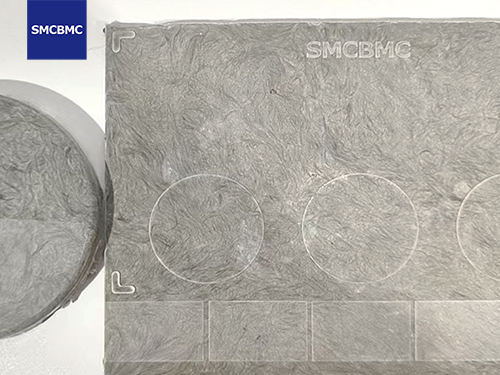
Performance is only part of the story.
Basalt fiber also offers compelling environmental advantages.
Basalt fiber is produced directly from naturally occurring volcanic rock.
Unlike traditional glass fiber manufacturing, no boron or fluorine additives are required during melting.
Life-cycle assessment databases indicate that the carbon footprint of basalt fiber can be approximately 30–40% lower than conventional glass fiber production.
As global manufacturers increasingly report product carbon footprints and supply-chain emissions, lower-carbon composite materials are becoming an important purchasing consideration.
Basalt is one of the most abundant minerals in the Earth's crust.
Its availability supports long-term material security while reducing dependence on more energy-intensive reinforcement materials.
Basalt fiber contains no restricted substances commonly regulated under environmental directives such as:
RoHS
REACH
WEEE-related material requirements
This allows straightforward integration into existing compliance programs.
Based on current testing results, Basalt Fiber Reinforced BMC is particularly suitable for:
Arc chambers
Contactor bases
Disconnect switch insulators
Energy storage insulation barriers
Battery pack partitions
PTC heater brackets
EV charging components
Power distribution supports
Smart meter housings
Utility enclosures
Pole-mounted electrical equipment
Renewable energy installations
Particularly for projects targeting:
European markets
Green procurement programs
Carbon reduction initiatives
ESG-driven supply chains
The comparative results demonstrate that replacing glass fiber with basalt fiber can significantly improve mechanical strength, impact resistance, and insulation performance while simultaneously reducing environmental impact.
For manufacturers seeking a balance between performance, sustainability, and cost efficiency, Basalt Fiber Reinforced BMC represents a compelling next-generation solution.
As electrical systems, energy storage infrastructure, and transportation technologies continue to evolve, material selection will play an increasingly important role in achieving long-term product reliability and sustainability goals.
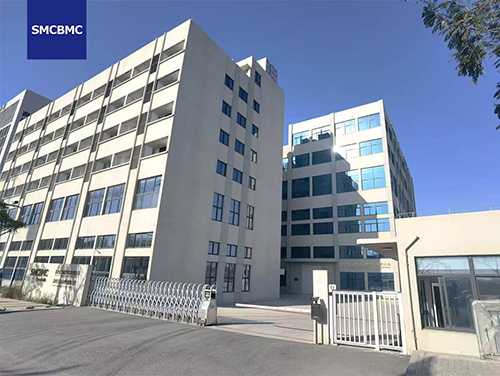
Jintong specializes in:
BMC and SMC material development
Custom thermoset compound formulation
Precision mold design and manufacturing
Compression and injection molding solutions
Electrical insulation and structural components
With more than 20 years of experience serving electrical, automotive, railway, renewable energy, and industrial markets, Jintong helps customers transform advanced material technologies into reliable mass-production solutions.