

Date | 2026-06-16 13:41:53
The rapid growth of electric vehicles and energy storage systems has placed battery safety under unprecedented scrutiny.
In recent years, regulators and industry organizations worldwide have shifted their focus from merely delaying thermal runaway propagation to preventing catastrophic fire and explosion events altogether. As a result, battery pack designers are re-evaluating every component involved in thermal containment, electrical insulation, and fire protection.
Among the emerging material solutions, Bulk Molding Compound (BMC) has gained increasing attention for its unique combination of flame resistance, electrical insulation, thermal stability, and lightweight construction.
Battery safety standards are evolving rapidly.
The latest version of China's battery safety standard, GB 38031-2025, significantly raises the requirements for thermal propagation testing. While previous regulations focused on providing occupants sufficient time to evacuate after a thermal runaway event, the new standard emphasizes preventing fire and explosion throughout an extended observation period.
The direction is clear:
Thermal runaway must remain localized.
Fire propagation between cells and modules must be minimized.
Battery systems must maintain structural integrity under extreme thermal conditions.
Passenger and operator safety must remain protected even during severe failure scenarios.
Similar safety philosophies are increasingly reflected in global EV and stationary energy storage standards, making thermal containment a critical engineering challenge worldwide.
When a lithium-ion cell enters thermal runaway, temperatures can exceed several hundred degrees Celsius within seconds.
Without effective fire barriers, heat can rapidly spread to neighboring cells, triggering a chain reaction that compromises the entire battery pack.
A fire barrier material must simultaneously provide:
Flame resistance
Electrical insulation
Thermal insulation
Mechanical stability at elevated temperatures
Long-term durability
Finding a material that can satisfy all these requirements simultaneously remains one of the industry's biggest challenges.
BMC formulations can achieve UL94 V-0 flame-retardant performance and, in specialized formulations, even UL94 5VA, one of the highest flame resistance classifications available for polymer-based materials.
Unlike conventional plastics that may soften, drip, or sustain combustion, properly engineered BMC materials self-extinguish rapidly and maintain structural integrity under flame exposure.
This characteristic helps prevent fire propagation between battery modules during thermal runaway events.
Modern EV and energy storage systems commonly operate between 800V and 1500V.
BMC offers:
Volume resistivity typically between 10¹² and 10¹⁴ Ω·cm
Dielectric strength exceeding 20 kV/mm
These properties provide reliable insulation performance in high-voltage environments while reducing the risk of electrical leakage, tracking, and short circuits.
Unlike metals, which rapidly transfer heat throughout a battery enclosure, BMC acts as a thermal barrier.
Typical thermal conductivity values range from approximately:
0.3–0.5 W/(m·K)
This low conductivity helps delay heat transfer from a failed cell or module to adjacent areas, providing valuable time for protection systems to respond and reducing the likelihood of thermal propagation.
Battery fire barrier materials must continue functioning even under severe thermal stress.
BMC typically offers:
Heat Deflection Temperature (HDT): 200–280°C
Continuous operating temperatures exceeding 130°C
Even when exposed to elevated temperatures associated with thermal runaway, BMC components can retain their structural integrity without significant softening or collapse.
Weight reduction remains a critical design objective in both electric vehicles and stationary energy storage systems.
With a density typically around:
1.7–2.0 g/cm³
BMC can provide substantial weight savings compared with steel while maintaining excellent mechanical performance and electrical insulation.
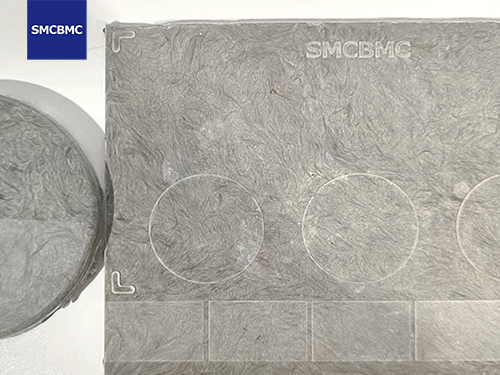
| Property | BMC | Steel / Aluminum | Engineering Plastics |
|---|---|---|---|
| Flame Resistance | UL94 V-0 / 5VA | Non-combustible | Typically requires additives |
| Electrical Insulation | Excellent | Conductive | Good but may degrade in humid environments |
| Thermal Conductivity | Low | High | Moderate |
| High-Temperature Stability | Excellent | Excellent | Limited |
| Weight | Medium | High | Low |
| Dimensional Stability | Excellent | Excellent | Moderate |
From a battery fire containment perspective, BMC offers a unique balance of:
Flame resistance
Electrical insulation
Thermal isolation
Structural durability
within a single material system.
BMC is increasingly used in:
Separating battery modules into independent thermal zones to limit fire propagation.
Providing both electrical insulation and fire protection while contributing to overall pack rigidity.
Supporting fire compartmentalization requirements within containerized energy storage systems.
Including busbar supports, insulation barriers, and structural electrical protection parts.
As battery energy density continues to increase, thermal management and fire containment will become even more important.
The future of battery safety is not defined by a single component but by an integrated system approach involving:
Cell technology
Thermal management
Fire containment
Electrical insulation
Structural design
Within this framework, advanced thermoset composite materials such as BMC are positioned to play an increasingly important role in helping manufacturers achieve higher safety standards while supporting lightweight and cost-effective designs.
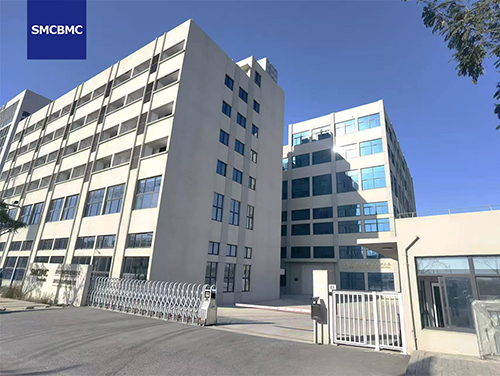
With more than 20 years of experience in thermoset composite materials, precision tooling, and compression molding, Wenzhou Jintong Complete Electric Co., Ltd. provides integrated solutions for:
BMC & SMC Materials
Battery Pack Insulation Components
Fire Barrier Structures
Electrical Insulation Parts
Precision Mold Design & Manufacturing
From material formulation to mass production, we help customers develop safer, more reliable solutions for the next generation of energy storage and electric mobility systems.