

Date | 2026-06-18 07:45:36
Bulk Molding Compound (BMC) compression molding is widely used in electrical insulation components, battery energy storage systems, automotive parts, industrial equipment, and structural composite applications.
While BMC offers excellent electrical, thermal, and mechanical performance, achieving consistent product quality requires careful control of material behavior, tooling conditions, molding parameters, and shop-floor practices.
Even experienced manufacturers occasionally encounter defects such as short shots, porosity, cracking, warpage, or surface imperfections.
This guide reviews the most common BMC molding defects, explains their root causes, and outlines practical corrective actions for improving process stability and product quality.
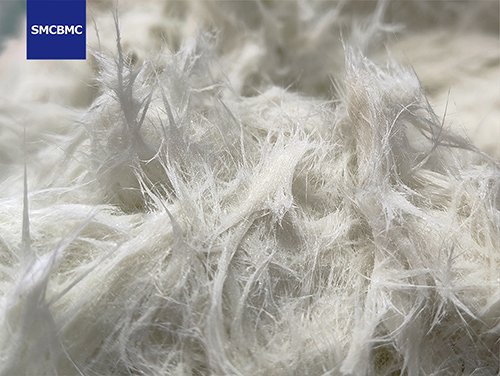
Unlike thermoplastics, thermoset materials undergo irreversible chemical crosslinking during molding.
Once curing begins, material flow rapidly decreases. As a result, even minor deviations in temperature, pressure, material condition, or venting can significantly affect part quality.
Effective defect prevention requires balancing three critical process variables:
Mold Temperature
Molding Pressure
Cure Time
Most production issues can ultimately be traced back to one or more of these factors.
Unfilled corners
Missing material in thin-wall areas
Incomplete edges or ribs
Insufficient charge weight
Inadequate molding pressure
Premature curing caused by excessive mold temperature
Poor material flowability
Insufficient venting
Excessive flow distance from gate to cavity end
Increase charge weight where appropriate
Raise molding pressure
Reduce mold temperature to extend flow time
Use a higher-flow BMC formulation
Improve venting at last-fill locations
Optimize gate location and flow path design
Internal voids
Surface bubbles
Pinholes
Blisters after demolding
Excessively rapid curing
Uneven mold temperature distribution
Inadequate cavity venting
High volatile content in material
Excessive closing speed
Air trapped between glass fibers
Moisture contamination
Oil, release agent, or lubricant contamination
Reduce mold temperature if necessary
Maintain mold temperature uniformity within ±5°C
Improve vent design in deep pockets and trapped-air regions
Store and handle materials properly to prevent moisture absorption
Reduce mold closing speed
Minimize air entrapment during charge placement
Consider vacuum-assisted molding for critical applications
Cracks after demolding
Fractures during machining or assembly
Stress cracks around inserts
Incomplete curing
Excessive residual stress
Uneven ejection forces
Low material toughness
Thermal shock after demolding
Differential shrinkage between inserts and molded material
Localized fiber accumulation
Increase cure time
Verify complete crosslinking
Balance ejection forces
Optimize part geometry to eliminate stress concentration
Preheat metal inserts
Select a tougher BMC formulation when required
Twisted or bowed parts
Out-of-tolerance dimensions
Assembly difficulties
Uneven curing
Significant mold temperature imbalance
Premature demolding
Excessive material shrinkage
Large wall thickness variations
Improve thermal uniformity throughout the mold
Keep mold-half temperature differences below ±5°C
Extend curing cycle
Use low-shrink BMC grades
Design parts with uniform wall thickness whenever possible
Thick flash along parting lines
Increased trimming and finishing requirements
Overcharging
Insufficient clamping force
Poor parting-line fit
Excessive molding pressure
Optimize charge weight
Verify press clamping capacity
Rework worn parting surfaces
Adjust molding pressure as necessary
Dull appearance
Flow marks
Surface haze
Uneven gloss
Low mold temperature
Inadequate mold polishing
Excessive release agent
High volatile content
Insufficient molding pressure
Poor material distribution
Increase mold temperature appropriately
Improve cavity surface finish
Reduce release agent usage
Improve material handling and storage
Increase molding pressure
Optimize charge placement strategy
Yellowing
Brown or black burn marks
Localized overheating
Excessive mold temperature
Trapped air compression
Material degradation due to age
Excessive shear heating
Poor gate design
Reduce mold temperature
Improve venting efficiency
Verify material shelf life
Optimize gate geometry and flow pattern
Temperature controls curing kinetics and material flow behavior.
Typical BMC molding temperatures range between:
130°C – 170°C (266°F – 338°F)
General recommendations:
Thin-wall parts: 150°C – 170°C
Thick-wall parts: 130°C – 150°C
Excessive temperatures may cause premature curing and trapped gases, while insufficient temperatures can result in incomplete cure and reduced mechanical performance.
Pressure influences cavity filling, air removal, and final part density.
Typical molding pressures range from:
10–30 MPa
Best practice typically involves:
Initial low-pressure closure for material flow
Progressive transition to full molding pressure
Controlled curing under pressure
This approach improves venting and reduces short-shot risk.
Cure time must be sufficient to achieve complete crosslinking.
A common engineering guideline is:
30–60 seconds per millimeter of wall thickness
Insufficient cure can cause:
Low strength
Cracking
Dimensional instability
Excessive cure primarily impacts production efficiency.
When defects occur, successful manufacturers avoid guessing and instead follow a structured troubleshooting methodology:
Observe the process and collect feedback from operators and quality inspectors.
Investigate systematically:
Material
Mold
Process Parameters
Equipment
Avoid multiple simultaneous adjustments that make root-cause identification difficult.
Once a solution is verified, update process standards and operating procedures to prevent recurrence.
Most BMC compression molding defects are not isolated events but symptoms of process imbalance.
By maintaining control over mold temperature, molding pressure, cure time, material condition, and venting design, manufacturers can significantly improve part consistency, reduce scrap rates, and achieve higher production efficiency.
For complex or recurring defects, a deeper review of material formulation, mold design, and process engineering may be necessary to achieve long-term stability.
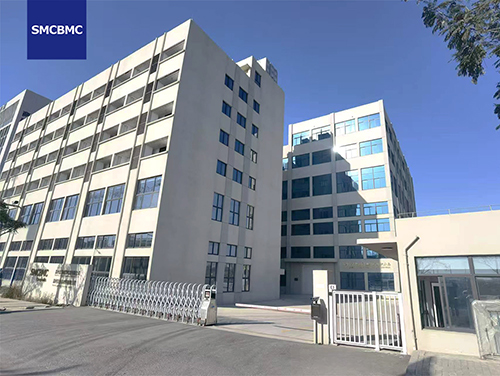
Wenzhou Jintong provides integrated solutions covering:
BMC & SMC Material Development
Precision Tooling Design & Manufacturing
Compression Molding Production
Electrical Insulation Components
Automotive & Energy Storage Composite Parts
With over 20 years of experience in thermoset composites, we help customers optimize material performance, tooling efficiency, and manufacturing reliability.