

Date | 2026-07-06 07:45:08
As photovoltaic (PV) systems continue moving from 1000V DC to 1500V DC architectures, electrical insulation has become one of the most critical design considerations.
Higher system voltage improves power density, reduces cable losses, lowers BOS (Balance of System) costs, and increases inverter efficiency. At the same time, it places much greater demands on every insulating component inside the system.
Busbar supports, terminal bases, fuse holders, insulating frames, and structural barriers must now withstand years of continuous high-voltage operation while being exposed to heat, humidity, UV radiation, and daily thermal cycling.
Selecting the wrong material can result in tracking, insulation degradation, partial discharge, or even catastrophic electrical failure.
This article explains why Bulk Molding Compound (BMC) has become an increasingly preferred solution for high-voltage photovoltaic insulation systems.
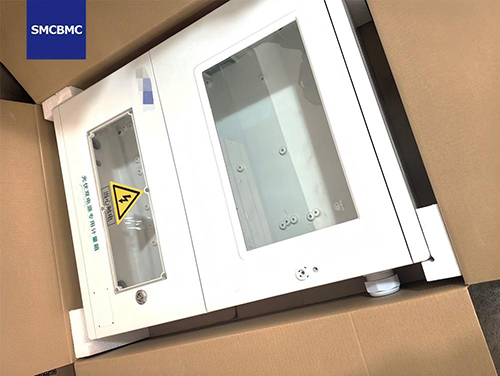
Glass-filled PA66 and PC/ABS blends are widely used in electrical products.
However, outdoor 1500V PV applications introduce challenges that push these materials close to their performance limits.
PA66 naturally absorbs moisture because of its molecular structure.
Over time, absorbed water can:
reduce insulation resistance
increase leakage current
accelerate electrical tracking
shorten service life
Under damp heat conditions (85°C / 85% RH), insulation performance may deteriorate significantly after prolonged exposure.
BMC behaves differently.
Its highly cross-linked thermoset structure absorbs very little moisture, allowing it to maintain excellent electrical insulation even after extended humidity exposure.
According to Wenzhou Jintong's internal qualification standard (Q/JTJ0001-2025):
Dry insulation resistance: ≥1 × 10¹³ Ω
After 24-hour water immersion: ≥1 × 10¹² Ω
This stability is particularly valuable in outdoor solar installations.
PV systems experience continuous temperature cycling.
Metal busbars, inserts, and fastening hardware expand and contract differently from plastic housings.
Large differences in the coefficient of thermal expansion (CTE) may cause:
insert loosening
stress cracking
increased contact resistance
premature insulation failure
Typical CTE values:
PA66-GF30: 80–100 ×10⁻⁶ /°C
BMC: 13–35 ×10⁻⁶ /°C
Steel: ≈12 ×10⁻⁶ /°C
Aluminum: ≈24 ×10⁻⁶ /°C
Because BMC closely matches common metals, it provides much greater dimensional stability throughout repeated thermal cycling.
Solar inverters contain high-energy DC circuits capable of producing sustained electrical arcs during fault conditions.
Insulating materials must therefore provide more than dielectric strength—they must also resist ignition and withstand high temperatures.
Typical Wenzhou Jintong BMC materials offer:
UL94 V-0 at 0.4 mm
Glow Wire Test: 960°C
Temperature Index (TI): 155°C–170°C
Arc Resistance: ≥180 seconds
These properties make BMC particularly suitable for long-term outdoor electrical service.
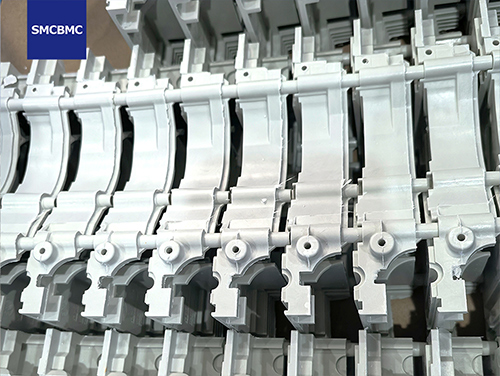
| Property | Wenzhou Jintong BMC | PA66-GF30 | PC/ABS |
|---|---|---|---|
| PTI | ≥600V (Material Group I) | 400–500V | 250–350V |
| Dielectric Strength | ≥20 kV/mm | 20–25 kV/mm | 18–22 kV/mm |
| Arc Resistance | ≥180 s | ~120 s | ~100 s |
| Dry Insulation Resistance | ≥10¹³ Ω·cm | 10¹³–10¹⁴ Ω·cm | 10¹²–10¹³ Ω·cm |
| Wet Insulation Resistance | ≥10¹² Ω·cm | Significant reduction | Moderate reduction |
| UL94 | V-0 | V-2 / V-0 | V-0 |
| Glow Wire | 960°C | 650–850°C | 800–850°C |
| CTE | 13–35 ×10⁻⁶ /°C | 80–100 ×10⁻⁶ /°C | 60–80 ×10⁻⁶ /°C |
| Temperature Index | 155–170°C | ~130°C | ~120°C |
Overall, BMC provides a more balanced combination of electrical insulation, flame resistance, thermal stability, and dimensional accuracy for high-voltage PV systems.
Electrical properties alone do not determine long-term field performance.
Materials used in photovoltaic systems must survive years of:
damp heat
UV exposure
thermal cycling
salt spray
outdoor aging
Accelerated reliability testing of Wenzhou Jintong BMC 16XX materials under 85°C / 85% RH for 2,000 hours demonstrated:
insulation resistance remained highly stable
flexural strength retention exceeded 85%
no visible cracking or blistering
Long-term outdoor exposure testing also indicates excellent weather resistance, supporting the service life expected for modern PV power plants.
| Application | Recommended Material |
|---|---|
| Busbar Supports | BMC 16XX |
| Phase Insulation Barriers | BMC 16XX |
| Terminal Blocks | BMC 17XX |
| Fuse Bases | BMC 17XX |
| High-Temperature Insulation Frames | BMC 18XX |
| Components Near Power Modules | BMC 18XX |
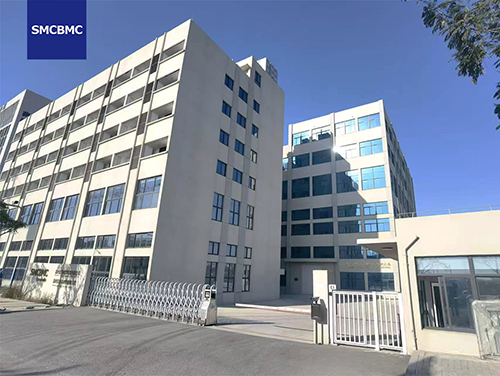
Since 2001, Wenzhou Jintong Complete Appliances Co., Ltd. has specialized in integrated BMC/SMC material development, mold manufacturing, and compression molding production.
Our materials have earned UL Yellow Card certification and are supplied to global electrical equipment manufacturers, including Siemens AG, ABB Ltd., and CHINT Group.
From custom formulations to mass production, we help customers optimize flame retardancy, electrical insulation, thermal performance, and mechanical properties for demanding applications.
If you're developing components for 1500V PV systems, our engineering team can provide material recommendations, technical data, and validation support tailored to your project.