

Date | 2026-07-01 08:37:43
When engineers compare BMC and SMC, they often notice something intriguing: two parts made from similar thermoset composites can exhibit very different strength and stiffness depending on the direction of the load.
This is not a material inconsistency—it is a fundamental characteristic of fiber-reinforced composites known as anisotropy.
Understanding how fiber orientation affects mechanical behavior is essential for selecting the right material, optimizing part design, and achieving predictable performance in real-world applications.
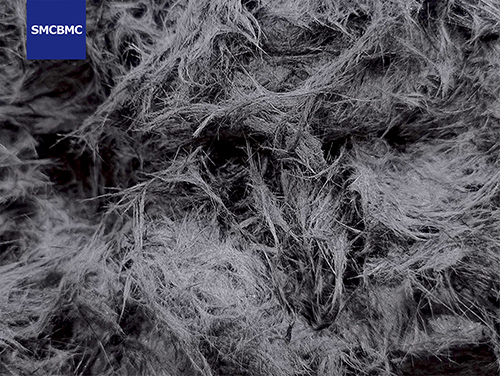
Anisotropy describes a material whose properties vary depending on the direction in which they are measured.
In fiber-reinforced composites, the reason is straightforward: fibers carry loads most efficiently along their length. As fibers become aligned in a particular direction, the composite becomes stronger and stiffer in that direction than in others.
The degree of anisotropy depends largely on:
Fiber length
Fiber content
Fiber orientation
Processing conditions
This is where BMC and SMC begin to differ significantly.
Bulk Molding Compound (BMC) is produced by mixing polyester resin, fillers, additives, and chopped glass fibers, typically 3–12 mm in length.
Because the fibers are dispersed in a largely three-dimensional random pattern, BMC tends to provide relatively uniform mechanical properties in different directions.
However, BMC is not perfectly isotropic.
During compression or injection molding, material flow can locally reorient fibers, particularly around:
Gates
Thin-wall sections
Complex geometries
Insert locations
Even so, compared with many other composite materials, BMC offers a high degree of directional consistency, making it well suited for components subjected to multi-directional loads.
Sheet Molding Compound (SMC) contains longer glass fibers, typically ranging from 12.5 mm to 50 mm.
Unlike BMC, SMC fibers are distributed primarily within a two-dimensional sheet structure. During compression molding, these fibers tend to align with the material flow direction.
As a result, SMC exhibits significantly stronger anisotropic behavior.
Mechanical properties such as:
Tensile strength
Flexural strength
Stiffness
Impact performance
can vary considerably between the flow direction and the transverse direction.
Several factors influence fiber orientation in SMC parts:
Charge pattern and placement
Material flow distance
Mold geometry
Rib and corner design
Compression molding parameters
The advantage is that engineers can intentionally align fibers with the primary load path, maximizing structural performance where it matters most.
| Property | BMC | SMC |
|---|---|---|
| Fiber Length | 3–12 mm | 12.5–50 mm |
| Glass Fiber Content | 15–25% | 25–35% |
| Fiber Distribution | 3D random | 2D planar |
| Degree of Anisotropy | Low | High |
| Directional Strength Variation | Limited | Significant |
| Typical Shrinkage | 0.05–0.2% | 0.01–0.1% |
| Dimensional Stability | Excellent | Excellent, but orientation-sensitive |
In simple terms:
BMC prioritizes uniformity and design flexibility.
SMC prioritizes structural performance and directional reinforcement.
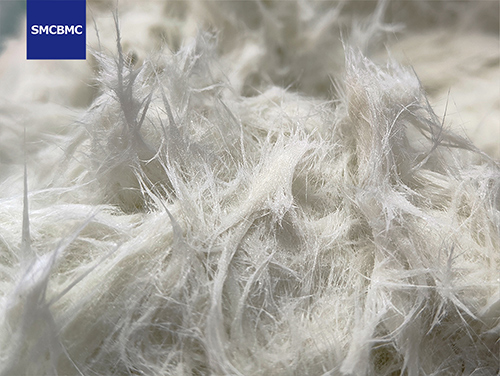
For SMC components, the relationship between fiber orientation and load path is critical.
When fibers align with the primary stress direction, designers can achieve substantially higher strength and stiffness without increasing part weight.
This makes SMC highly effective for:
Automotive structural components
Electrical enclosure panels
Equipment covers
Large load-bearing parts
BMC, by contrast, provides more balanced performance when loads may come from multiple directions.
Fiber orientation affects shrinkage behavior during molding.
Non-uniform fiber distribution can cause uneven shrinkage, increasing the risk of warpage.
Because SMC develops stronger orientation effects, it generally requires greater attention to:
Charge placement
Mold flow design
Rib layout
Tool engineering
BMC's more random fiber structure typically results in lower warpage sensitivity.
For complex geometries, metal inserts, and tight dimensional tolerances, BMC often provides advantages because of:
Better flowability
More uniform properties
Lower orientation sensitivity
This is one reason BMC is widely used for electrical insulation components, circuit breaker housings, contactor bases, and precision molded parts.
| Application | Recommended Material | Reason |
|---|---|---|
| Complex geometries and insert molding | BMC | Uniform properties and excellent flow |
| Large structural panels | SMC | Higher strength and stiffness |
| Clearly defined load direction | SMC | Enables directional reinforcement |
| Multi-directional loading | BMC | More balanced mechanical performance |
| High-precision molded parts | BMC 17XX Series | Low shrinkage and dimensional stability |
| Automotive semi-structural components | SMC | High fiber content and superior load-bearing capability |
Anisotropy is not a weakness of composite materials—it is one of their greatest design opportunities.
BMC and SMC simply utilize fiber reinforcement in different ways:
BMC provides more uniform mechanical behavior through random fiber distribution.
SMC delivers higher structural efficiency through fiber orientation and directional reinforcement.
The optimal choice depends on how the component will be loaded, manufactured, and assembled.
Understanding fiber orientation allows engineers to move beyond material datasheets and design composites that fully exploit their performance potential.
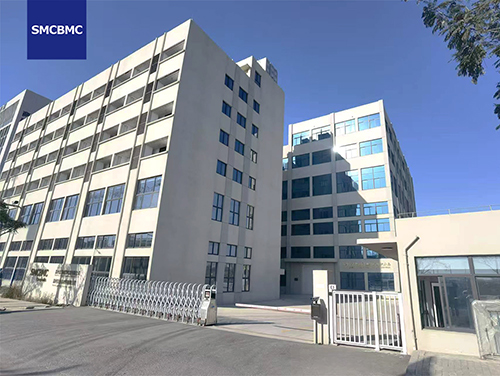
As a long-term supplier to companies including Siemens AG, ABB Ltd., and CHINT Group, Wenzhou Jintong Complete Appliances Co., Ltd. provides both BMC and SMC material systems for electrical, energy storage, industrial, and transportation applications.
Our engineering team supports customers with material selection, mechanical property analysis, mold design optimization, and application-specific performance evaluation.