

Date | 2026-01-19 08:09:09
In modern electrical, energy, and industrial equipment design, material selection is no longer a cosmetic or cost-only decision. It directly affects safety, reliability, compliance, lifecycle cost, and brand risk.
When engineers evaluate BMC (Bulk Molding Compound) versus engineering thermoplastics (such as PA, PC, PBT, PPS), the real question is not “Which material is stronger or cheaper?” but:
Which material delivers the highest system reliability under real operating conditions?
This article provides a clear decision matrix to help engineers, project managers, and product designers choose the right material based on performance logic, not assumptions.
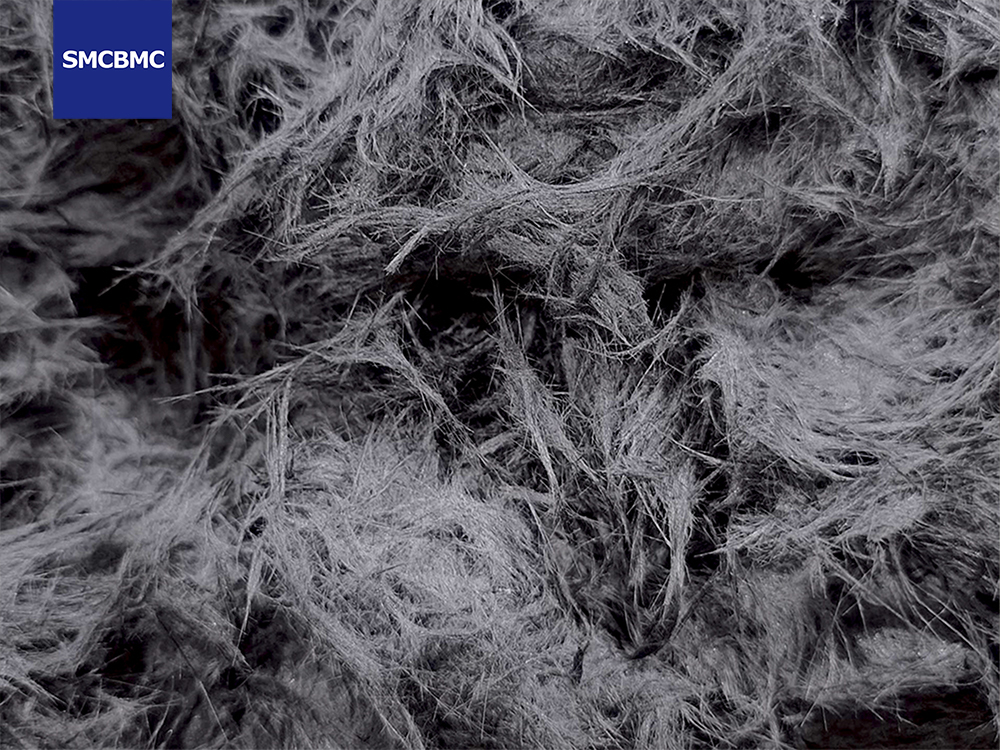
Before comparing data, it is critical to understand the material nature.
Cross-linked polymer structure (irreversible curing)
Glass fiber reinforced
Will not melt, soften, or drip under heat
Designed for structural, electrical, and fire-critical components
Linear or branched molecular structure
Soften and melt when heated
Good for complex shapes and aesthetic parts
Performance strongly depends on temperature and time
This structural difference explains most performance gaps discussed below.
| Evaluation Criteria | BMC (Thermoset) | Engineering Plastics |
|---|---|---|
| Heat Resistance | Excellent (Tg up to 230 °C) | Moderate to good, but softening occurs |
| Flame Retardancy | Inherent, UL94 V-0 without halogens | Additives required, aging sensitive |
| Arc & Tracking Resistance | Very high (CTI ≥ 600 achievable) | Limited, degrades over time |
| Dimensional Stability | Excellent (low CTE) | Creep and deformation under load |
| Long-Term Mechanical Strength | Stable over decades | Stress relaxation and creep |
| Electrical Insulation Stability | Excellent | Sensitive to heat and humidity |
| Vibration Damping | Very good (fiber + matrix synergy) | Limited |
| Environmental Aging | UV, heat, humidity resistant | Property loss over time |
| Design Freedom | Medium–High (compression molding) | Very high (injection molding) |
| Recyclability | Limited (thermoset) | Easier (thermoplastic) |
BMC is not selected for convenience, but for risk control.
Typical applications:
MCB housings and arc chambers
Electrical insulation supports
Motor stator encapsulation
Busbar supports and terminal blocks
High-temperature, fire-sensitive components
Why engineers choose BMC:
No melting or dripping in fault conditions
Stable dimensions under continuous heat
Predictable insulation performance over time
Higher tolerance to overload, vibration, and aging
👉 In safety-critical electrical applications, BMC is a reliability material.
Engineering plastics excel where:
Thin walls and complex geometry are required
Aesthetic surface finish is important
Operating temperature is controlled
Fire exposure risk is low
Typical applications:
Control knobs and covers
Connectors (non-arc areas)
Consumer electronics housings
👉 Engineering plastics are excellent design materials, but not failure-forgiving materials.
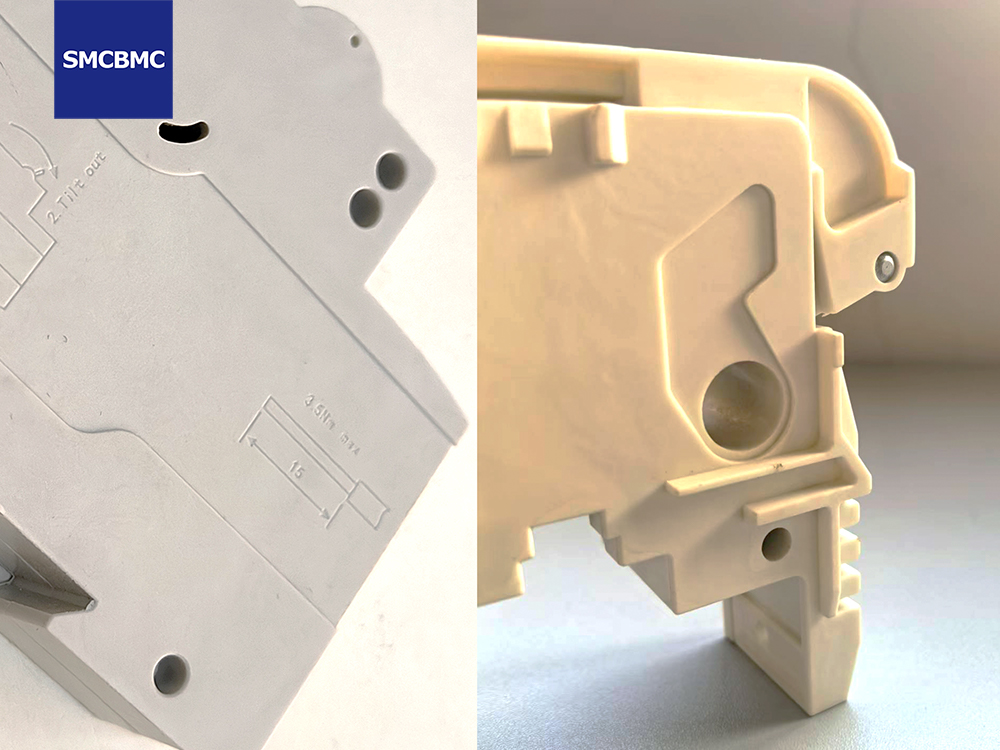
A frequent misconception is:
“Engineering plastics are cheaper than BMC.”
In reality:
Material cost per kg may be lower
System cost over lifecycle is often higher
Hidden costs of incorrect material choice:
Field failures
Certification challenges (UL, IEC)
Warranty claims
Brand and safety risk
BMC often delivers lower total cost of ownership (TCO) in long-life electrical products.
Use this rule during early design reviews:
If the component must still perform safely after 10–20 years of heat, current, vibration, and overload → choose BMC.
If the component prioritizes shape, appearance, and short-term performance → consider engineering plastics.
Material choice alone does not guarantee performance.
To fully unlock BMC advantages, success depends on:
Correct formulation (fiber length, filler system, resin chemistry)
Mold design adapted to material flow and curing
Stable compression molding process control
This is why material–mold–process integration is critical for high-reliability BMC components.
The real advantage of BMC is not just strength or heat resistance.
It is predictability.
In electrical and industrial systems where failure is unacceptable, thermosetting composites provide a wider safety margin than thermoplastics ever can.
Choosing between BMC and engineering plastics is not a trend decision —
it is a risk management decision.