

Date | 2026-03-02 07:37:31
In engineering, strength is easy to measure.
Tensile strength.
Impact resistance.
Flexural modulus.
Numbers are clear. Comparisons are straightforward. Specifications look reassuring.
But in real-world infrastructure — electrical systems, smart grids, industrial equipment, transportation networks — failures rarely occur because a component lacked strength on day one.
They occur because something moved.
Something drifted.
Something relaxed.
Something slowly changed shape.
Reliability, in practice, is not about peak strength.
It is about stability over time.
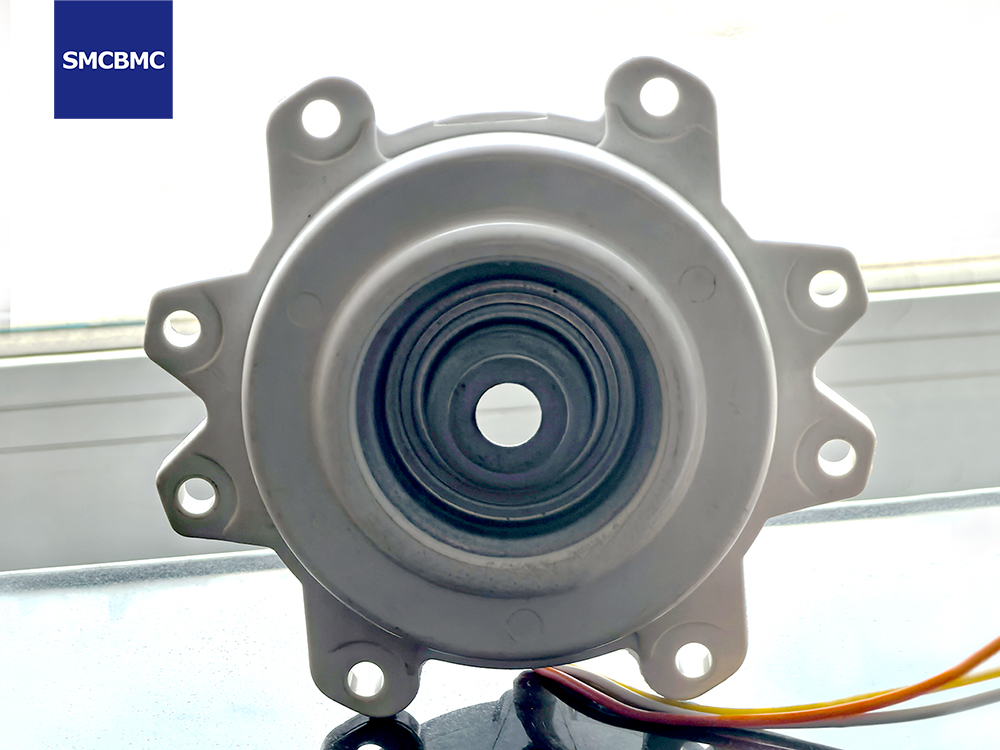
Strength describes how a material performs under a defined load at a defined moment.
Stability describes how that material behaves:
After thousands of thermal cycles
Under continuous mechanical stress
In humid or outdoor environments
With constant vibration
Over 10–20 years of service life
A component can be strong — yet dimensionally unstable.
It can pass laboratory testing — yet fail in long-term deployment.
In modern infrastructure, duration matters more than initial resistance.
Instability does not announce itself dramatically.
It appears as:
Slight dimensional drift
Reduced clamping force
Creepage distance reduction
Seal misalignment
Gradual contact resistance increase
None of these are catastrophic on day one.
But when tolerance margins are tight and systems are compact, small deviations accumulate into functional risk.
In electrical systems, movement is often more dangerous than weakness.
Bulk Molding Compound (BMC) is a thermosetting composite reinforced with glass fibers and mineral fillers. Unlike thermoplastics, it forms a permanently crosslinked molecular structure during curing.
This structure provides:
Low thermal expansion
Minimal creep under sustained load
High rigidity at elevated temperatures
Resistance to moisture-induced deformation
Stable dimensional behavior over extended service periods
Once cured, BMC does not soften or relax under heat.
Its geometry remains predictable.
For applications such as:
Smart meter enclosures
Switchgear housings
Motor insulation systems
Busbar supports
Rail electrical components
predictable geometry is directly linked to electrical safety and operational reliability.
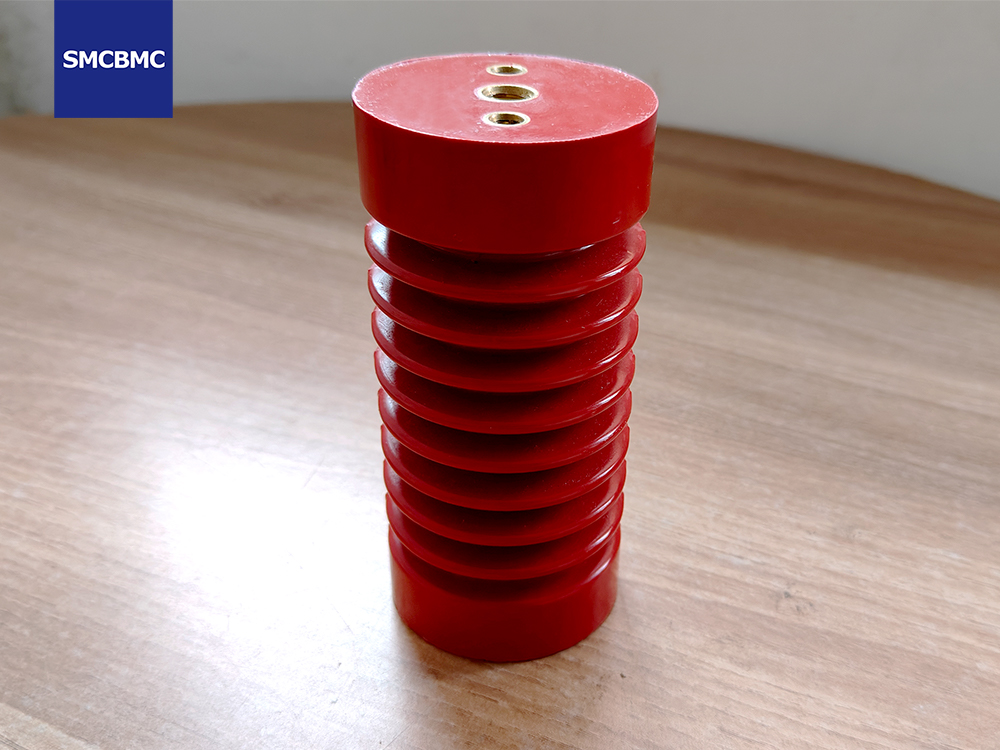
Reliability cannot be engineered through material properties alone.
It depends on:
Formulation precision
Fiber distribution control
Mold design optimization
Temperature uniformity
Pressure and curing discipline
At Wenzhou Jintong, stability is engineered through integrated material–mold–process control, ensuring that laboratory specifications translate into consistent, repeatable production performance.
In high-density electrical systems, consistency is protection.
As electrification expands and systems become more intelligent, operational lifespans extend.
Infrastructure components are expected to function reliably for 15–20 years or more. Under these conditions, strength without stability becomes insufficient.
The real engineering question is not:
“How strong is the material?”
It is:
“How unchanged will it remain?”
Reliability is not strength.
It is stability sustained over time.
Modern electrical infrastructure demands materials that do not simply withstand load — they must resist movement, deformation, and drift throughout their service life.
In compact, tolerance-sensitive systems, stability defines safety.
BMC is not selected for impressive peak numbers.
It is selected for predictable long-term behavior.
Because in infrastructure engineering, reliability is measured in years — not in megapascal.
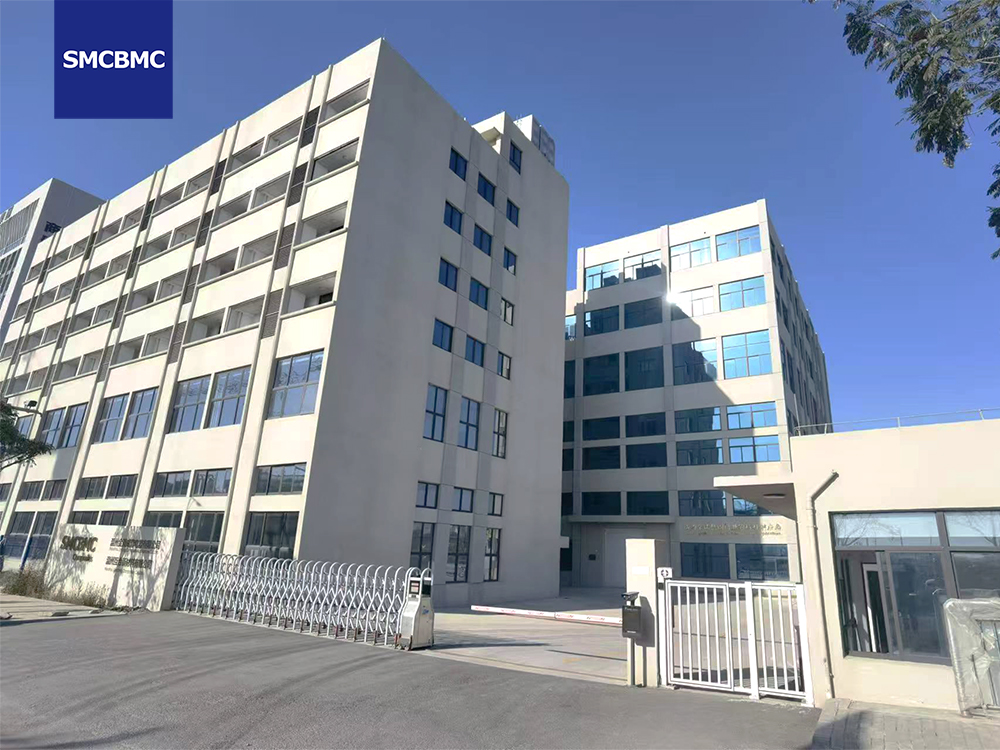
Wenzhou Jintong Complete Appliances Co., Ltd. specializes in high-performance BMC/SMC thermosetting composites, precision mold development, and compression molding of electrical and structural components.
We provide dimensionally stable, flame-retardant composite solutions for smart grid systems, motor assemblies, switchgear, and infrastructure-grade electrical applications worldwide.