

Date | 2026-03-12 10:58:29
In the manufacturing of electrical components, material properties alone do not determine final product performance.
Even when high-quality composite materials are used, the reliability and consistency of the finished part depend heavily on how materials, mold design, and manufacturing processes work together.
This integrated engineering approach — often referred to as material–mold–process integration — is essential for producing high-performance components using thermoset composites such as BMC (Bulk Molding Compound).
Composite materials like BMC are widely used in electrical systems because they offer a unique combination of:
high electrical insulation
flame retardancy
dimensional stability
mechanical strength
resistance to heat and moisture
However, these properties only represent the potential of the material.
To translate that potential into reliable parts, manufacturers must carefully control the molding environment and tooling design.
Without proper process control, even excellent materials can produce inconsistent results.
In compression molding of BMC components, the mold is not simply a shaping tool. It plays a major role in determining how the material flows, cures, and forms its final structure.
Well-designed molds help ensure:
balanced fiber distribution
uniform pressure application
controlled shrinkage behavior
consistent dimensional accuracy
Mold temperature uniformity is especially important. Uneven heating can lead to incomplete curing or internal stress within the composite structure.
For electrical components where dimensional precision and insulation integrity are critical, mold design becomes a key factor in product reliability.
Beyond materials and mold design, the molding process itself has a direct impact on part quality.
Key parameters in BMC compression molding include:
mold temperature
pressure profile
curing time
material charge placement
flow behavior inside the mold
Carefully controlled process parameters help ensure:
stable mechanical strength
consistent electrical insulation performance
minimal internal defects
reliable batch-to-batch repeatability
For industries such as electrical infrastructure, motors, and smart energy systems, this level of manufacturing consistency is essential.
When material formulation, mold engineering, and manufacturing processes are developed together, manufacturers gain a much higher level of control over final component performance.
This integrated approach enables:
optimized part design
reduced production defects
improved dimensional stability
better long-term reliability
For electrical components that must operate for decades, this coordination between material science and manufacturing engineering is a major advantage.
As electrical systems continue to demand higher reliability and longer service life, manufacturers are increasingly looking for partners capable of providing integrated composite solutions.
Combining material expertise with mold design and manufacturing capabilities allows complex electrical components to be produced with both high performance and consistent quality.
In composite manufacturing, the best results are achieved when materials, molds, and processes are engineered as a single system.
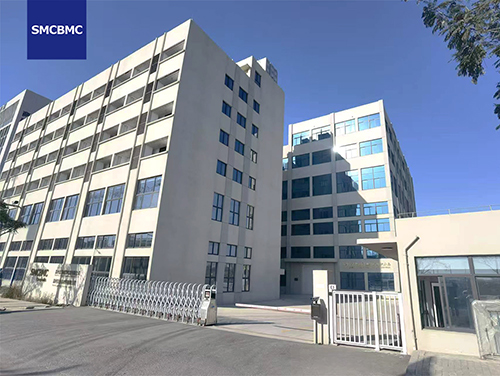
Wenzhou Jintong Complete Appliances Co., Ltd. specializes in BMC and SMC thermoset composite materials, precision mold design, and compression molding of electrical insulation components.
By integrating material development, mold engineering, and manufacturing processes, we provide reliable composite solutions for electrical equipment, motors, rail transit, smart energy systems, and industrial applications.
Our integrated approach ensures stable quality, dimensional accuracy, and long-term performance for critical electrical components.