

Date | 2026-03-14 07:37:44
In composite manufacturing, material selection is only part of the equation. The molding process used to shape the material can significantly influence the final performance of a component.
For BMC (Bulk Molding Compound), two molding technologies are commonly used in industrial production: compression molding and injection molding.
Both processes are capable of producing high-quality thermoset components, but they differ in material flow behavior, tooling design, production efficiency, and typical application scenarios.
Understanding these differences helps engineers select the most suitable process for their specific product requirements.
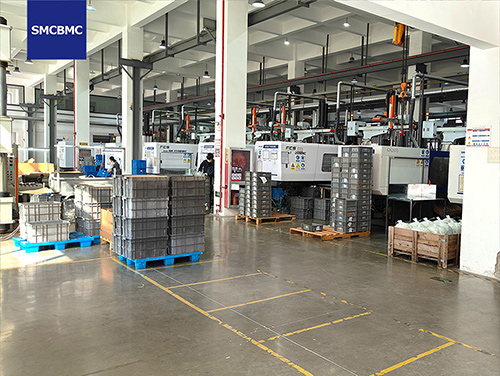
Compression molding is a widely used process for manufacturing BMC components, especially in applications where mechanical strength and dimensional stability are critical.
In this process, a measured charge of BMC material is placed directly into a heated mold cavity. The mold is then closed under pressure, forcing the material to flow and fill the cavity while the thermoset resin cures.
Because the material flows under relatively controlled conditions, the glass fiber reinforcement can remain well distributed within the structure.
Compression molding is commonly used for components such as:
motor terminal boards
busbar supports
switchgear insulation structures
electrical housings
industrial structural components
The process is particularly suitable for medium-to-large parts that require high structural reliability.
Injection molding is another manufacturing method used for shaping BMC materials, particularly in applications that require higher production efficiency or more complex geometries.
In injection molding, BMC material is fed into a heated barrel and pushed forward by a screw before being injected into a closed mold cavity.
This process allows the material to fill intricate geometries and thin-wall structures more easily.
Injection molding is often used for:
smaller components
complex geometries
high-volume production
parts requiring faster cycle times
For certain product designs, injection molding offers advantages in automation and production efficiency.
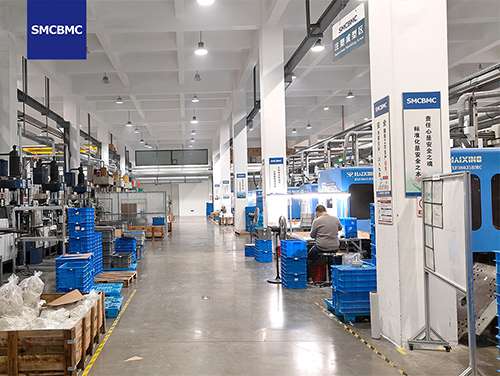
While both processes use the same thermoset material system, the molding conditions can influence part characteristics.
Compression molding allows the material to flow gradually within the mold cavity.
Injection molding involves higher shear forces as the material passes through the injection system, which may influence fiber orientation and flow patterns.
Injection molds generally require runner systems, gates, and more complex flow channel designs.
Compression molds are structurally simpler but require careful control of material charge placement and cavity filling behavior.
Injection molding can achieve shorter cycle times in high-volume manufacturing environments.
Compression molding is often preferred for parts where structural integrity and dimensional precision are the primary priorities.
Both processes are capable of producing reliable BMC components when properly designed and controlled.
The choice of process often depends on the balance between:
part size
geometry complexity
production volume
structural requirements
In practice, the most suitable molding process depends on the design requirements of the component.
For example:
Compression molding is often chosen for larger structural parts or insulation components where dimensional stability is critical.
Injection molding may be preferred for smaller, more complex parts that benefit from higher production automation.
Rather than viewing the two processes as competitors, many manufacturers use both technologies to optimize different types of components within the same product system.
Regardless of the molding method used, achieving consistent performance requires close coordination between material formulation, mold design, and process control.
Parameters such as mold temperature, pressure distribution, curing time, and material flow must be carefully managed to ensure the composite material develops its intended properties.
When materials, molds, and processes are engineered together, manufacturers can achieve reliable performance across a wide range of applications.
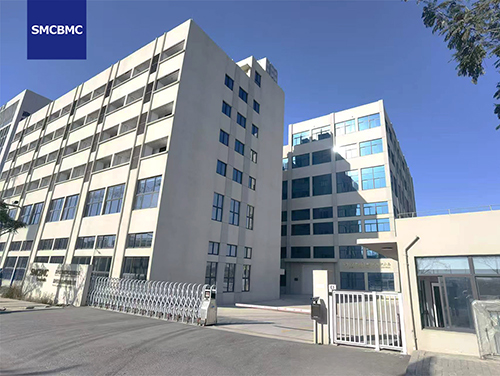
Wenzhou Jintong Complete Appliances Co., Ltd. specializes in BMC and SMC thermoset composite materials, mold development, and composite component manufacturing.
Our capabilities include both compression molding and injection molding, allowing us to provide flexible manufacturing solutions for a wide range of electrical and industrial components.
Through integrated expertise in materials, tooling, and process engineering, we support customers in developing reliable composite components for electrical equipment, motors, smart energy systems, and industrial infrastructure.