

Date | 2026-05-18 10:29:10
In technical datasheets for electrical insulation materials, two parameters appear repeatedly:
PTI ≥600V
CTI ≥400V
Although the two tests are related and often confused, they are not interchangeable.
And the distinction matters.
An engineer who mistakes PTI for CTI may unintentionally overestimate a material’s long-term tracking resistance under humid and energized operating conditions. In many cases, the consequences may not appear until years after equipment enters service.
This article explains the difference between PTI and CTI from three perspectives:
international standards,
testing methodology,
and real-world engineering application.
Both PTI and CTI originate from the same fundamental tracking resistance test defined in:
IEC 60112
GB/T 4207
The basic principle is simple:
A voltage is applied across the surface of an insulating material while electrolyte droplets are deposited repeatedly onto the surface. The goal is to determine whether conductive tracking failure occurs.
However, despite sharing the same test platform, PTI and CTI evaluate completely different things.
CTI (Comparative Tracking Index) determines the highest voltage a material can withstand during 50 electrolyte drops without tracking failure.
The test voltage is gradually increased step-by-step until failure occurs.
In practical terms, CTI answers the question:
“What is the maximum tracking-resistant capability of this material?”
CTI is directly used in:
creepage distance calculations,
insulation coordination,
and material grouping under IEC standards.
IEC classifies materials into groups such as:
| Material Group | CTI Range |
|---|---|
| Group I | ≥600V |
| Group II | 400–599V |
| Group IIIa | 175–399V |
| Group IIIb | 100–174V |
A higher CTI allows engineers to design shorter creepage distances while maintaining electrical safety.
PTI (Proof Tracking Index) does not determine a maximum capability.
Instead, it verifies whether a material can survive one predefined voltage level — typically 600V — during the standard 50-drop test.
PTI answers a different question:
“Can this material reliably pass at this specified voltage?”
For example, according to Wenzhou Jintong internal standard Q/JTJ0001-2025:
all BMC material grades must achieve PTI ≥600V
meaning the material successfully survives the test at 600V without tracking failure.
However, PTI alone does not reveal the actual upper performance limit of the material.
| Parameter | CTI | PTI |
|---|---|---|
| Purpose | Determine maximum capability | Verify pass/fail at set voltage |
| Test Logic | Step-up voltage testing | Single specified voltage |
| Engineering Role | Design reference | Production quality control |
| Key Question | “How much can it withstand?” | “Can it reliably pass this level?” |
A material with high CTI will naturally pass PTI at lower voltages.
But a material that passes PTI at 600V does not automatically mean its CTI is 600V.
This is the most common misunderstanding in the industry.
A supplier states:
“PTI ≥600V”
The engineer then assumes the material belongs to CTI Group I.
This can be dangerous because PTI only verifies performance at a single voltage point. It does not establish the actual maximum tracking resistance capability required for insulation coordination calculations.
IEC 60112 allows two electrolyte solutions:
Solution A
Solution B
The same material may produce different CTI/PTI values depending on the electrolyte used.
If a test report does not clearly specify the electrolyte type, comparisons between materials become unreliable.
In most electrical equipment applications, Solution A is the default unless otherwise specified.
For BMC materials, tracking performance depends on multiple formulation factors:
filler selection,
resin purity,
glass fiber content,
additive systems,
and processing consistency.
A material may test at exactly 400V CTI in one batch and slightly below in another.
This is why PTI is often more practical for production quality control.
At Wenzhou Jintong, PTI ≥600V is treated as a mandatory outgoing inspection item for every production batch to ensure consistent insulation reliability.
Compared with many thermoplastic engineering plastics, BMC thermoset composites typically offer superior tracking resistance.
This comes from two important material characteristics:
Unsaturated polyester thermoset systems resist thermal decomposition and carbonized conductive path formation better than many thermoplastics.
Fillers such as:
aluminum hydroxide,
calcium carbonate,
and mineral reinforcements
help absorb heat and release water vapor at elevated temperatures, delaying surface carbonization.
These mechanisms significantly improve resistance to electrical tracking.
According to Q/JTJ0001-2025, all Wenzhou Jintong BMC material grades achieve:
PTI ≥600V (Solution A)
corresponding to IEC Material Group I performance requirements.
This makes BMC highly suitable for:
circuit breakers,
contactors,
smart meter enclosures,
switchgear insulation parts,
and other compact electrical systems requiring reduced creepage distances.
A “600V” result alone is meaningless without understanding the test method.
If the supplier cannot provide step-voltage testing details, the result is probably PTI rather than CTI.
Always verify whether Solution A or Solution B was used.
The two results are not directly comparable.
A single batch may achieve exceptionally high CTI values.
But long-term product safety depends on stable production consistency.
That is why Wenzhou Jintong uses PTI ≥600V as a batch-level release requirement rather than relying solely on occasional peak CTI measurements.
In electrical insulation engineering, misunderstanding PTI and CTI can lead to incorrect creepage calculations, inadequate safety margins, and long-term reliability risks.
Reliable insulation design requires more than simply reading a datasheet value. It requires understanding:
what the number actually means,
how it was tested,
and whether it remains consistent in mass production.
At Wenzhou Jintong, we combine material engineering, process control, and electrical application expertise to provide reliable thermoset insulation solutions for demanding electrical environments.
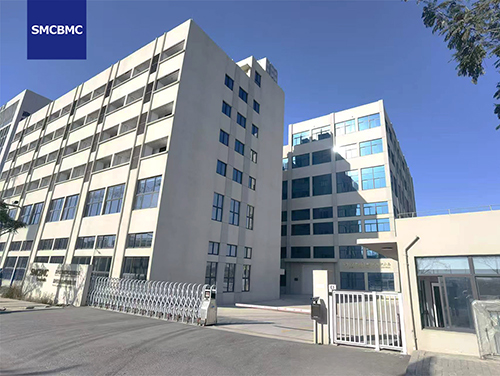
Wenzhou Jintong specializes in:
BMC/SMC thermoset composite materials
electrical insulation components
precision mold development
compression molding manufacturing
customized electrical insulation solutions
For technical support or material selection consultation:
📧 wendy.qiu@smcbmc.com
📞 +86 13868305300