

Date | 2026-06-24 07:45:00
When engineers select BMC (Bulk Molding Compound) or SMC (Sheet Molding Compound), mechanical strength and electrical insulation are often the first considerations. Yet one practical question ultimately determines long-term reliability:
How long will the component perform as intended?
Low-voltage electrical enclosures are expected to operate for decades. Energy storage insulation components must match the lifetime of battery systems. Automotive parts must withstand years of thermal cycling and environmental exposure.
Because product development cannot wait 10 or 20 years for real-time validation, engineers rely on accelerated aging methods to predict long-term performance. The scientific foundation behind these predictions comes from chemical kinetics, particularly the Arrhenius equation.
Material aging is fundamentally a chemical process.
Over time, thermoset composites such as BMC and SMC are exposed to heat, oxygen, moisture, UV radiation, and other environmental stresses. These factors gradually alter the polymer network through irreversible chemical reactions, including oxidation, chain scission, and post-curing effects.
At the molecular level, the material structure changes.
At the engineering level, these changes appear as:
Reduced mechanical strength
Lower impact resistance
Degraded insulation performance
Dimensional instability
Among all environmental factors, temperature is typically the most significant driver of aging.
Most degradation reactions in polymers are thermally activated. As temperature increases, reaction rates accelerate, causing materials to age more rapidly and shortening service life.
This relationship forms the basis of modern lifetime prediction.
The Arrhenius equation describes how reaction rates change with temperature:
k = A · exp(-Ea / RT)
Where:
k = reaction rate constant
A = pre-exponential factor
Ea = activation energy
R = gas constant
T = absolute temperature
For engineering applications, this relationship is adapted to connect time-to-failure with operating temperature.
By conducting accelerated aging tests at elevated temperatures and measuring how long it takes for a critical property to decline to a specified threshold, engineers can extrapolate performance at normal service temperatures.
For thermoset composites such as BMC and SMC, the Arrhenius approach is particularly effective when aging mechanisms remain consistent throughout the test temperature range.
In the electrical insulation industry, Arrhenius-based lifetime prediction has been standardized through the concept of Thermal Index (TI).
A Thermal Index represents the temperature at which a material can operate for an extended period while retaining a defined level of performance, typically 50% of its original property value.
The evaluation process generally includes:
Aging specimens at multiple elevated temperatures
Periodically measuring critical properties
Recording time-to-endpoint at each temperature
Constructing an Arrhenius plot
Extrapolating long-term performance at lower operating temperatures
A higher Thermal Index indicates greater thermal endurance and longer expected service life.
For example:
BMC 16XX Series: TI ≥ 155°C
BMC 18XX Series: TI ≥ 170°C
This means the higher-rated material can maintain its performance for significantly longer periods under elevated-temperature conditions.
Typical BMC materials exhibit heat deflection temperatures ranging from approximately 200°C to 280°C and can operate continuously in environments around 130°C with minimal performance degradation.
In protected indoor applications, properly designed BMC components commonly achieve service lives of:
15–20 years or more
This comfortably meets the design requirements of most electrical distribution and industrial control equipment.
Long-term outdoor exposure introduces additional challenges such as UV radiation, temperature cycling, humidity, and environmental contaminants.
Even after prolonged outdoor service, thermoset composites often maintain a significant portion of their original structural properties due to their highly crosslinked molecular architecture.
In many applications, strength retention remains above 60% after extended weathering exposure.
Compared with many conventional insulation materials, thermoset composites benefit from:
High crosslink density
Superior dimensional stability
Strong resistance to thermal aging
Reduced creep over time
These characteristics contribute to their widespread use in electrical infrastructure, transportation systems, renewable energy equipment, and industrial applications.
Engineers need objective data to ensure products meet target service-life requirements.
Thermal Index ratings and accelerated aging studies provide a quantifiable basis for material selection.
Manufacturers cannot wait decades to confirm reliability.
Accelerated aging allows long-term performance to be evaluated within weeks or months, significantly reducing development cycles.
Thermal endurance testing is recognized globally through standards such as:
IEC 60216
UL thermal aging systems
Various electrical insulation qualification programs
These standards provide a common framework for evaluating long-term material reliability.
Laboratory testing is essential, but real-world validation is equally important.
BMC and SMC materials supplied by Wenzhou Jintong have been deployed in demanding electrical and energy applications for many years. As a qualified supplier serving projects associated with leading global manufacturers such as Siemens, ABB, and CHINT, our materials have accumulated extensive field-performance data in low-voltage electrical equipment, power distribution systems, and energy infrastructure.
This long-term application experience complements laboratory aging studies and provides additional confidence in lifetime prediction and material reliability.
When laboratory aging data aligns with field experience, engineers gain greater confidence in lifetime predictions and material selection decisions.
| Application Environment | Recommended Material | Thermal Index | Expected Service Life* |
|---|---|---|---|
| Indoor electrical enclosures | BMC 16XX Series | ≥155°C | 15–20 years |
| Industrial equipment (80–100°C continuous exposure) | BMC 16XX Series | ≥155°C | 10–15 years |
| Automotive under-hood components | BMC 18XX Series | ≥170°C | Vehicle lifetime |
| Outdoor electrical infrastructure | Weather-resistant BMC/SMC | ≥155°C | Long-term outdoor durability |
*Actual service life depends on operating conditions, load profiles, environmental exposure, and design factors.
The service life of BMC and SMC materials is not a matter of estimation or assumption.
It can be predicted through a combination of:
Chemical kinetics
Arrhenius-based aging models
Thermal Index testing
Accelerated aging validation
Real-world field performance
Together, these tools provide a scientifically grounded framework for evaluating long-term reliability.
For engineers, the goal is not simply to know a material's specifications today—but to understand how those properties will evolve after years of operation.
That perspective is what transforms material selection from a purchasing decision into an engineering decision.
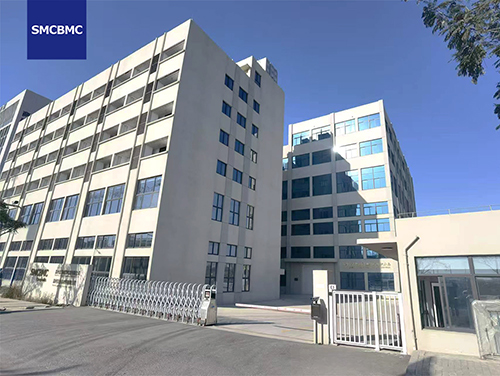
Wenzhou Jintong Complete Appliances Co., Ltd. provides BMC and SMC material solutions with comprehensive thermal-aging and long-term performance data to support lifetime assessment and reliability engineering.
For technical support, material selection guidance, or aging-performance information:
📧 wendy.qiu@smcbmc.com
📞 +86 13868305300