

Date | 2026-08-03 10:33:36
For years, the compliance checklist for exporting BMC/SMC components to the European Union was short: RoHS and REACH. Pass those two, and the market was open.
That checklist is now considerably longer.
The EU Carbon Border Adjustment Mechanism (CBAM) entered its definitive phase in January 2026.The EU Battery Regulation is phasing in carbon-footprint declarations and digital battery passports. The End-of-Life Vehicles (ELV) directive is undergoing its most significant revision in two decades. And EN 45545-2 for railway fire safety continues to tighten. For manufacturers of thermoset molding compounds and molded parts, the regulatory landscape has evolved from a simple two-line checklist into an interconnected web of obligations — some already enforceable, others on the horizon but approaching fast.
This article maps the six regulations most relevant to BMC/SMC exporters, explains what each one means in practical terms, and outlines the compliance data Wenzhou Jintong can supply today.
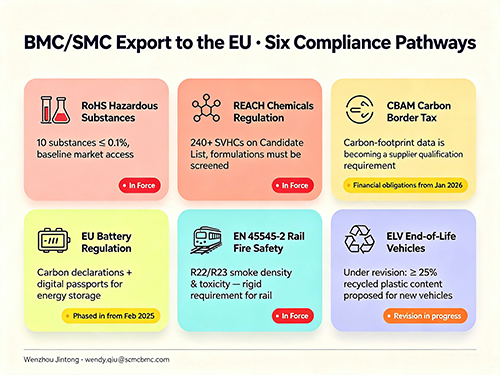
Table 1: EU Regulatory Landscape for BMC/SMC Products
| Regulation | Core Requirement | Impact on BMC/SMC | Timeline |
|---|---|---|---|
| RoHS (2011/65/EU) | Restricts 10 hazardous substances (Pb, Hg, Cd, Cr VI, PBB, PBDE, 4 phthalates) to ≤ 0.1% each (Cd ≤ 0.01%) | BMC raw material formulations must pass RoHS compliance testing | In full effect; updated as substances are added |
| REACH (EC 1907/2006) | Substances of Very High Concern (SVHCs) must be declared if present above 0.1% w/w; certain substances are restricted | BMC constituents — resin, fillers, flame retardants, mold release — must be screened against the the continuously updated SVHC Candidate List | In full effect; SVHC list updated twice yearly |
| CBAM (EU 2023/956) | Importers must declare embedded emissions and purchase CBAM certificates for covered goods | BMC/SMC not directly in the initial scope (steel, aluminum, cement, fertilizer, electricity, hydrogen), but downstream customers may demand carbon-footprint data to support their own CBAM filings | Transitional phase since Oct 2023; financial obligations from Jan 2026 |
| EU Battery Regulation (EU 2023/1542) | EV and industrial batteries require carbon-footprint declarations, digital battery passports, and disclosure of recycled content (Co, Li, Ni) | BMC insulators and fire barriers inside battery packs are not active cell materials, but battery manufacturers may require upstream material data for their own declarations | Carbon-footprint declaration requirements are being introduced progressively from 2025; recycled-content targets: from 2031 |
| EN 45545-2 | Sets smoke density (Ds) and toxicity index (CIT) limits for materials used in rolling stock, by hazard level (R22/R23) | BMC/SMC parts in European rail vehicles must pass the relevant hazard-level tests | In full effect |
| ELV (2000/53/EC, under revision) | The proposed revision is expected to introduce requirements such as(of which 25% closed-loop); mandatory plastic-content disclosure | Automotive BMC/SMC parts (lamp housings, motor end-caps, PTC brackets) may need recycled-content statements or recycling pathway documentation | Current directive in force; revised text expected to phase in key provisions between 2025–2027 |
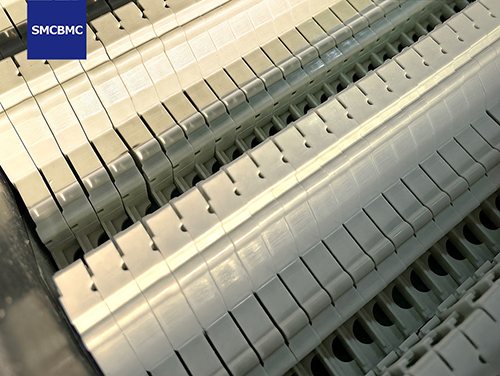
RoHS and REACH: The Non-Negotiable Baseline
These remain the entry ticket. Without RoHS compliance, market access to many EU applications is not possible.Wenzhou Jintong's enterprise standard Q/JTJ0001-2025 incorporates all ten RoHS 2.0 substance limits as mandatory requirements, with periodic verification testing built into the quality system. For REACH, the company tracks updates to the SVHC Candidate List and screens formulations accordingly. Customers with specific compliance needs can request material composition declarations and RoHS test reports.
CBAM: When Carbon Costs Become Real
CBAM's initial scope does not directly cover BMC/SMC molding compounds. But indirect effects are already materializing. European electrical equipment manufacturers and automotive tier-1 suppliers, facing their own CBAM obligations on metal components, increasingly request carbon-footprint data from upstream material suppliers as part of their broader carbon accounting. Carbon-footprint capability is becoming a supplier-qualification criterion — even where CBAM does not directly apply.
Wenzhou Jintong completed a pilot carbon-footprint assessment for its BMC 16XX series in 2025, following GB/T 45441-2025 (China's national standard for plastic-product carbon-footprint quantification, aligned with ISO 14067 principles). This dataset is available to customers for their own carbon-disclosure and CBAM-supporting documentation.
EU Battery Regulation: A New Reality for Energy Storage
The Battery Regulation represents a paradigm shift — from regulating product safety to regulating the entire lifecycle. For the BMC industry, the relevant touchpoint is energy storage: the insulation barriers and fire-protection plates inside battery packs. While these BMC components are not electrochemically active, battery system manufacturers compiling carbon-footprint declarations and battery passport preparation will increasingly require upstream material information. Wenzhou Jintong has published extensively on BMC insulation for battery storage (including 1500 V DC creepage design per IEC 60664-1, dual-85 reliability verification, and fire-barrier material selection) and can supply the supporting performance and carbon data battery manufacturers require.
EN 45545-2: The Rail Industry's Fire-Safety Gatekeeper
This standard harmonized what was once a fragmented patchwork of national fire-safety codes across Europe. For BMC/SMC components inside rolling stock — electrical cabinet insulators, interior structural parts — compliance with the applicable hazard-level smoke and toxicity limits is mandatory. Wenzhou Jintong has published a dedicated technical article on BMC performance under EN 45545-2 and can supply grades with verified R22/R23 test data.
ELV Revision: A Variable Worth Watching Now
The current ELV directive already restricts heavy metals and sets 85% reuse/recycling targets. The proposed revision goes significantly further: ≥ 25% of plastic in new vehicles from recycled sources (with 25% of that closed-loop), mandatory disclosure of plastic types and weights, and potential restrictions on microplastic release. For automotive BMC/SMC parts, this means recycled-content requirements or recycling-pathway documentation may shift from "nice to have" to "mandatory." Mechanical recycling of thermoset compounds — grinding cured BMC into filler — is the most technically mature near-term route. Wenzhou Jintong includes Recycling among its four core capabilities and maintains technical engagement with industry recycling partners.
Rather than tackling all six regulations at once, we recommend a four-tier progression:
Tier 1 — Secure the baseline (RoHS + REACH). Never let these lapse. Confirm your supplier can provide RoHS ten-substance test reports and REACH SVHC compliance statements for every batch.
Tier 2 — Build carbon-footprint capability (preparation for CBAM + Battery Regulation). Even if CBAM does not yet cover your product, carbon-footprint data is becoming a standard supplier-qualification requirement. Select a BMC supplier that has completed carbon accounting, or complete a pilot assessment of your own products within 2026.
Tier 3 — Address sector-specific mandates (EN 45545 + Battery Regulation). Rail exports require EN 45545-2 testing. Storage exports require battery carbon-footprint and passport readiness. These are not universal, but where they apply, they are rigid entry requirements.
Tier 4 — Monitor and prepare (ELV revision + recycled content). Automotive suppliers should track the ELV revision timeline. Among the available recycling routes for thermosets, mechanical grinding into filler is the most industrially mature and can serve as a near-term response strategy.
With over two decades of specialization in BMC/SMC materials and molding, Compliance Data Package Available for Customers:
RoHS compliance: Q/JTJ0001-2025 enterprise standard incorporates all ten RoHS 2.0 substance limits; batch-level declarations and test reports available.
REACH SVHC: SVHC Candidate List tracked and formulations screened against updates; material composition declarations available.
Carbon-footprint data: Pilot carbon-footprint assessment completed for BMC 16XX series per GB/T 45441-2025; data available for customer carbon-disclosure needs.
EN 45545-2: Grades with verified R22/R23 smoke density and toxicity test data available.
Material composition and recyclability declarations: Support for automotive customers' ELV-related documentation.
UL Yellow Card: BMC materials UL Yellow Card listed since 2018; RTI, CTI, and flammability ratings retrievable via UL iQ database.
📧 wendy.qiu@smcbmc.com📞 +86-13868305300