

Date | 2026-08-24 14:14:19
1. Water: The Hidden Enemy of Insulation
Insulation parts in chemical pumps, valves, underwater equipment and outdoor distribution enclosures live with water, moisture and even chemical media year-round. For insulating materials, water is the most common cause of failure: water molecules penetrating the material directly lower insulation resistance, and long-term immersion can trigger hydrolysis aging that gradually degrades performance.
When an insulation part fails in a wet environment, the result can be equipment malfunction, short circuit or leakage. For electrical parts exposed to moisture, "hydrolysis resistance and low water absorption" matter as much as electric strength — dry-state performance is only the starting point; wet-state behavior is the real working condition.
2. Wet-State Performance Is What Matters
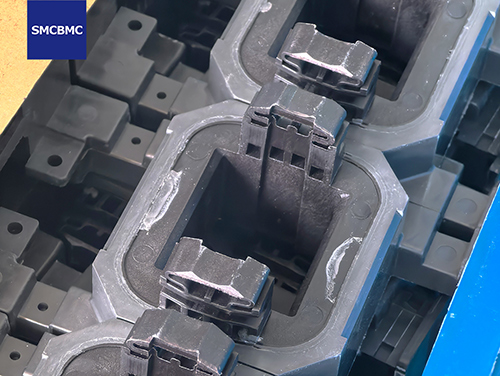
The most direct indicators of water resistance are water absorption and insulation retention under wet conditions. Based on in-house testing (typical values), Wenzhou Jintong BMC offers wet-state insulation resistance ≥10¹² Ω after 24 h and ≥1.0×10¹³ Ω under normal conditions; electric strength ≥20 kV/mm, arc resistance ≥180 s and PTI ≥600 V (per Q/JTJ0001-2025).
Key indicator | Requirement | Note |
Insulation resistance, wet (24 h) | ≥10¹² Ω | Retention in humid service (in-house testing, typical) |
Insulation resistance, normal | ≥1.0×10¹³ Ω | Dry-condition level (per Q/JTJ0001-2025) |
Electric strength | ≥20 kV/mm | Voltage breakdown resistance (per Q/JTJ0001-2025) |
Arc resistance | ≥180 s | Tolerance to arcing (per Q/JTJ0001-2025) |
PTI (tracking index) | ≥600 V | Surface tracking resistance (per Q/JTJ0001-2025) |
Materials with low water absorption resist moisture penetration and keep insulation stable in humid service. Combined with a hydrolysis-resistant resin system, parts maintain reliable electrical and mechanical performance under long-term exposure to water and vapor.
3. The 14XX Series: Designed for Hydrolysis Resistance
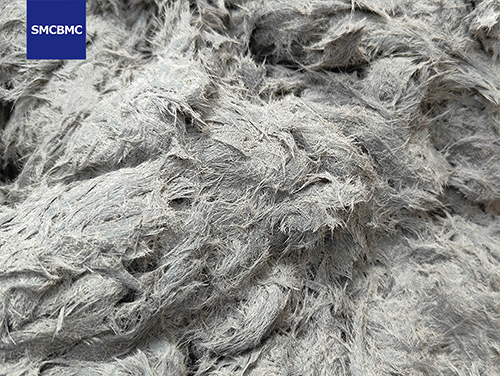
For chemical pumps, valves and underwater electrical parts, Wenzhou Jintong offers the BMC 14XX series, engineered around hydrolysis resistance and low water absorption for insulation and structural parts in constant contact with water, moisture and selected chemical media.
Established in 2001, the company provides integrated material, mold and molding capability, with formulations customizable to the medium, working temperature and pressure. Where chemical resistance and structural strength are both required, high-mechanical-strength grades can be combined; for elevated-temperature media, the 18XX high-temperature series (temperature index ≥170℃, per Q/JTJ0001-2025) can be paired in the material selection.
4. Typical Applications and Selection Guidance
• Chemical pumps / valves: long-term contact with acidic or alkaline media; hydrolysis and chemical resistance required together;
• Underwater electrical parts: pump motor components, submersible housings — low water absorption and wet-state insulation are the focus;
• Outdoor humid environments: distribution enclosures, cable accessories under high humidity and condensation;
• Selection tips: prioritize wet-state insulation resistance, water absorption and chemical resistance; for fully immersed service, validate against the actual medium and temperature.
5. Conclusion
Hydrolysis resistance is not a line on a data sheet — it is a part running reliably in a wet environment year after year. With integrated material, mold and molding capability, Wenzhou Jintong delivers dependable insulation and structural solutions for electrical parts in humid service.
📧 wendy.qiu@smcbmc.com 📞 +86-13868305300